Best Djembes for Beginners and Drum Circles
A good djembe has a solid shell, a well-fitted head and clear bass, tone and slap sounds. Rope versus key tuning, goatskin versus synthetic, the right size, and six reliable djembes for adults, children and drum circles.
In this guide
We may earn a commission when you buy through links on this page, at no extra cost to you. How we choose gear.
A djembe is a wonderful first drum: it is loud, expressive and perfect for drum circles and classes. But the market is full of decorative souvenir drums that look the part and sound disappointing. A good djembe has a solid shell, a properly fitted head and a clear distinction between bass, tone and slap. This guide explains what to look for and suggests six reliable djembes.
What to look for in a djembe
Shell
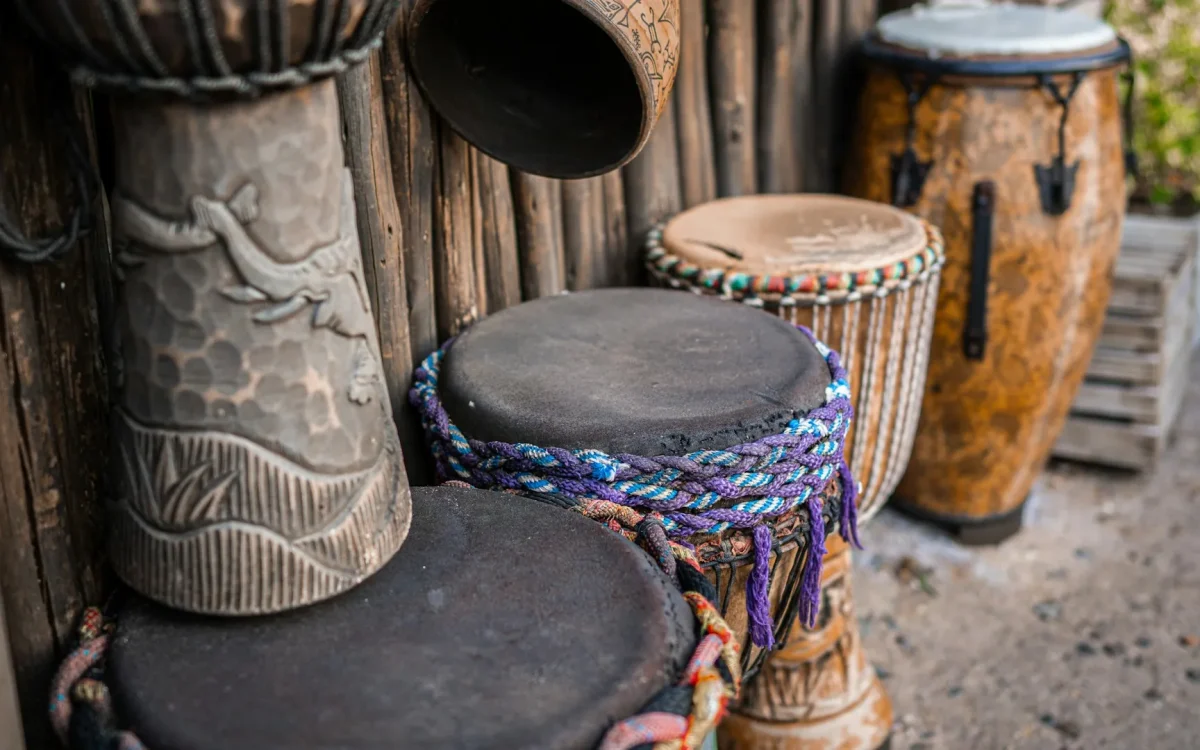
Traditional djembes are carved from a single piece of hardwood, which gives a powerful, resonant sound. Thick, solid shells sound better than thin ones. Synthetic shells, made from fibreglass or composite materials, are lighter and more weather-resistant, which suits travel, schools and outdoor drum circles.
Head and tuning
| Option | Advantages | Drawbacks |
|---|---|---|
| Goatskin head | Traditional, warm, expressive tone | Sensitive to humidity and temperature |
| Synthetic head | Stable, durable, easy to maintain | Less traditional sound |
| Rope tuning | Authentic, can reach high tensions | Takes skill and time to tune |
| Key (lug) tuning | Quick and easy adjustment | Heavier, less traditional |
Size
For adults, a head diameter of about 30 to 35 cm (12 to 14 inches) offers a good balance of bass and high sounds. Smaller djembes, around 20 to 25 cm, suit children and travel. Larger drums give a deeper bass but are heavier.
Bearing edge
The edge where the head meets the shell should be smooth and rounded. A sharp or rough edge makes slaps painful and the sound harsh. Run your hand over the edge before buying if you can.
Six djembes worth a look
These picks are based on reputations with teachers and drum circle leaders, and on published specifications. Availability varies by country. See learning the djembe.
Best all-round beginner djembe
Meinl Headliner Series Rope Tuned Djembe
Rope tuning · natural goatskin head · wooden shell · several sizes
Meinl’s Headliner djembes offer a traditional rope-tuned design with a natural head at an accessible price. They produce a good balance of bass, tone and slap for beginners.
Suits: beginners who want a traditional-style drum.
Skip if: you need a drum that copes with damp outdoor conditions.
Check the price on Amazon Price band: $$
Best easy-tuning djembe
Remo Mondo Key-Tuned Djembe
Key tuning · synthetic head · durable shell · consistent sound
Remo’s key-tuned djembes are popular with teachers and drum circles because they stay in tune and can be adjusted quickly with a key. The synthetic head is unaffected by weather.
Suits: schools, drum circles and players who want low maintenance.
Skip if: you want the feel and tone of a natural goatskin head.
Check the price on Amazon Price band: $$$
Best lightweight djembe
Toca Freestyle II Djembe
Lightweight synthetic shell · synthetic head · portable · colourful finishes
Toca’s Freestyle djembes are light, affordable and robust, making them popular for beginners, children and travel. They are easy to carry to classes and drum circles.
Suits: beginners on a budget, children and travellers.
Skip if: you want a deep, powerful traditional sound.
Check the price on Amazon Price band: $
Best for durability
LP Rope Tuned Djembe
Rope tuning · natural head · solid shell · trusted percussion brand
Latin Percussion (LP) is a respected percussion maker, and its rope-tuned djembes offer solid construction and a full sound suitable for regular playing.
Suits: beginners who want a dependable drum from a major brand.
Skip if: you prefer a lightweight drum for travel.
Check the price on Amazon Price band: $$
Best traditional sound
Hand-Carved West African Djembe
Carved hardwood shell · goatskin head · rope tuning · made by West African craftspeople
A professionally made djembe from West Africa, carved from a single piece of hardwood, offers the most powerful and authentic sound. Buy from sellers who work directly with drum makers and describe the wood and maker.
Suits: committed players who want a traditional instrument.
Skip if: you cannot check the quality before buying.
Check the price on Amazon Price band: $$$
Best for children
Remo Kids Percussion Djembe
Child-sized · lightweight · synthetic head · durable
Remo’s children’s djembes are sized for small hands and built to survive classrooms and family use. A great way for young children to start drumming.
Suits: children aged about three to ten.
Skip if: the drum is for an adult or a teenager.
Check the price on Amazon Price band: $
Caring for a djembe
- Keep natural-skin drums away from heat, direct sun and damp.
- Never leave a djembe in a hot car.
- Retune rope-tuned drums when the head loses tension.
- Use a padded bag for transport.
A closer look: testing a djembe
If you can try a djembe before buying, play a bass in the centre, a tone near the edge and a slap. A good drum produces three clearly different sounds: a deep bass, a round ringing tone and a sharp, high slap. If the tone and slap sound the same, or the bass is weak, look for another drum.
Putting it into practice
Choose a drum that fits your budget and playing situation, then practise the three basic sounds with our metronome. The World Rhythm Coach AI can teach you your first rhythms, and the World Music Gift Finder AI can help you choose a djembe as a gift.
New or second-hand?
Second-hand djembes can be excellent value, especially well-made carved drums. Check the shell for cracks, look at the head for thin spots or tears and make sure the ropes or lugs are in good condition. A worn head can be replaced, but a cracked shell usually cannot be repaired well. Ask the seller to play the drum for you, or record a short video of the bass, tone and slap.
Frequently asked questions
What size djembe should I buy?
About 30 to 35 cm (12 to 14 inches) for adults; smaller for children.
Is rope tuning or key tuning better?
Rope tuning is traditional and powerful; key tuning is quicker and easier.
Are synthetic djembes good?
Yes, especially for schools, travel and outdoor use, though they sound less traditional.
Questions and notes