Best Portable Recorders for Field Recording
A portable recorder lets you capture music lessons, sessions, rehearsals and the sounds of your travels in high quality. Microphone types, inputs, formats, battery life and wind protection explained, with six reliable recorders and tips on recording ethically.
In this guide
We may earn a commission when you buy through links on this page, at no extra cost to you. How we choose gear.
A portable audio recorder is one of the most useful tools for music lovers and learners. It lets you record your lessons to review later, capture sessions and rehearsals, document traditional musicians (with permission) and collect the sounds of your travels, from market bells to ocean waves. Modern recorders are small, affordable and capable of excellent quality, far better than a phone’s built-in microphone. This guide explains what to look for and suggests six reliable recorders.
What to look for in a portable recorder
Built-in microphones
| Configuration | Character | Good for |
|---|---|---|
| X/Y stereo | Focused stereo image, good mono compatibility | Lessons, solo instruments, small groups |
| A/B (spaced) stereo | Wide, spacious stereo | Ambience, ensembles, outdoor sounds |
| Omnidirectional pair | Natural, open sound | Rooms, nature recording |
| Interchangeable capsules | Flexible | Varied projects |
Inputs
Some recorders include XLR or combination inputs for external microphones, which allows you to record interviews, multiple instruments or use specialised microphones. If you plan to record bands or interviews, look for at least two inputs with good preamps.
Recording formats
Record in uncompressed WAV format for the best quality, typically at 24-bit resolution. Some newer recorders offer 32-bit float recording, which makes it almost impossible to distort the recording by setting the level too high, a great advantage when recording unpredictable live music.
Battery, storage and size
Check battery life and whether the recorder uses standard AA or AAA batteries, which are easy to find while travelling, or a built-in rechargeable battery. Most recorders store audio on microSD or SD cards. Smaller recorders are easier to carry and less intrusive.
Wind protection
Outdoors, even a light breeze can ruin a recording. A foam windscreen helps a little, but a furry windscreen (often called a “dead cat”) is much more effective for outdoor recording.
Six recorders worth a look
These picks are based on long-standing reputations with musicians, field recordists and reviewers, and on published specifications. Models are updated regularly, so check for the latest versions.
Best budget recorder
Zoom H1n
X/Y stereo microphones · compact · AAA batteries · simple controls
The Zoom H1 series is one of the most popular entry-level recorders, small enough to slip into a pocket and simple enough for recording lessons, rehearsals and ideas.
Suits: students recording lessons and practice.
Skip if: you need inputs for external microphones.
Check the price on Amazon Price band: $
Best natural-sounding budget recorder
Tascam DR-05X
Omnidirectional stereo microphones · AA batteries · USB audio interface function
The Tascam DR-05X uses omnidirectional microphones that capture a natural, open sound, well suited to rooms, ensembles and ambient recordings.
Suits: recording sessions, rehearsals and room sound.
Skip if: you need XLR inputs.
Check the price on Amazon Price band: $
Most discreet recorder
Sony PCM-A10
Adjustable stereo microphones · built-in memory and card slot · rechargeable · app control
Sony’s PCM-A10 is compact and discreet, with adjustable microphones and smartphone control, making it useful for recording performances without drawing attention.
Suits: travellers and discreet recording, with permission.
Skip if: you need external microphone inputs.
Check the price on Amazon Price band: $$
Best versatile mid-range recorder
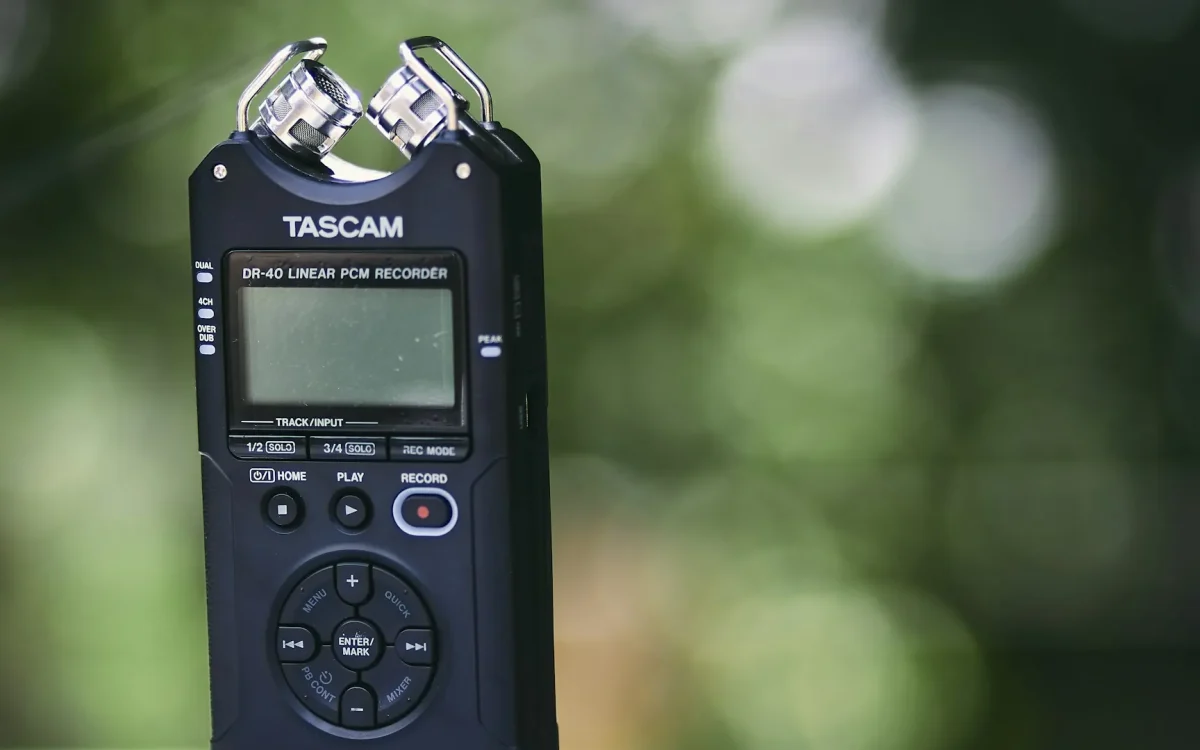
Tascam DR-40X
Adjustable X/Y or A/B microphones · two XLR/TRS inputs · four-track recording
The Tascam DR-40X combines adjustable built-in microphones with two inputs for external microphones, offering flexibility for interviews, ensembles and field work.
Suits: musicians and researchers who need inputs.
Skip if: you want the smallest possible recorder.
Check the price on Amazon Price band: $$
Best multi-input recorder
Zoom H6
Interchangeable microphone capsules · four XLR/TRS inputs · multitrack recording
The Zoom H6 is a popular multitrack recorder with interchangeable microphone capsules and multiple inputs, suitable for recording bands, interviews and complex field projects.
Suits: recording groups and multi-microphone setups.
Skip if: you only need simple stereo recording.
Check the price on Amazon Price band: $$$
Best professional quality
Sound Devices MixPre-3 II
Three high-quality preamps · 32-bit float recording · rugged build · professional
Sound Devices recorders are used by professional sound recordists. The MixPre-3 II offers exceptional preamps and 32-bit float recording for those who need the highest quality.
Suits: serious field recordists and professionals.
Skip if: you are recording lessons or casual sounds.
Check the price on Amazon Price band: $$$$
Recording musicians respectfully
Always ask permission before recording musicians, whether at a session, a festival or a private performance. Explain how you will use the recording, and respect a refusal. Some music is sacred or belongs to particular communities and should not be recorded or shared. If you publish recordings, credit the musicians and consider how they might benefit. See how to travel for music.
Recording your lessons
Recording lessons is one of the best uses of a portable recorder. Listening back helps you remember what your teacher demonstrated, notice details in their playing and track your own progress. Ask your teacher first, and label recordings by date and topic so you can find them easily.
A closer look: setting levels
Before recording, do a test and set the input level so the loudest sounds peak well below the maximum. Leave plenty of headroom to avoid distortion, especially with drums and loud instruments. Recorders with 32-bit float recording make this less critical, but checking levels remains good practice.
Putting it into practice
Choose a recorder based on what you will record most, then practise with a few test recordings at home. The Learn a World Instrument Coach AI can suggest how to use recordings in your practice, and our guide to folk session etiquette explains when recording is appropriate.
Frequently asked questions
Is a portable recorder better than a phone?
Yes, its microphones and preamps capture much better sound.
What is 32-bit float recording?
A format that prevents distortion from levels set too high, useful for unpredictable live sound.
Do I need permission to record musicians?
Yes, always ask before recording.
Questions and notes