Flamenco: Song, Guitar, Dance and Duende
Flamenco is Andalusia's art of song, guitar and dance, shaped by Gitano communities and centuries of cultural exchange. The palos, the 12-beat compás, palmas and jaleo, the idea of duende and the artists who changed flamenco.
In this guide
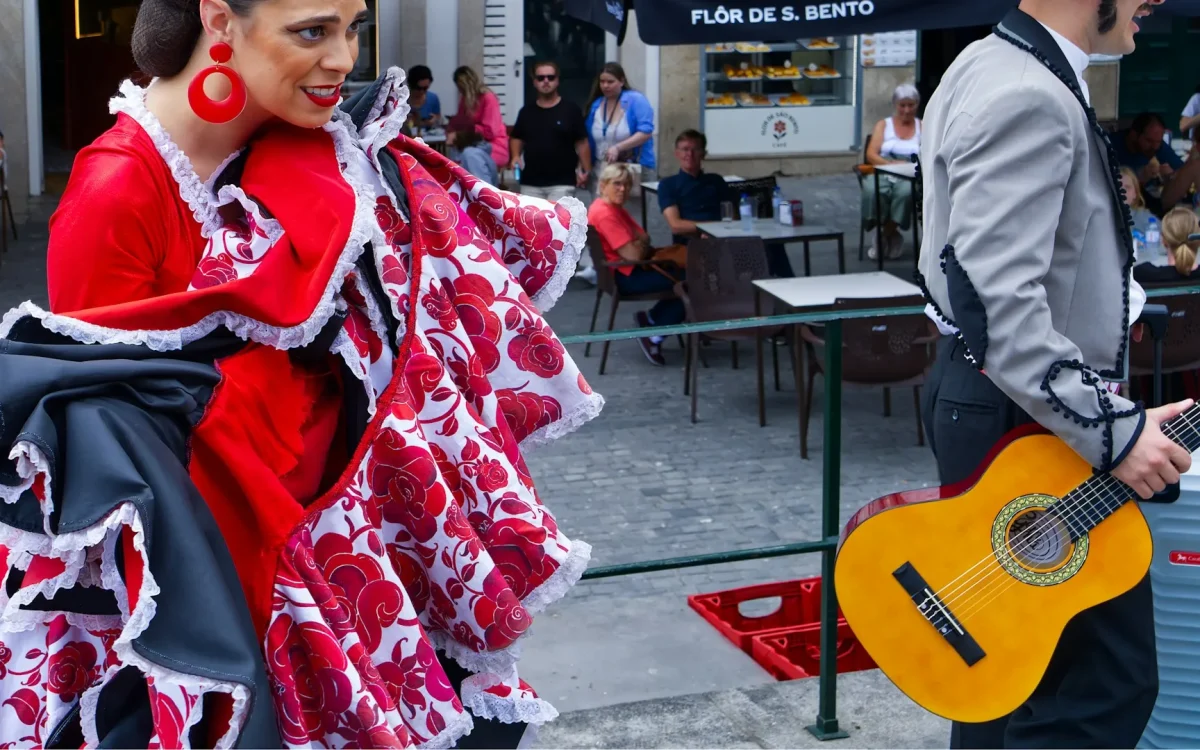
A singer’s raw, anguished cry, a guitarist’s flurry of notes and percussive strums, the sharp clap of hands and the thunder of a dancer’s heels: flamenco is one of the most intense and expressive art forms in the world. Born in Andalusia, in southern Spain, it brings together song, guitar and dance in a tradition shaped by Gitano (Spanish Roma) communities and centuries of cultural exchange. In 2010, UNESCO inscribed flamenco on its list of the Intangible Cultural Heritage of Humanity. This guide explains its roots, forms and rhythms.
Roots in Andalusia
Flamenco emerged in Andalusia, especially in the region around Seville, Jerez and Cádiz, in the eighteenth and nineteenth centuries. It was shaped above all by Gitano communities, who had lived in Spain since the fifteenth century, but it also draws on Andalusian folk music and the region’s long history of Moorish, Jewish and Christian cultures. Its exact origins are debated, and much of its early history was passed down orally, but by the nineteenth century, flamenco had become a recognisable art form.
Three elements
| Element | Spanish term | Role |
|---|---|---|
| Song | Cante | The heart of flamenco, often deeply emotional |
| Guitar | Toque | Accompanies the singer and dancer, also solo |
| Dance | Baile | Expressive movement with footwork, arms and posture |
| Hand claps and shouts | Palmas and jaleo | Rhythm and encouragement |
Flamenco performances can range from a solo singer with a guitarist to full ensembles with dancers, percussion and additional instruments.
The palos
Flamenco is organised into forms called palos, each with its own rhythm, mood, melodic character and typical verses. Some of the most important palos include the soleá, solemn and profound, often considered the mother of flamenco; the seguiriya, the most tragic and intense; the bulerías, fast, festive and full of rhythmic play; the alegrías, joyful and bright, associated with Cádiz; the tangos, lively and danceable; and the fandangos, a large family with many regional variants. Each palo offers different expressive possibilities.
Compás: the rhythmic cycle
Many palos are built on a twelve-beat rhythmic cycle called compás, with accents on particular beats. In the soleá and bulerías, the accents fall on beats 3, 6, 8, 10 and 12, creating a pattern that combines groups of three and two. This shifting pattern gives flamenco its distinctive drive. Other palos, such as tangos, use a four-beat compás. Mastering compás is essential for every flamenco artist, and performers communicate with each other through it. Practise twelve-beat cycles with our metronome.
Cante jondo and the voice
The deepest, most serious forms of flamenco song are known as cante jondo, “deep song”. In 1922, the poet Federico García Lorca and the composer Manuel de Falla organised a cante jondo competition in Granada to preserve and celebrate this tradition. Flamenco singers use a rough, powerful voice with intricate melismas, ornaments spread over a single syllable. The melodies often use the Phrygian mode, with its characteristic descending cadence.
Duende
Flamenco artists and audiences speak of duende, a mysterious, intense emotional power that can seize a performer and move listeners deeply. Lorca described it in a famous lecture as a force that rises from the soles of the feet, linked with darkness, struggle and authenticity. Duende cannot be taught or guaranteed; it appears in moments of complete emotional commitment.
Palmas and jaleo
Palmas are rhythmic hand claps that accompany flamenco, either sharp and loud or muted, played in interlocking patterns. Jaleo refers to shouts of encouragement, such as “olé”, “eso es” and “vamos ya”. Both are an integral part of flamenco’s rhythm and energy, and audience members familiar with flamenco may join in, though it is best to listen first and follow the lead of experienced participants.
The café cantante era
In the second half of the nineteenth century, flamenco moved into cafés cantantes, venues where professional singers, guitarists and dancers performed for paying audiences. This period, sometimes called a golden age, helped professionalise flamenco and develop many palos. Later, theatres and tablaos, small venues dedicated to flamenco, became the main places to see it. See Seville for flamenco lovers.
Camarón and Paco de Lucía
In the 1970s, the singer Camarón de la Isla (1950–1992) and the guitarist Paco de Lucía (1947–2014) transformed flamenco. Camarón’s intense voice and willingness to experiment, including with electric instruments, inspired a new generation. Paco de Lucía expanded the technical and harmonic possibilities of flamenco guitar, collaborated with jazz musicians and introduced the cajón, a Peruvian box drum, which became a standard flamenco instrument. His rumba “Entre dos aguas” (1973) became a hit. See learning the cajón.
Flamenco today
Flamenco continues to evolve. Nuevo flamenco blended it with jazz, rock, pop and Latin music from the 1980s onwards, and artists such as Rosalía have brought flamenco elements into global pop. At the same time, traditional flamenco thrives in peñas (flamenco clubs), festivals and family gatherings in Andalusia.
A closer look: clapping the compás
To feel the soleá compás, count from 1 to 12 and clap loudly on 3, 6, 8, 10 and 12, softly on the other beats. Repeat until it feels natural. Then listen to a soleá recording and try clapping along. You will notice how the singer, guitarist and dancer all relate to this cycle.
Putting it into practice
Listen to a soleá, a seguiriya and a bulerías, and compare their moods. Then listen to Camarón and Paco de Lucía together. The World Rhythm Coach AI can teach you more compás patterns, and the Music Festival Trip Planner AI can help plan a flamenco trip to Andalusia.
Frequently asked questions
What are the palos of flamenco?
Forms such as soleá, seguiriya, bulerías, alegrías, tangos and fandangos, each with its own rhythm and mood.
What is duende?
An intense emotional power that can seize a flamenco performer and move the audience.
Who introduced the cajón to flamenco?
Paco de Lucía and his group, after encountering the Peruvian box drum in the 1970s.
Questions and notes