Klezmer: Joyful and Soulful Jewish Instrumental Music
Klezmer is the celebratory instrumental music of Eastern European Jewish communities, with crying clarinets and dancing fiddles. Its wedding roots, modes and ornaments, emigration to America and the revival that brought it back.
In this guide
A clarinet laughs and cries, a violin sings a soulful melody, an accordion pumps out chords and a band launches into a fast dance that pulls everyone onto the floor. This is klezmer, the instrumental music of the Ashkenazi Jewish communities of Eastern Europe. For centuries, klezmer musicians played at weddings and celebrations, and their music combined joy and melancholy in a uniquely expressive way. After nearly disappearing in the twentieth century, klezmer enjoyed a remarkable revival and is now played around the world. This guide explains its history and sound.
The klezmorim
The word klezmer comes from the Hebrew kley zemer, meaning “vessels of song”, and originally referred to the musicians themselves; a professional musician was a klezmer, and the plural is klezmorim. Klezmorim were usually professional musicians, often from musical families, who travelled between towns and villages in what are now Poland, Ukraine, Belarus, Lithuania, Romania and Moldova. They played for Jewish communities and often for their non-Jewish neighbours, absorbing local musical influences.
Music for weddings
The most important occasion for klezmer was the wedding, which could last several days. Klezmorim accompanied every stage: the ceremonial seating of the bride, the procession to the canopy, the meal and the dancing. Some tunes were meant for listening, such as slow, mournful pieces played to the bride before the ceremony, while others were for dancing. A wedding entertainer called the badkhn recited humorous and moralising verses, often accompanied by the musicians.
The instruments
| Instrument | Role |
|---|---|
| Violin | The traditional lead instrument, expressive and ornamented |
| Clarinet | Became a lead instrument in the nineteenth century; famous for its crying tone |
| Tsimbl | Hammered dulcimer adding shimmering texture |
| Bass or cello | Bass lines and rhythm |
| Accordion | Chords and rhythm, especially later |
| Trumpet, trombone, drums | Added in larger bands, especially in America |
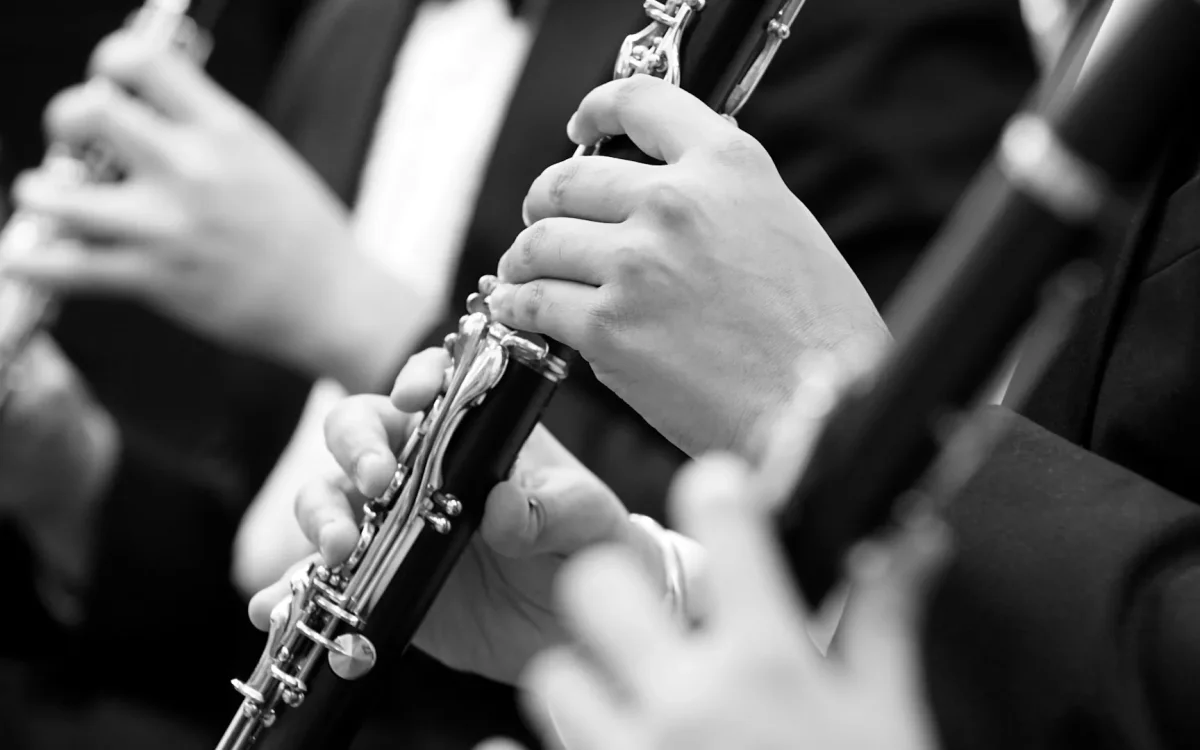
The violin was the original heart of klezmer ensembles. The clarinet rose to prominence in the nineteenth century and became, for many listeners, the defining sound of klezmer.
Modes and ornaments
Klezmer melodies use modes related to Jewish prayer chant and to the music of neighbouring cultures. One of the most characteristic is freygish, with its augmented second interval, similar to the Arabic Hijaz and the Phrygian dominant scale. Another is the so-called Ukrainian Dorian, with a raised fourth. Klezmer musicians use expressive ornaments, such as the krekhts, a sob-like break in the note, as well as slides, trills and bends that imitate the human voice, especially the voice of the cantor in the synagogue. See Arabic maqam.
Dance forms
The most common klezmer dance is the freylekhs, a lively circle dance. The bulgar, popular especially in Bessarabia and later in America, has a distinctive syncopated rhythm. The sher is a set dance for couples, similar to a square dance. The hora, in a limping triple rhythm, and the terkisher, with a Turkish-influenced rhythm, are also part of the repertoire. Slow, free-rhythm pieces called doinas, borrowed from Romanian shepherds’ music, allow soloists to improvise expressively.
Coming to America
Between the 1880s and the 1920s, millions of Eastern European Jews emigrated to the United States, bringing klezmer with them. In New York and other cities, klezmer musicians played at weddings and in the Yiddish theatre and recorded for record companies. Clarinettists Naftule Brandwein and Dave Tarras became famous in the 1920s for their virtuosic recordings, which later inspired the revival. Klezmer in America absorbed influences from jazz and popular music.
Tragedy and decline
In Europe, the Holocaust destroyed the Jewish communities in which klezmer had flourished, killing millions of people, including countless musicians. In America, younger generations assimilated, and klezmer came to seem old-fashioned. By the mid-twentieth century, the tradition had largely faded, kept alive by a few older musicians.
The klezmer revival
From the 1970s, young musicians in the United States began rediscovering klezmer through old recordings and older musicians. Bands such as The Klezmorim, Kapelye, the Klezmer Conservatory Band and Andy Statman led the revival. The Klezmatics, formed in New York in the 1980s, combined klezmer with other styles and became internationally known. The violinist Itzhak Perlman’s project In the Fiddler’s House brought klezmer to new audiences in the 1990s. Workshops and festivals in North America and Europe taught new generations.
Klezmer today
Today klezmer is played by traditional bands, jazz musicians, classical ensembles and experimental groups. Festivals in cities such as Kraków, Weimar and Montreal celebrate klezmer and Yiddish culture. The music continues to evolve while honouring its roots.
A closer look: the crying clarinet
When you listen to a klezmer clarinet solo, notice the moments when the player seems to sob or laugh through the instrument. These ornaments, the krekhts and other effects, are central to klezmer’s expressive power. Compare a slow doina, where the clarinet improvises freely, with a fast freylekhs, where it drives the dance. The same instrument expresses both deep sorrow and exuberant joy.
Putting it into practice
Listen to a 1920s recording by Naftule Brandwein or Dave Tarras, a revival band recording and a contemporary klezmer group. The Global Playlist Curator AI can suggest recordings, and the Music Culture Storyteller AI can tell you about Jewish wedding traditions. See also Balkan brass.
Frequently asked questions
What does klezmer mean?
It comes from the Hebrew kley zemer, “vessels of song”, originally meaning the musicians.
What instruments are used in klezmer?
Violin and clarinet as lead instruments, with tsimbl, bass, accordion, brass and drums.
What is a freylekhs?
A lively klezmer circle dance, one of the most common dance forms.
Questions and notes