Rebetiko: The Blues of Greece
Rebetiko is the urban song of Greece's ports and refugee neighbourhoods, often called the Greek blues. The bouzouki and baglamas, the Smyrna style, the zeibekiko dance, Markos Vamvakaris, Vassilis Tsitsanis and its rise from the margins.
In this guide
Rebetiko is often called the blues of Greece. Born in the ports, taverns and refugee neighbourhoods of Greek cities, it gave voice to people on the margins of society: sailors, labourers, refugees, outsiders and rebels. Its songs speak of love, poverty, exile, prison, hashish and death, sung over the metallic ring of the bouzouki. Once frowned upon by respectable society, rebetiko became one of Greece’s most beloved musical traditions, recognised by UNESCO in 2017. This guide explains its history, its instruments and its dances.
Urban roots
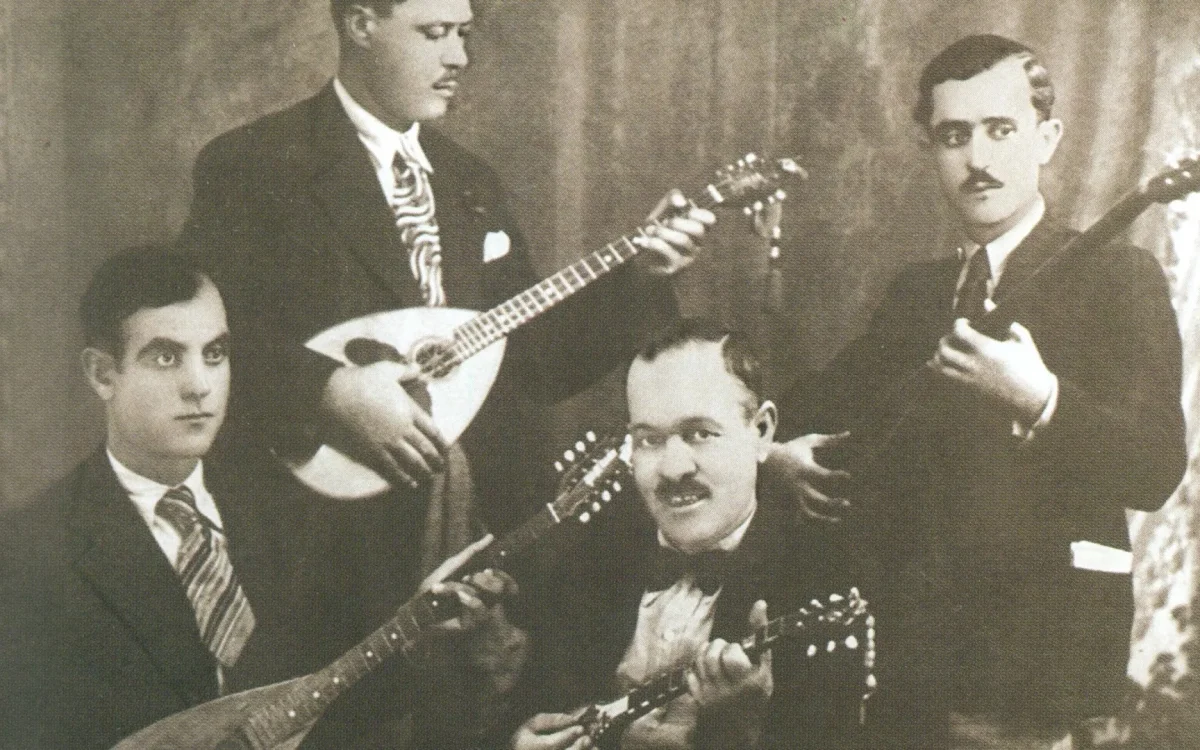
Rebetiko developed in the late nineteenth and early twentieth centuries in the urban underclass of port cities such as Piraeus, Thessaloniki, Syros and Smyrna (now İzmir, in Turkey). It was associated with the rebetes or mangas, tough, proud men who lived by their own code, and with the tekedes, hashish dens where musicians played. The origin of the word rebetiko is uncertain.
Refugees from Asia Minor
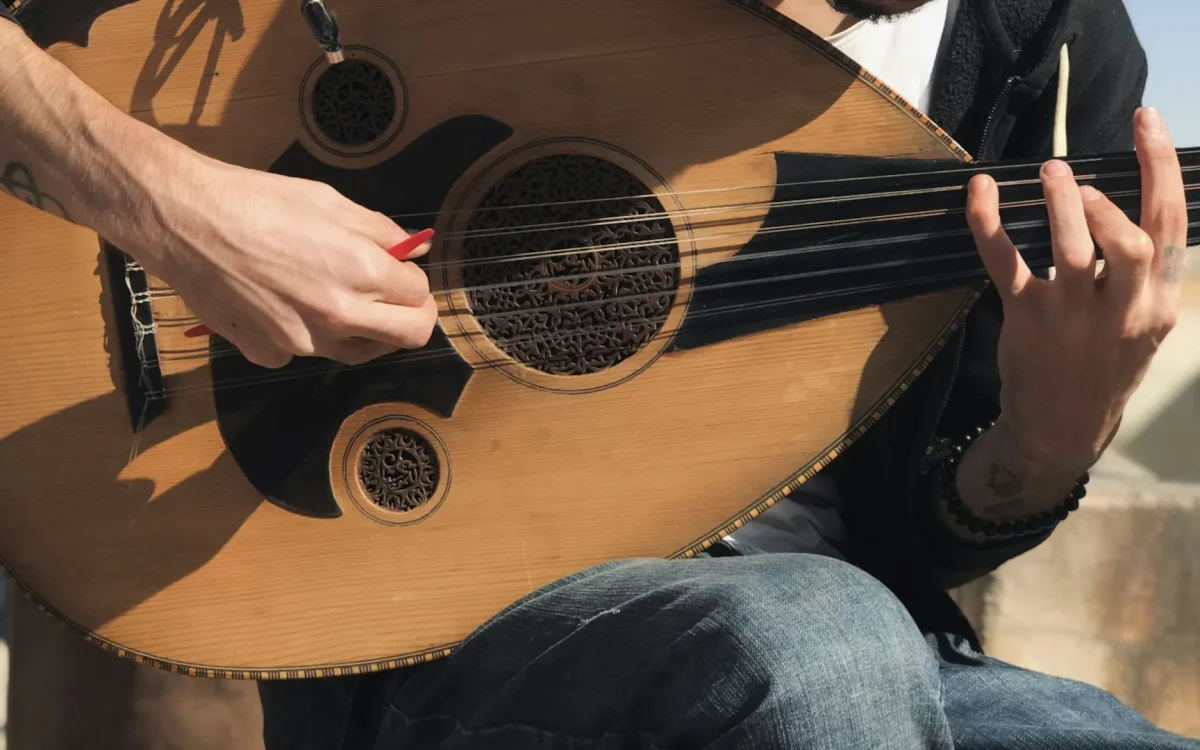
A turning point came in 1922, after the Greek-Turkish war ended in the destruction of Smyrna and the Asia Minor Catastrophe. In 1923, a population exchange between Greece and Turkey brought more than a million Greek Orthodox refugees to Greece. Many settled in poor neighbourhoods of Athens, Piraeus and Thessaloniki, bringing with them the sophisticated urban music of Smyrna and Constantinople, known as Smyrneika, played on violin, santouri (hammered dulcimer), kanonaki (zither) and oud, and influenced by Ottoman makam.
The bouzouki and baglamas
| Instrument | Description |
|---|---|
| Bouzouki | Long-necked lute with metal strings and a bright, ringing tone |
| Baglamas | Small, high-pitched relative of the bouzouki, easy to carry and hide |
| Guitar | Provides chords and rhythm |
| Violin, santouri, oud | Typical of the earlier Smyrna style |
The bouzouki became the defining instrument of rebetiko from the 1930s. Traditionally it had three courses of strings; a four-course version became popular from the 1950s. The small baglamas was said to be popular among those who needed to hide their instruments, including in prisons.
The dromoi
Rebetiko melodies are based on modes called dromoi (“roads”), derived largely from the Ottoman makam system and given names such as Hitzaz, Ousak, Rast and Sabah. Each dromos has its own character. Many rebetiko songs begin with a taximi, an improvised instrumental introduction, similar to the Arabic taqsim. See Turkish music.
Dances and rhythms
Rebetiko is closely linked with dance. The zeibekiko, in 9/8 time, is a solo, improvised dance traditionally performed by men, introspective and intense, in which the dancer expresses personal emotions; others watch respectfully, sometimes kneeling and clapping. The hasapiko, in 2/4 time, is a line dance with dancers holding shoulders. The tsifteteli is a sensual dance related to belly dance. Each rhythm gives the songs a distinctive mood.
Markos Vamvakaris
Markos Vamvakaris (1905–1972), from the island of Syros, is considered the patriarch of rebetiko. A bouzouki player, singer and songwriter, he recorded influential songs in the 1930s that defined the Piraeus style, with its raw voice and bouzouki-led sound. His songs, many about the life of the mangas, became classics.
Censorship and change
In 1936, the Metaxas dictatorship imposed censorship on music, banning songs about hashish and the underworld and discouraging the Ottoman-influenced elements of the music. Rebetiko songwriters adapted, writing about love and everyday life. During the German occupation of the Second World War and the civil war that followed, rebetiko continued to evolve and express the hardships of the time.
Vassilis Tsitsanis
Vassilis Tsitsanis (1915–1984) brought rebetiko to a wider audience with his melodic, sophisticated songs. His “Synnefiasmeni Kyriaki” (“Cloudy Sunday”), written during the occupation, became one of the most famous Greek songs. Tsitsanis helped make rebetiko acceptable to middle-class audiences. Singers such as Sotiria Bellou and Rosa Eskenazi also became legends.
From the margins to the mainstream
In 1949, the composer Manos Hadjidakis gave a lecture defending rebetiko as a valuable art, and later composers, especially Mikis Theodorakis, used the bouzouki in art songs and film music. Theodorakis’s music for the film Zorba the Greek (1964) brought the bouzouki to the world. In the 1970s and 1980s, after the fall of the military junta, young Greeks rediscovered old rebetiko recordings, and rebetiko revival bands flourished.
A closer look: watching a zeibekiko
If you see a zeibekiko danced, notice how the dancer moves slowly and deliberately, often with eyes downcast, turning, crouching and sometimes slapping the floor or heel. The 9/8 rhythm, felt in long and short beats, gives the dance a swaying, unsettled quality. It is a dance of personal expression, not display, and it is considered rude to interrupt a dancer.
Putting it into practice
Listen to a Markos Vamvakaris recording, a Tsitsanis song and an early Smyrna-style recording, and compare their instruments and moods. The World Music Genre Explorer AI can explain rebetiko’s connections with Turkish and Arabic music, and the Global Playlist Curator AI can build a rebetiko playlist.
Frequently asked questions
Why is rebetiko called the Greek blues?
Because, like the blues, it grew among marginalised people and sings of hardship, love and exile.
What instrument is central to rebetiko?
The bouzouki, a long-necked lute with metal strings.
What is the zeibekiko?
An improvised solo dance in 9/8 time, linked with rebetiko.
Questions and notes