Italian Folk Music: Tarantella, Canto a Tenore and More
Beyond opera and Neapolitan song, Italy has a vivid folk heritage. The tarantella and the healing dances of the tarantula, Sardinia's canto a tenore and launeddas, Genoese polyphony, bagpipes, accordions and the festivals that keep them alive.
In this guide
Italy is famous for opera and Neapolitan song, but it also has a remarkably rich folk music heritage, as varied as its regions. In the south, frame drums and tambourines drive frenzied tarantella dances once believed to cure the bite of a spider. In Sardinia, four male voices produce an extraordinary throat-sung harmony, and shepherds play a triple clarinet with an unbroken sound. In Genoa, dockworkers sang complex polyphony, and across the mountains, bagpipes announce Christmas. This guide explores some of Italy’s most distinctive folk traditions.
The tarantella
The tarantella is a family of fast, energetic dances from southern Italy, usually in a rapid 6/8 or 12/8 rhythm. It is played with tambourines, accordions, mandolins, guitars and violins, and danced by couples or groups. Different regions have their own versions, such as the pizzica of Salento in Puglia, the tarantella of Calabria and the tammurriata of Campania. The tarantella became a symbol of southern Italy and was adopted by classical composers in pieces inspired by its rhythm.
Tarantism: dancing to heal
The tarantella is linked with tarantism, a phenomenon recorded in southern Italy, especially in Puglia, for centuries. People, often women, who believed they had been bitten by a tarantula spider would fall into a state of distress, and the cure was music and dance: musicians played the pizzica for hours or days while the afflicted person danced until exhausted. In the 1950s, the Italian anthropologist Ernesto de Martino studied tarantism and interpreted it as a ritual that expressed social and personal suffering. The practice had largely disappeared by the late twentieth century.
The tamburello
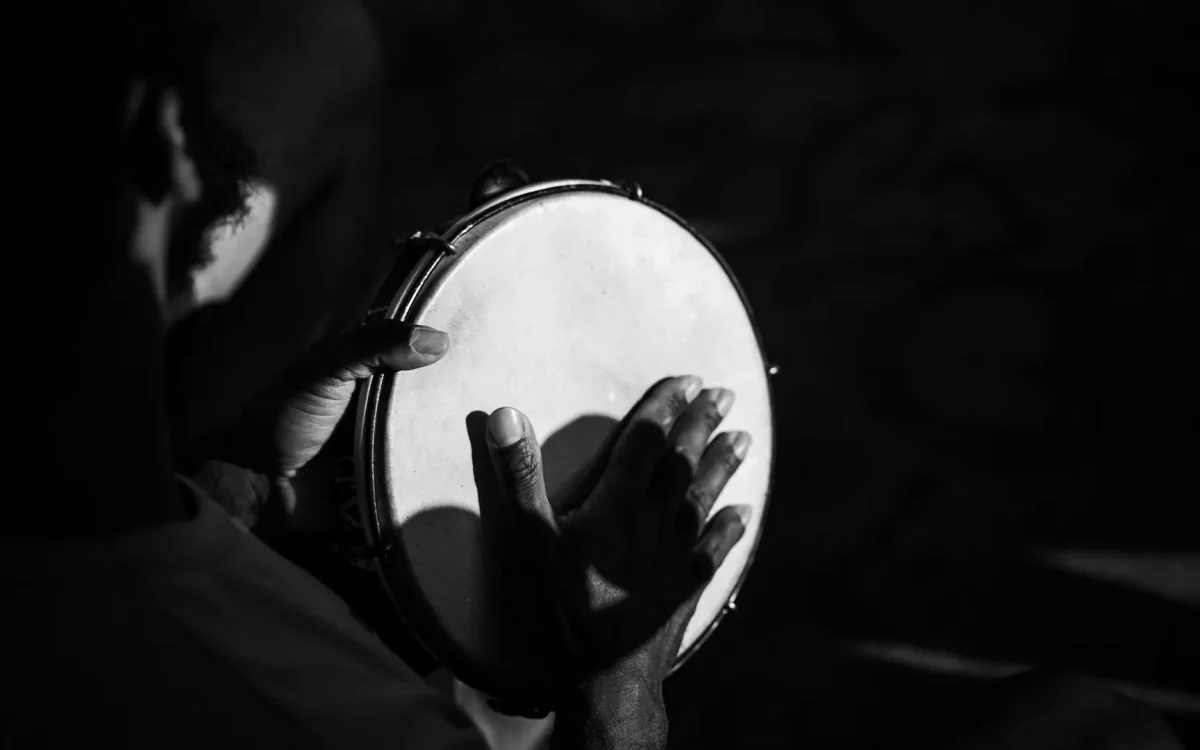
The tamburello, a frame drum with jingles similar to a large tambourine, is the heart of southern Italian folk music. Players use complex techniques, rotating the drum and striking it with the hand to produce rolling rhythms and accents. In Salento and Campania, tamburello players are admired for their stamina and skill, sometimes playing for hours. See frame drums of the world.
La Notte della Taranta
Since 1998, the festival La Notte della Taranta has celebrated the pizzica and the music of Salento, culminating in a huge concert in the town of Melpignano that attracts large crowds. The festival has helped revive interest in southern Italian folk music among young people, and has featured collaborations between local musicians and artists from other traditions.
| Tradition | Region | Highlights |
|---|---|---|
| Pizzica | Salento, Puglia | Fast tarantella linked with tarantism |
| Tammurriata | Campania | Large frame drums, dances at religious festivals |
| Canto a tenore | Sardinia | Four-part male vocal harmony |
| Launeddas | Sardinia | Triple clarinet with circular breathing |
| Trallalero | Liguria | Polyphonic singing of the Genoa docks |
| Zampogna | Southern and central Italy | Bagpipes, especially at Christmas |
Neapolitan song
Naples has a long tradition of popular song, the canzone napoletana, sung in Neapolitan dialect. Songs such as “Funiculì, Funiculà” (1880) and “‘O sole mio” (1898) became famous worldwide, sung by opera stars and popular singers. Neapolitan song combines folk melodies with sophisticated composition and is celebrated at the Piedigrotta festival. Traditional Neapolitan music also includes the tammurriata, danced to large frame drums at religious festivals.
Sardinia’s canto a tenore
Sardinia’s canto a tenore is one of Europe’s most remarkable vocal traditions. Four men stand in a close circle: the lead voice (boghe) sings the text, while three others, the bassu, contra and mesu boghe, provide harmony. The bassu and contra use a throat-singing technique that produces a deep, buzzing sound, similar in some ways to Central Asian overtone singing. In 2005, UNESCO recognised canto a tenore as Intangible Cultural Heritage. See throat singing.
The launeddas
The launeddas is an ancient Sardinian wind instrument made of three cane pipes with single reeds: one plays a drone, and the other two play melodies. Players use circular breathing, breathing in through the nose while pushing air from the cheeks, to produce a continuous sound for long periods. Bronze figurines from ancient Sardinia appear to show similar instruments, suggesting a very long history. The launeddas accompanies dances and religious processions.
Trallalero
In Genoa and Liguria, groups of men sang trallalero, a polyphonic style in which voices imitate instruments, including a falsetto voice and a guitar-like voice. The tradition developed among dockworkers and working-class communities, and groups still perform it today.
Bagpipes and accordions
The zampogna, a large bagpipe from southern and central Italy, is traditionally played at Christmas by zampognari, shepherds who come down from the mountains to play in towns and cities. The organetto, a small diatonic accordion, is widely used in folk dance music. In northern Italy, ballo liscio, a style of ballroom dance music, became popular in Emilia-Romagna in the twentieth century. See bagpipes around the world.
Recording the traditions
In 1954 and 1955, the American folklorist Alan Lomax and the Italian ethnomusicologist Diego Carpitella travelled across Italy recording folk music, documenting traditions that were soon to change. Their recordings, along with those of Italian researchers, inspired the Italian folk revival of the 1960s and 1970s.
A closer look: hearing the canto a tenore
When you listen to canto a tenore, focus on the lowest voice, the bassu. Its deep, buzzing sound may seem almost inhuman at first. Then listen to how the four voices blend into a single sound, with the lead voice singing above. The singers often stand close together, cupping their ears to hear each other.
Putting it into practice
Listen to a pizzica from Salento, a canto a tenore group and a launeddas player. If you travel to Italy in summer, look for folk festivals in Puglia or Sardinia. The Music Festival Trip Planner AI can help, and the World Rhythm Coach AI can teach you the tarantella rhythm.
Frequently asked questions
What is the tarantella?
A family of fast southern Italian dances, often in 6/8 time.
What is tarantism?
A phenomenon in which people believed bitten by a tarantula were cured through music and dance.
What is canto a tenore?
A Sardinian four-part male vocal tradition using throat singing.
Questions and notes