Bagpipes Around the World: Far More Than Scotland
Bagpipes are played from Ireland to India and from Sweden to Tunisia. How a bagpipe works, mouth-blown and bellows-blown pipes, drones and chanters, and a tour of the world's bagpipes from the uilleann pipes and gaita to the gaida, tulum and mezoued.
In this guide
Mention bagpipes and most people think of Scotland, kilts and the Great Highland Bagpipe. But bagpipes are found across a vast area, from Ireland and Spain to Bulgaria, Turkey, Tunisia and India. There are bagpipes with one chanter or two, with drones or without, blown by mouth or by bellows, made from goatskin, sheepskin or synthetic materials. Each has its own sound, repertoire and traditions. This guide explains how bagpipes work and takes you on a tour of the world’s pipes.
How a bagpipe works
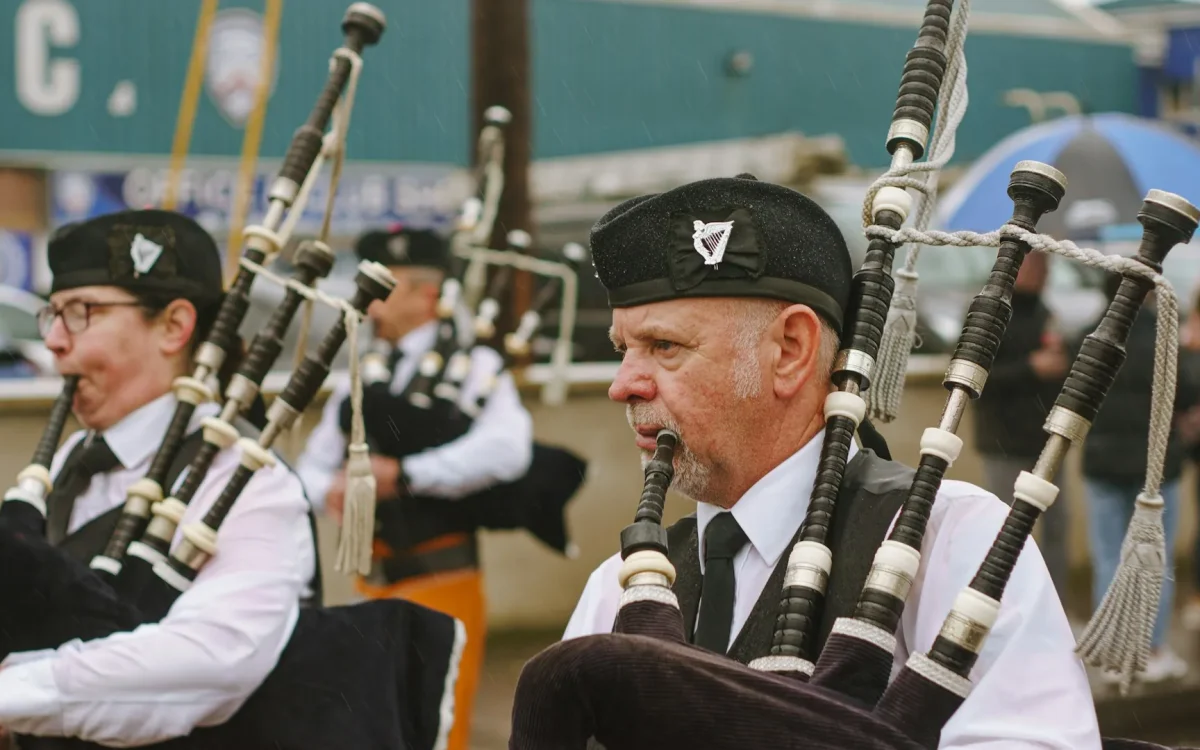
A bagpipe consists of an airtight bag that acts as a reservoir, filled either by the player’s breath through a blowpipe or by a bellows strapped under the arm. The player squeezes the bag to push air through one or more pipes containing reeds. The chanter is the pipe with finger holes on which the melody is played. Many bagpipes also have drones, pipes that sound a constant note. Because the bag stores air, the sound is continuous, even when the player breathes.
| Bagpipe | Country | Feature |
|---|---|---|
| Great Highland Bagpipe | Scotland | Loud, three drones, mouth-blown |
| Uilleann pipes | Ireland | Bellows-blown, sweet tone, regulators for chords |
| Northumbrian smallpipes | England | Bellows-blown, closed fingering, gentle sound |
| Gaita galega | Galicia, Spain | Bright tone, one or more drones |
| Zampogna | Italy | Two chanters, played at Christmas |
| Gaida and kaba gaida | Bulgaria | Goatskin bag, ornamented playing |
| Tulum | Turkey (Black Sea) | No drone, double chanter |
| Mezoued | Tunisia | Used in urban popular music |
Ancient origins
Bagpipes are very old, though their exact origins are uncertain. Ancient sources from the Roman period appear to mention a piper who played a bag instrument, and bagpipes spread widely across Europe in the Middle Ages, appearing in manuscripts, carvings and paintings. They were played by shepherds, at village festivals, in courts and in religious processions. Over time, regional varieties developed, adapted to local music and materials.
The British Isles
Scotland’s Great Highland Bagpipe is the most famous, loud and powerful, suited to outdoor use. Ireland’s uilleann pipes are blown with a bellows and have a sweet, complex sound, with drones and regulators that can play chords. England’s Northumbrian smallpipes, also bellows-blown, have a closed chanter that produces a gentle, crisp sound. Scotland also has bellows-blown smallpipes and border pipes. See Scottish folk and bagpipes and Irish traditional music.
Spain and France
In Galicia and Asturias in northern Spain, the gaita is a symbol of regional identity, played at festivals and processions. In France, Brittany has its binioù, played with the bombarde, and central France has the cornemuse, often played alongside the hurdy-gurdy. The Auvergne has the cabrette, a bellows-blown pipe associated with dance music, which Auvergnat immigrants brought to Paris. In the Baroque period, French aristocrats played the musette de cour, an elegant bellows-blown bagpipe. See Breton and Galician music.
Italy
Italy’s zampogna is unusual in having two chanters, one played by each hand, along with drones, allowing the player to play melody and accompaniment. It is traditionally played by shepherds who come down from the mountains at Christmas to play in towns. Other Italian regions have their own pipes. See Italian folk music.
The Balkans and Greece
In Bulgaria, the gaida, made from a whole goatskin, is central to folk music. The kaba gaida of the Rhodope Mountains has a deep, rich sound, and festivals bring together dozens of players. Macedonian, Serbian and Albanian traditions have their own bagpipes. On Greek islands, the tsampouna, a bagpipe without drones and with a double chanter, accompanies island dances. See Bulgarian singing.
Turkey and North Africa
In the Black Sea region of Turkey, the tulum, a bagpipe without drones and with a double chanter, accompanies energetic dances such as the horon. In Tunisia, the mezoued, a bagpipe made from goatskin, is the leading instrument of a popular urban music genre, also called mezoued, played at weddings and celebrations. Bagpipes are also found in Libya and other parts of North Africa.
India and beyond
Bagpipes are played in parts of India and Nepal, where the mashak, a folk bagpipe, has a long history in regions such as Rajasthan and Uttarakhand. British military influence also introduced the Highland bagpipe to India, Pakistan and Nepal, where pipe bands are popular at weddings and ceremonies. Pipe bands exist in many countries, including the United States, Canada, Australia and New Zealand.
Northern and Eastern Europe
Sweden has the säckpipa, revived in the twentieth century; Estonia has the torupill; Poland has several regional bagpipes, such as the dudy and koza; and the Czech Republic, Hungary and Russia have their own traditional pipes. Many of these traditions declined in the twentieth century and have been revived by folk musicians. See Nordic folk music.
A closer look: drones or no drones
Compare a bagpipe with drones, such as the Highland pipe, with one without drones, such as the Turkish tulum. The drone creates a constant harmonic background, while a double chanter can create harmonies between two melody lines. These different approaches show how bagpipe makers adapted the instrument to their musical traditions.
Putting it into practice
Listen to recordings of five different bagpipes: Highland pipes, uilleann pipes, gaita galega, kaba gaida and tulum. Notice their different tones and styles. The Instrument Origins Guide AI can tell you more about each, and the Global Playlist Curator AI can build a bagpipe playlist.
Frequently asked questions
Are bagpipes only Scottish?
No. Bagpipes are played across Europe, North Africa, the Middle East and South Asia.
What is the difference between mouth-blown and bellows-blown pipes?
Mouth-blown pipes are filled by breath; bellows-blown pipes use a bellows under the arm.
What is a chanter?
The pipe with finger holes on which the bagpipe’s melody is played.

Questions and notes