Steel Tongue Drum vs Handpan: Which Should You Choose?
Tongue drums and handpans both make dreamy, scale-tuned notes, but they differ hugely in sound, price and care. A side-by-side comparison of how they work, how they sound, how they are played and which suits your budget and goals.
In this guide
If you have fallen in love with the dreamy, resonant sound of melodic steel drums, you have probably come across two options: the steel tongue drum and the handpan. Both are round, both are made of steel, both are tuned to a scale and both produce soothing, bell-like notes. But they are very different instruments, with very different prices. This guide compares them side by side so you can decide which is right for you.
What is a steel tongue drum?
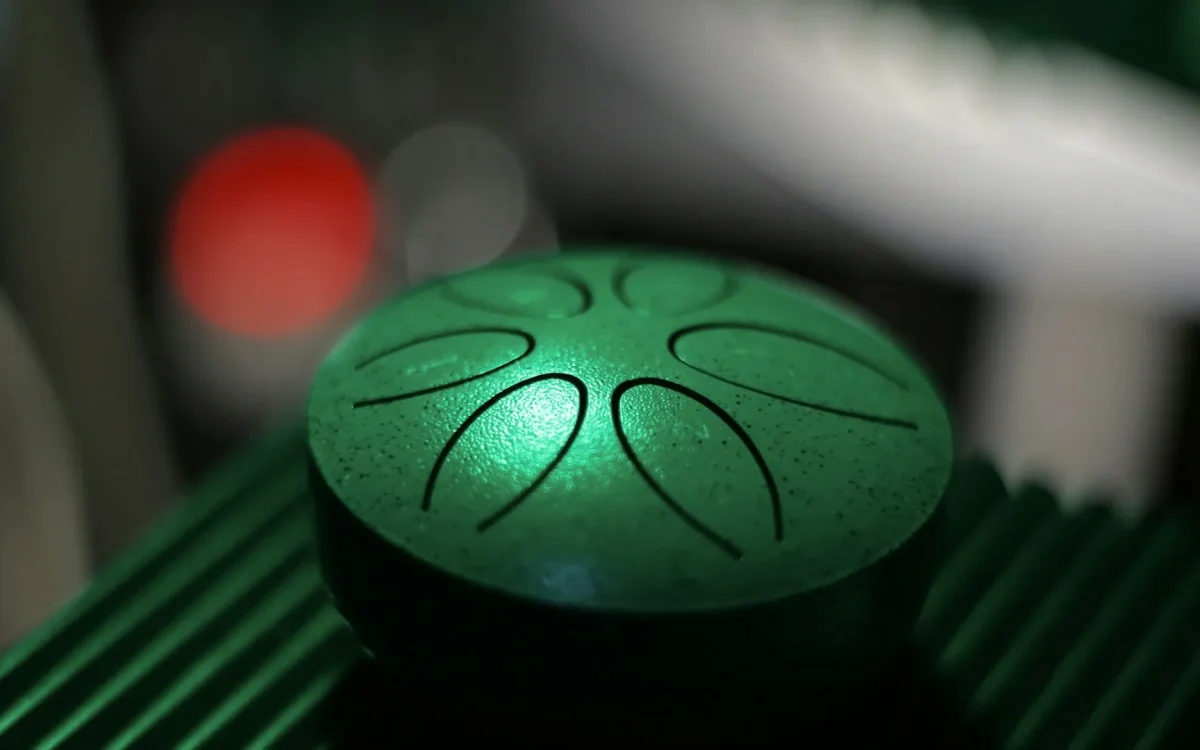
A steel tongue drum is a hollow steel body with tongues cut into its top surface. Each tongue is a different size and produces a different note when struck. The design developed in the early twenty-first century from experiments cutting tongues into empty gas cylinders, inspired by ancient wooden slit drums and by the handpan. Today, tongue drums are made in many sizes, from small travel models with six or eight notes to larger drums with fifteen or more notes, and can be played with mallets or hands.
What is a handpan?
A handpan is made of two shallow steel shells joined together. The top shell has a central dome, called the ding, surrounded by tone fields, shallow areas hammered and tuned to produce specific notes with rich harmonics. The bottom shell has an opening, the gu, which adds resonance. The handpan grew from the Hang, created in Switzerland in 2000, and each instrument is shaped and tuned by hand. See learning the handpan.
Side by side
| Feature | Steel tongue drum | Handpan |
|---|---|---|
| Typical price | About 50 to 500 US dollars | About 1,500 to over 3,000 US dollars |
| Sound | Pure, bell-like, simpler | Rich, layered, with harmonics |
| Sustain | Moderate | Long, especially on stainless steel |
| Volume | Soft to moderate | Louder and more projecting |
| Durability | Very robust | Can detune if knocked or played too hard |
| Playing | Mallets or hands | Hands only |
| Weight | Light to moderate | Moderate, often 5 kg or more |
| Learning curve | Very easy | Easy to start, deep to master |
Sound
The biggest difference is the sound. A tongue drum produces clear, pure notes with fewer overtones, similar to a soft bell or a kalimba amplified. A handpan produces complex, layered tones, with each note including the fundamental and tuned harmonics, giving a shimmering, almost vocal quality. Handpans also have a stronger bass and more resonance. If you are drawn to the rich, cathedral-like sound of handpan videos, a tongue drum will not quite reproduce it.
Price
Price is the second big difference. Good tongue drums are affordable, making them ideal gifts and first instruments. Handpans are expensive because each is hand-hammered and tuned by skilled makers, a process that can take many hours. Very cheap handpans often have poor tuning and may go out of tune quickly, so they are rarely a good compromise. If your budget is limited, a quality tongue drum is a better choice than a poor handpan.
Playing technique
Tongue drums are very easy to play: strike a tongue with a mallet or finger and it rings. Mallets produce a clear, soft sound and are good for children and beginners. Playing with the hands produces a warmer tone. Handpans require a lighter, bouncing touch with the fingertips, and players can create percussive effects, harmonics and muted notes, which offer more expressive possibilities.
Scales
Both instruments are tuned to a fixed scale, often pentatonic or minor, so improvising sounds good. Tongue drums are commonly available in pentatonic scales and major scales, as well as popular handpan scales such as D Kurd. Handpans are available in a wide variety of scales, from minor to Middle Eastern. Explore scales in our World Scales Explorer.
Durability and care
Tongue drums are tough and need little care beyond keeping them clean and dry. Handpans are more delicate: knocks, drops or excessive force can detune them, and nitrided handpans need regular oiling to prevent rust. Handpans also need to be protected from extreme heat. If you plan to travel a lot or play outdoors, a tongue drum is less worrying.
Who should choose a tongue drum?
A tongue drum is ideal if you want an affordable, robust instrument for relaxation, meditation, children, classrooms or casual playing. It is a wonderful gift, requires no musical experience and can be played immediately. It is also a good way to discover whether you enjoy melodic percussion before investing in a handpan.
Who should choose a handpan?
A handpan is right for you if you are passionate about its unique sound, ready to invest significantly and willing to care for a delicate instrument. Handpans reward dedicated practice, and many players find them deeply inspiring. If possible, try several handpans in person before buying, and buy from a reputable maker.
A closer look: try before you buy
Whenever possible, play both instruments before deciding. Many music shops, festivals and meetups offer the chance to try handpans and tongue drums. Listen closely to the sustain, the bass and the overall character. Online recordings can be misleading, as they are often processed with reverb.
Putting it into practice
Read our guide to the best handpans and tongue drums, then listen to recordings of both instruments in the same scale. The World Music Gift Finder AI can help choose a model as a gift, and the Learn a World Instrument Coach AI can create a practice plan for either instrument.
Frequently asked questions
Is a tongue drum the same as a handpan?
No. A tongue drum has tongues cut into the steel; a handpan has hammered tone fields with richer harmonics.
Which is easier to play?
The tongue drum is easier to start, especially with mallets.
Why are handpans so much more expensive?
Each one is hand-hammered and precisely tuned by a skilled maker.

Questions and notes