Small Strings of Latin America: Charango, Cuatro and Tres
Latin America is full of small guitars with big personalities. The Andean charango, the Venezuelan and Puerto Rican cuatros, the Cuban tres, the jarana, cavaquinho and tiple: how they are built and tuned, and the music they drive.
In this guide
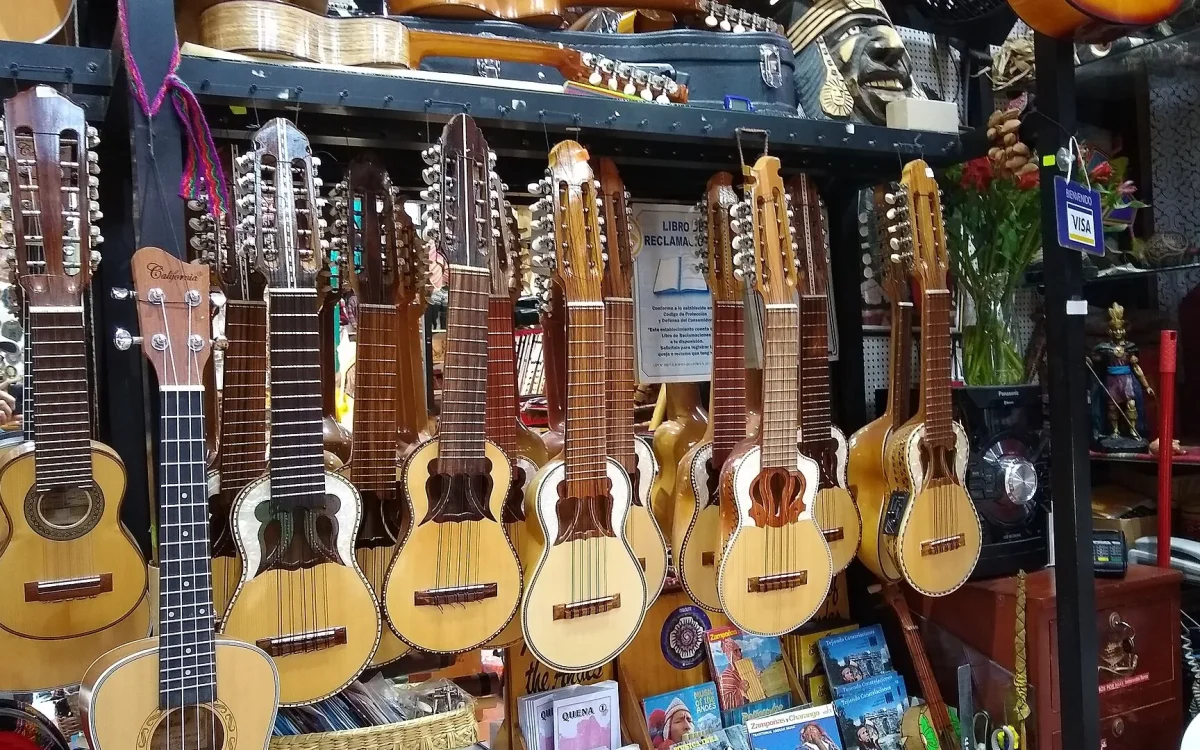
When Spanish and Portuguese guitars arrived in the Americas, local musicians adapted them into dozens of new instruments, many of them small, bright and full of character. The Andean charango, the Venezuelan cuatro and the Cuban tres are among the most important, each at the heart of a musical tradition. Others, such as the Mexican jarana, the Brazilian cavaquinho and the Colombian tiple, are equally beloved. This guide introduces these small stringed instruments and the music they drive.
A family of guitars
| Instrument | Country | Strings | Music |
|---|---|---|---|
| Charango | Bolivia, Peru | 10 in 5 double courses | Andean folk music |
| Cuatro venezolano | Venezuela | 4 single strings | Joropo, llanera music |
| Cuatro puertorriqueño | Puerto Rico | 10 in 5 double courses | Jíbaro music |
| Tres | Cuba | 6 in 3 double courses | Son cubano |
| Jarana jarocha | Mexico (Veracruz) | Usually 8 in 5 courses | Son jarocho |
| Cavaquinho | Brazil | 4 strings | Choro, samba |
| Tiple | Colombia | 12 in 4 courses of three | Andean Colombian music |
The charango
The charango is a small Andean instrument with ten strings arranged in five double courses. It developed in the colonial period, probably in the highlands of present-day Bolivia and Peru, both of which claim it as their own. Traditionally, some charangos were made with the shell of an armadillo as the back of the body, but today most are made of wood, which protects the animals and gives a better sound. The charango’s bright, sparkling tone is central to Andean music, alongside panpipes and quena flutes. See Andean music.
Charango tuning and technique
The charango is usually tuned G-C-E-A-E, with the middle course often in octaves. The tuning is re-entrant, meaning the strings do not go simply from low to high, which gives the instrument its characteristic sparkle. Players use rapid strumming patterns called rasgueo, as well as fingerpicking for melodies. Famous players include the Bolivian Ernesto Cavour and the Argentine Jaime Torres, who brought the charango to international audiences.
The Venezuelan cuatro
The cuatro is Venezuela’s national instrument, a small guitar with four nylon strings, usually tuned A-D-F#-B in a re-entrant tuning. It is mainly a rhythm instrument, played with fast, intricate strumming patterns that drive Venezuelan music. In joropo, the music of the plains (llanos), the cuatro plays with the harp and maracas, creating a fast, exciting sound. The cuatro is found in almost every Venezuelan home and is often the first instrument children learn.
The Puerto Rican cuatro
Puerto Rico has its own cuatro, quite different from the Venezuelan one. It has ten strings in five double courses and a distinctive body shape. It is the leading instrument of jíbaro music, the music of rural Puerto Rico, played in forms such as the seis and the aguinaldo, especially at Christmas. Players such as Yomo Toro became famous for their virtuosity, and the cuatro is a national symbol of Puerto Rico.
The Cuban tres
The tres is a Cuban guitar with three double courses of strings, six strings in total. It developed in eastern Cuba and became the key instrument of son cubano, the foundation of salsa. The tres plays repeating, syncopated patterns called guajeos or montunos, which interlock with the clave and the bass. Tres players such as Arsenio Rodríguez transformed Cuban music with their playing. See son cubano and the clave.
The Mexican jarana and vihuela
In the son jarocho music of Veracruz, Mexico, the jarana jarocha, a small eight-string guitar, provides rhythmic strumming, accompanied by the requinto jarocho, which plays melodies, the harp and dancers on a wooden platform. In mariachi music, the vihuela, a small, round-backed guitar with five strings, provides bright rhythmic strumming alongside the guitarrón, a large bass guitar. See mariachi.
The cavaquinho and the tiple
The cavaquinho, a small four-string guitar from Portugal, became an essential instrument in Brazilian choro and samba, providing rhythmic chords and melodies. It is closely related to the instruments that became the ukulele in Hawaii. The Colombian tiple, with twelve strings in four courses of three, is the national instrument of Colombia, used in Andean Colombian music. See Brazilian music beyond samba and Hawaiian music.
Choosing a small Latin guitar
If you already play the ukulele or guitar, these instruments are accessible. The Venezuelan cuatro and cavaquinho, with four strings, are easiest to start. The charango and Puerto Rican cuatro, with double courses, require more practice to tune and play cleanly. The tres is ideal if you love Cuban music. Choose based on the music you want to play, and look for a well-made instrument from a reputable maker.
A closer look: re-entrant tuning
Many of these instruments use re-entrant tunings, in which a higher string is placed among lower ones. This means that strummed chords have a bright, close-voiced sound, and melodies can be played across strings in unusual ways. The ukulele uses the same idea. Listen to a charango or cuatro strummed, and notice how the chords sound bright and compact.
Putting it into practice
Listen to a charango solo, a Venezuelan joropo, a Puerto Rican seis and a Cuban son with tres. The Learn a World Instrument Coach AI can create a practice plan for any of these instruments, and the Instrument Origins Guide AI can tell you more about their history.
Frequently asked questions
What is a charango?
A small Andean instrument with ten strings in five double courses.
How many strings does a Venezuelan cuatro have?
Four nylon strings, usually tuned A-D-F#-B.
What does the Cuban tres play?
Repeating syncopated patterns called montunos or guajeos in son cubano.
Questions and notes