Learning the Handpan: What Beginners Need to Know
The handpan's dreamy, resonant tones have captivated players since the Hang appeared in 2000. Its origins, how it works, choosing a scale, stainless versus nitrided steel, first techniques and rhythms, and how to care for a costly instrument.
In this guide
With its spaceship shape and its warm, shimmering tones, the handpan has become one of the most fascinating instruments of the twenty-first century. Street musicians, meditation teachers and composers have all fallen for its sound, and videos of handpan players have attracted millions of viewers. But handpans are expensive, and choosing one can be confusing. This guide explains where the handpan came from, how it works and what you need to know before you buy and start playing.
The Hang
The handpan’s story begins with the Hang, created in 2000 by Felix Rohner and Sabina Schärer of PANArt in Bern, Switzerland. Rohner and Schärer had worked for years making steelpans, the instruments invented in Trinidad, and they developed a new instrument to be played with the hands. The Hang was presented to the public in 2001 and quickly attracted fascinated players. PANArt produced the instrument in limited numbers and later stopped making it, but by then other makers around the world had begun producing similar instruments, which became known as handpans. See the steelpan.
How a handpan works
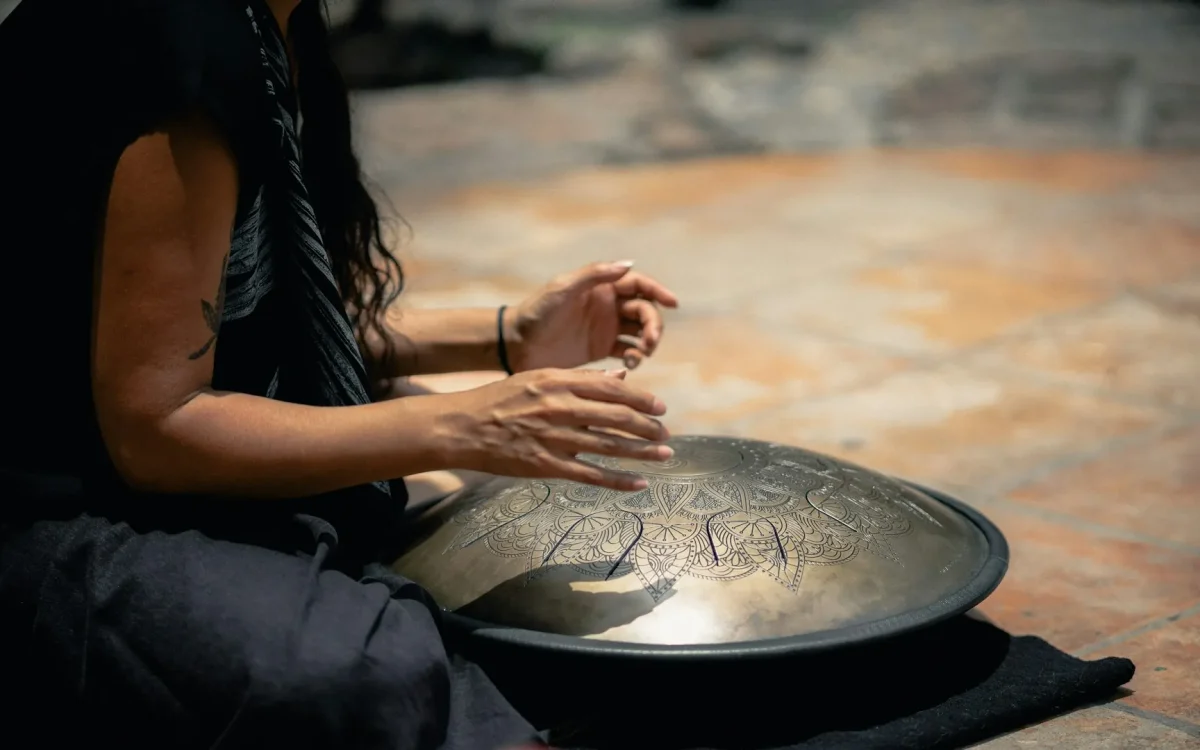
A handpan is made from two shallow steel shells glued together, forming a hollow, lens-shaped body. On the top shell, a central dome called the ding produces the lowest note, and around it are seven to nine or more tone fields, shallow dimples each tuned to a note. Each tone field is carefully hammered to produce a fundamental note and harmonics. On the bottom shell, a hole called the gu allows the air inside to resonate, adding depth to the sound.
Scales
| Scale | Mood |
|---|---|
| D Kurd | Minor, melancholic and versatile; the most popular |
| Celtic minor | Gentle, folk-like |
| Hijaz | Middle Eastern, exotic |
| Integral | Mysterious, meditative |
| Major scales | Bright, joyful |
Each handpan is tuned to a fixed scale and cannot be changed. Beginners often choose D Kurd, which is versatile and pleasant, and has many tutorials available. Listen to as many scales as possible before deciding. Explore similar scales in our World Scales Explorer.
Materials and prices
Handpans are usually made from nitrided steel, which has a hardened surface and a warm, short sustain, or stainless steel, which resists rust and has a longer, more singing sustain. Quality handpans from reputable makers typically cost from around 1,500 to over 3,000 US dollars, and some have waiting lists. Cheap handpans sold for a few hundred dollars are often poorly tuned and go out of tune quickly. Buying from a recognised maker or a trusted dealer is important.
Tongue drum or handpan?
If your budget is limited, a steel tongue drum offers a similar experience at a fraction of the price. Tongue drums are easier to manufacture and more robust, though their sound is simpler. Many players start with a tongue drum and move to a handpan later. See steel tongue drum vs handpan and our guide to the best handpans and tongue drums.
Playing technique
Handpans are played with the fingertips, the thumbs and the palms, using light, bouncing strikes. The key is to strike quickly and let the finger bounce away, allowing the note to ring. Striking too hard can damage the tuning. Rest the handpan on your lap, with the gu facing down, or on a stand. Start by playing each note individually, listening to its tone, then play scales up and down, alternating hands.
First rhythms
A simple way to start is to combine the ding with a few tone fields in a repeating rhythm. For example, play the ding with your right hand, then two tone fields with your left and right, and repeat. Add percussive taps on the body of the handpan between notes, using the side of the hand or fingertips. Gradually build patterns that combine melody and rhythm. Many handpan players think of the instrument as both a drum and a melodic instrument.
Arpeggios and melodies
Once you are comfortable with the layout, play arpeggios, playing notes of a chord one after another, and simple melodies. Because the handpan’s notes all belong to one scale, improvising is easy and rewarding: you can explore freely without hitting a “wrong” note. Over time, you can learn techniques such as harmonics, muted notes and fast rolls.
Care and storage
Handpans need care. Keep yours in a padded case and avoid extreme temperatures and humidity, which can cause rust or affect the tuning. Wipe the surface after playing to remove sweat and fingerprints, and apply a protective oil recommended by the maker, especially on nitrided instruments. Avoid dropping or knocking the handpan, which can detune it. Most makers offer retuning services.
A closer look: listening to sustain
Play a single note on a handpan and listen until it fades completely. You will hear the fundamental note and higher harmonics blending into a rich, shimmering sound. Learning to listen to each note’s sustain will help you play more musically, leaving space between notes and letting them ring.
Putting it into practice
Listen to recordings of different scales before buying. Start with ten minutes a day: play each note, then scales, then simple rhythms. The Learn a World Instrument Coach AI can build a practice plan, and the Instrument Origins Guide AI can tell you more about the handpan’s history.
Frequently asked questions
Who invented the handpan?
The Hang, the first instrument of this kind, was created by PANArt in Switzerland in 2000.
Which handpan scale is best for beginners?
D Kurd is the most popular, versatile and well supported by tutorials.
Why are handpans so expensive?
Each one is shaped and tuned by hand, which takes great skill and time.

Questions and notes