The Steelpan: Trinidad’s Oil-Drum Invention
The steelpan was born in Trinidad's yards in the 1930s and 1940s, hammered from oil drums into the only major acoustic instrument invented in the twentieth century. Its story, its pioneers, how a pan is made and tuned, and the Panorama competition.
In this guide
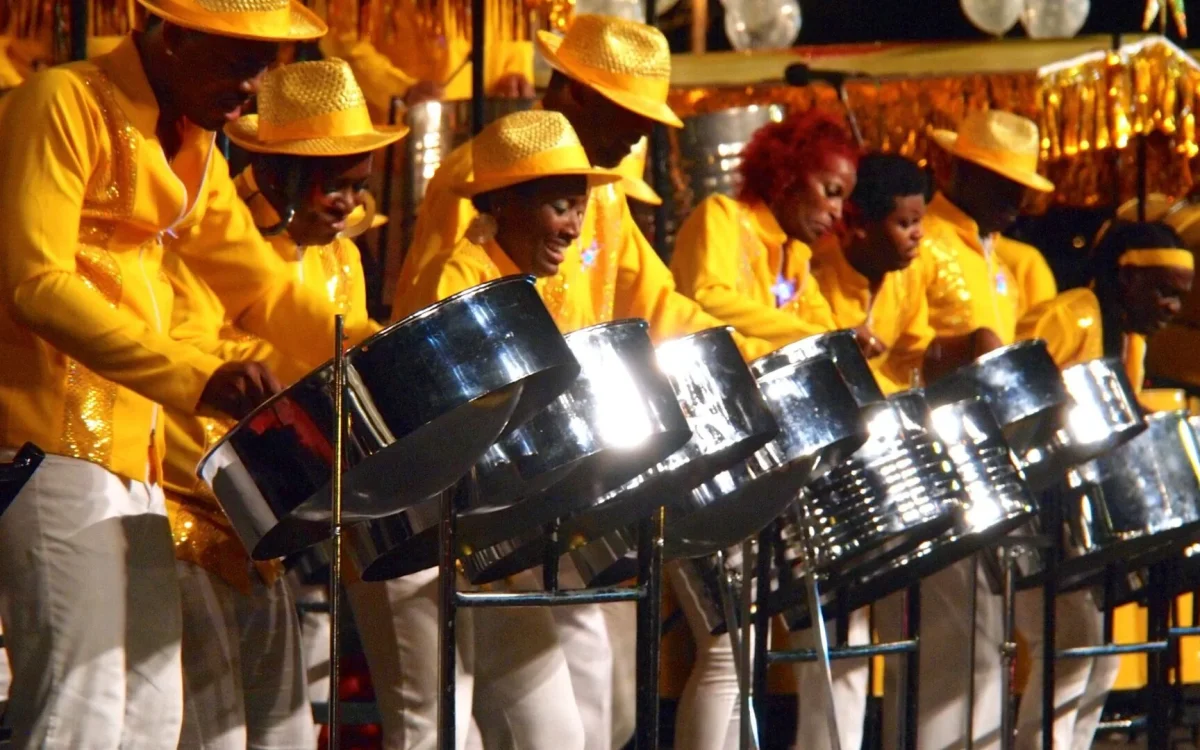
The steelpan, or steel drum, is often described as the only major acoustic instrument invented in the twentieth century. Created in Trinidad and Tobago from discarded oil drums, it produces a bright, shimmering, sweet sound that has become synonymous with the Caribbean. From the yards of Port of Spain to concert halls and schools around the world, the steelpan’s story is one of creativity, resistance and community. This guide explains how the steelpan was invented, how it works and how it is played.
Drums banned
The steelpan’s story begins with the suppression of drumming. In the nineteenth century, the colonial authorities in Trinidad tried to control the African-derived drumming of the island’s Carnival, which they associated with disorder. Laws in the 1880s restricted drumming in public. In response, Carnival revellers created tamboo bamboo bands, which used lengths of bamboo of different sizes, stamped on the ground or struck with sticks, to produce rhythms.
From bamboo to metal
In the 1930s, bamboo bands began incorporating metal objects such as biscuit tins, paint cans, dustbin lids and car parts, which were louder and more durable. Musicians discovered that by denting the metal surface, they could produce different pitches. Over time, they shaped the surfaces to produce several notes, creating the first melodic pans.
The oil drum
During and after the Second World War, the presence of the oil industry and a US naval base in Trinidad made 55-gallon oil drums widely available. Pan makers began using them, as their size and steel allowed more notes and better tone. By the late 1940s, the modern steelpan had taken shape, made by sinking the top of an oil drum into a concave bowl, marking out note areas and tuning them by hammering.
The pioneers
Several pioneers shaped the steelpan. Winston “Spree” Simon is often credited with demonstrating early melodic pans in the 1940s. Ellie Mannette, often called the father of the modern steelpan, developed the technique of sinking the drum surface into a concave shape, which improved tone and allowed more notes; he later taught and built pans in the United States. Anthony Williams developed the “fourths and fifths” note layout, also called the spider web pattern, which became the standard for tenor pans. Neville Jules and others also made important contributions.
How a pan is made
| Step | What happens |
|---|---|
| Sinking | The top of the drum is hammered into a concave bowl |
| Marking | Note areas are marked on the surface |
| Grooving | Grooves are punched to separate the notes |
| Cutting | The drum is cut to the right skirt length |
| Tempering | The pan is heated to harden the steel |
| Tuning | Each note is hammered and adjusted to pitch and harmonics |
Tuning a pan requires great skill: the tuner must shape each note area so that its fundamental and harmonics are in tune, and adjust neighbouring notes so they do not interfere.
The family of pans
Steelpans come in different sizes, forming a family like the instruments of an orchestra. The tenor pan, or lead pan, plays the melody in the highest range. Double tenors and double seconds, played in pairs, cover the middle ranges. Guitar and cello pans provide harmony and rhythmic strumming patterns. Bass pans, made from full-length drums, sometimes six or more per player, provide the bass line. A large steel band can include more than a hundred players.
Steel bands and Carnival
Steel bands became central to Trinidad’s Carnival. In the early days, rival bands were sometimes associated with conflict, but over time, the steel band movement became a source of pride and community organisation. In 1951, the Trinidad All Steel Percussion Orchestra performed at the Festival of Britain in London, introducing the steelpan to international audiences. Famous bands include Desperadoes, Renegades, Invaders and All Stars. See Trinidad Carnival.
Panorama
Since 1963, the Panorama competition has been the highlight of the steel band year. During Carnival season, bands compete with elaborate arrangements of calypso and soca songs, often lasting around eight to ten minutes, performed by large ensembles. Arrangers create complex, virtuosic music, and the competition attracts huge crowds. Bands rehearse for weeks in their panyards, where visitors can listen. See calypso and soca.
A national instrument
The steelpan was declared the national instrument of Trinidad and Tobago in 1992. It is taught in schools and played at national events. Steel bands also play classical music, jazz and pop arrangements, and the instrument’s versatility has helped it spread far beyond the Caribbean.
The steelpan around the world
Today, steel bands exist in the United Kingdom, where they are central to the Notting Hill Carnival, in the United States, Canada, Japan, Switzerland and many other countries. Many schools and universities have steel band programmes. The steelpan also inspired the creation of the handpan in Switzerland. See learning the handpan.
A closer look: hearing the layers
When you listen to a steel band, try to separate the different voices: the bright melody of the tenor pans, the strumming chords of the guitar and cello pans and the deep notes of the bass pans. Notice how the sound shimmers, partly because players roll rapidly on sustained notes. A Panorama performance shows how rich the steelpan orchestra can be.
Putting it into practice
Listen to a Panorama performance, a solo tenor pan recording and a steel band playing a classical piece. The Music Festival Trip Planner AI can help plan a trip to Trinidad Carnival, and the Instrument Origins Guide AI can tell you more about how pans are made.
Frequently asked questions
Where was the steelpan invented?
In Trinidad and Tobago, in the 1930s and 1940s.
What are steelpans made from?
Originally from 55-gallon oil drums, sunk, grooved and tuned by hand.
What is Panorama?
Trinidad’s annual steel band competition, held during Carnival since 1963.

Questions and notes