Trinidad Carnival: Steelpan, Soca and J’ouvert
Trinidad's Carnival is a non-stop celebration of soca, calypso and steelpan, with dawn mud parties and a sea of costumes. Its history, fete season, Panorama, Dimanche Gras, J'ouvert, playing mas on Carnival Tuesday and tips for first-timers.
In this guide
Trinidad’s Carnival is often called “the greatest show on Earth”, and for those who experience it, the description feels accurate. For weeks before Ash Wednesday, the island pulses with soca music, steel band rehearsals and parties called fetes, building to two days of street celebrations when hundreds of thousands of people dance through Port of Spain. Carnival is also the stage for calypso, soca and steelpan, music that Trinidad gave to the world. This guide explains how Trinidad Carnival works and how to enjoy it.
History
Trinidad’s Carnival has roots in the masquerade balls held by French Catholic planters in the late eighteenth century. After the emancipation of enslaved Africans in the 1830s, freed people made Carnival their own, bringing African traditions of masquerade, music and dance into the streets. The Canboulay procession, commemorating the burning of sugar cane fields, became part of the celebrations. Colonial authorities repeatedly tried to restrict Carnival, leading to conflicts such as the Canboulay riots of 1881, but the celebration grew into a symbol of freedom and identity. See calypso and soca.
Traditional mas characters
Traditional Carnival characters, known as ole mas, keep alive the history and satire of Carnival. They include the Midnight Robber, who delivers boastful speeches; the Jab Jab and Jab Molassie, devil characters; the Moko Jumbie, a stilt walker with roots in West Africa; the Dame Lorraine, satirising colonial society; and the Pierrot Grenade, a witty wordsmith. These characters appear in J’ouvert and special events.
| Event | When | What happens |
|---|---|---|
| Fete season | From after Christmas to Carnival | Parties with live soca and DJs |
| Panorama finals | Saturday before Carnival | Steel band competition |
| Dimanche Gras | Carnival Sunday | Calypso Monarch and King and Queen of the Bands |
| J’ouvert | Pre-dawn Carnival Monday | Street party with mud, paint and traditional mas |
| Carnival Monday and Tuesday | Before Ash Wednesday | Masquerade bands parade through the streets |
Fete season
From soon after Christmas until Carnival, Trinidad hosts countless fetes, parties featuring the latest soca hits performed by live artists and DJs. Fetes range from large all-inclusive events with food and drinks to breakfast fetes and beach parties. Fete season is where new soca songs are tested, and the songs that dominate will compete to become the Road March, the most-played song on the road on Carnival Tuesday.
Panorama
Panorama, the national steel band competition, is one of the highlights of Carnival. Steel bands with up to a hundred or more players perform elaborate arrangements of calypso and soca songs, competing in preliminary rounds, semi-finals and finals. In the weeks before Carnival, visitors can visit panyards, where bands rehearse at night, to hear the music being prepared. The finals take place at the Queen’s Park Savannah in Port of Spain. See the steelpan.
Dimanche Gras
On the Sunday night of Carnival, the Dimanche Gras show features the final of the Calypso Monarch competition, in which calypsonians perform songs often full of social and political commentary, and the crowning of the King and Queen of the Bands, whose enormous, elaborate costumes are works of art.
J’ouvert
Carnival officially begins before dawn on Monday with J’ouvert, from the French “jour ouvert”, meaning daybreak. Revellers cover themselves in mud, paint, oil or chocolate and dance through the streets behind trucks playing soca, steel bands and rhythm sections. J’ouvert is wild, messy and joyful, with traditional characters and satirical costumes. Wear old clothes you do not mind ruining.
Playing mas
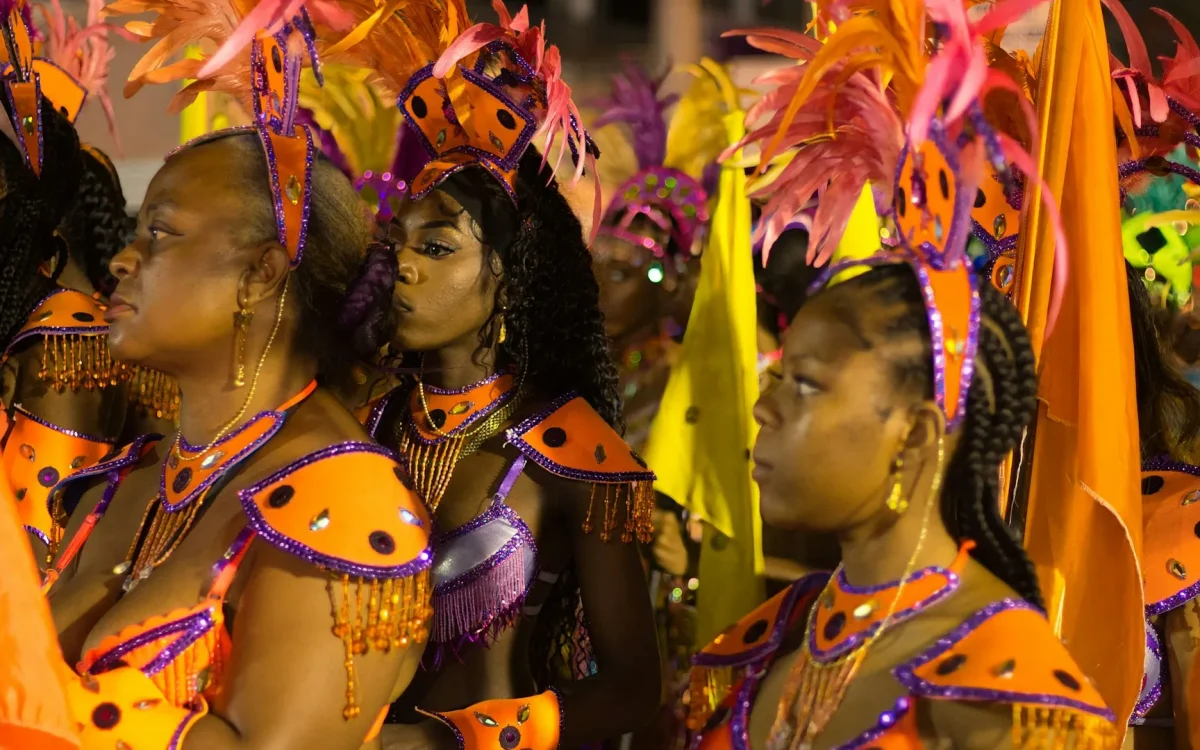
On Carnival Monday and Tuesday, masquerade bands, called mas bands, parade through Port of Spain. Each band has a theme, and its members wear costumes in sections, from elaborate feathered creations to simpler designs. Visitors can “play mas” by buying a costume from a band months in advance, which usually includes music trucks, drinks and security on the road. Carnival Tuesday is the main day, when bands cross judging stages and parade until evening.
Tobago
Tobago, Trinidad’s sister island, offers a quieter atmosphere and beautiful beaches. Some visitors combine Carnival in Trinidad with a few days of relaxation in Tobago afterwards.
Practical tips
Book flights and accommodation many months in advance, as Carnival is the busiest time of year. Buy fete tickets and mas costumes early, as popular events and bands sell out. Drink plenty of water, wear sunscreen and comfortable shoes and keep valuables secure. Pace yourself: Carnival is a marathon of celebrations.
A closer look: the Road March
Each year, soca artists compete to have their song named the Road March, the song played most often by bands as they cross the judging points on Carnival Tuesday. Following the competition between songs during fete season adds excitement to the build-up. By Carnival day, the most popular songs are everywhere.
Putting it into practice
Check next year’s Carnival dates, choose a mas band and plan your fete schedule. The Music Festival Trip Planner AI can build an itinerary, and our festival packing list will help you prepare. See also Rio Carnival.
Frequently asked questions
When is Trinidad Carnival?
On the Monday and Tuesday before Ash Wednesday, with weeks of events beforehand.
What is J’ouvert?
A pre-dawn street party that opens Carnival, with mud, paint and traditional characters.
What does “playing mas” mean?
Joining a masquerade band in costume to parade on Carnival Monday and Tuesday.

Questions and notes