The Fès Festival of World Sacred Music
Each spring, the ancient Moroccan city of Fès hosts a festival of sacred music from many faiths and cultures. Its origins, the historic venues, Sufi nights in the medina, the music you may hear and practical tips for visiting one of the world's oldest medieval cities.
In this guide
In the ancient city of Fès, Morocco, a festival has brought together sacred music from around the world for three decades. Sufi singers from Morocco share the festival with Christian choirs, Jewish cantors, Indian devotional musicians, Buddhist monks and many others, performing in palace courtyards, gardens and historic squares. The Fès Festival of World Sacred Music is one of the most unusual and moving music festivals anywhere. This guide explains its history, its music and how to plan a visit.
Origins
The Fès Festival of World Sacred Music was founded in 1994, partly in response to the tensions of the Gulf War, with the aim of promoting dialogue and understanding between cultures and religions through music. It was conceived by the Moroccan scholar Faouzi Skali and has been held most years since, usually in late May or June. The festival’s spirit of openness and exchange has made it a model for other cultural events.
A city of history
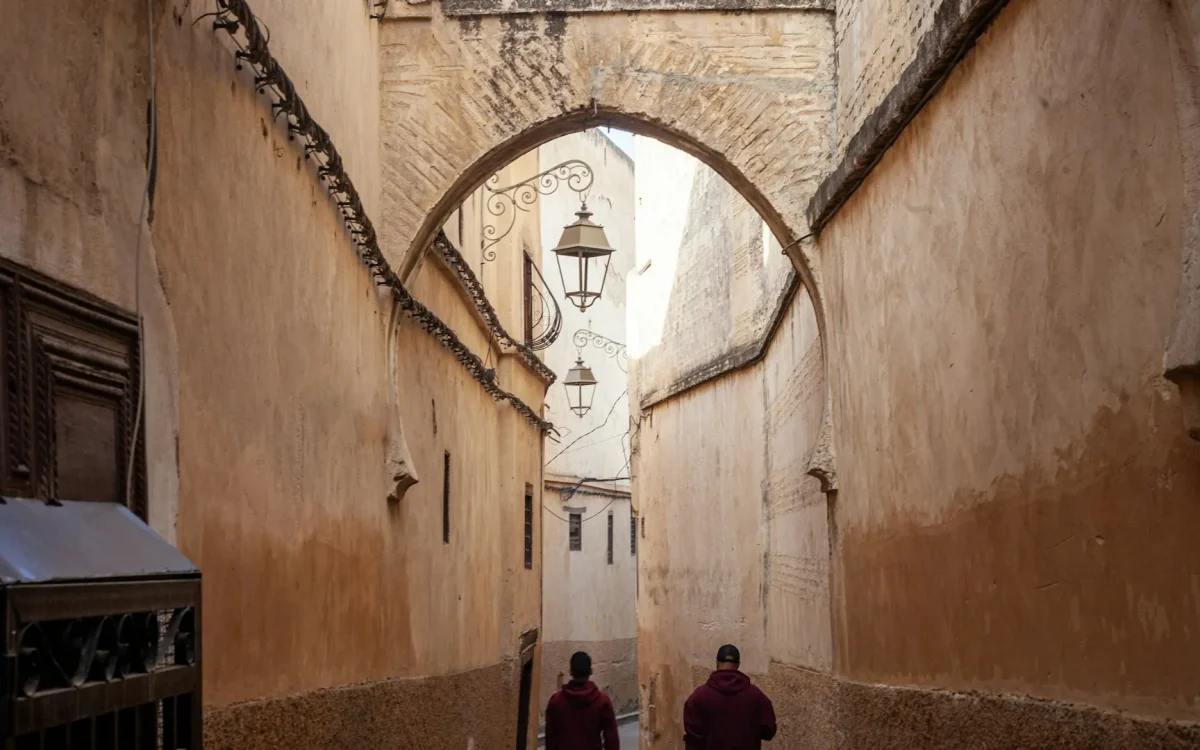
Fès is one of the oldest cities in Morocco, founded in the late eighth and early ninth centuries. Its old medina, Fès el-Bali, is one of the largest car-free urban areas in the world, a maze of narrow streets, markets, mosques, madrasas and workshops, recognised as a UNESCO World Heritage Site. The University of al-Qarawiyyin, founded in 859, is often described as one of the oldest continuously operating educational institutions in the world. Fès has long been a centre of learning, religion and Andalusian music. See Andalusian music.
The venues
| Venue type | Atmosphere |
|---|---|
| Bab al-Makina | A vast historic courtyard for major evening concerts |
| Palace and museum gardens | Intimate afternoon concerts under ancient trees |
| Riads and medina venues | Late-night Sufi gatherings |
| Public squares | Free concerts for local audiences |
Bab al-Makina, a vast courtyard near the royal palace, hosts the festival’s largest evening concerts. Garden venues offer more intimate afternoon performances. Venues may vary from year to year, so check the current programme.
Sufi nights
One of the festival’s highlights is its Sufi nights, gatherings of Moroccan Sufi brotherhoods held late at night in the medina. Groups such as the Aissawa and Hamadsha perform devotional songs, chants and rhythms that can build to great intensity. Attending a Sufi night offers a glimpse of the living spiritual traditions of Morocco. See Sufi music.
The music
The festival programme typically includes Moroccan traditions such as Andalusian music, Sufi chant, Gnawa and Amazigh (Berber) music, alongside sacred and spiritual music from across the world: Christian choral music, Jewish liturgical song, Hindu devotional music, Buddhist chant, gospel, qawwali and more. Some concerts present unexpected collaborations between musicians of different traditions. See Gnawa music and qawwali.
Free concerts
Alongside ticketed concerts, the festival often presents free concerts in public squares, attracting large local crowds. These concerts often feature popular Moroccan and Arab artists and offer a festive atmosphere very different from the contemplative evening concerts.
When to go
The festival usually lasts about a week, in late May or June. Temperatures in Fès can be hot during the day, so evening concerts are often the most comfortable. Check the official festival website for dates and programmes, which are usually announced a few months in advance.
Where to stay
Many visitors stay in riads, traditional houses built around a central courtyard, often converted into guesthouses within the medina. Staying in a riad offers a peaceful and atmospheric base. Book early, as accommodation fills up during the festival. The newer parts of the city also offer hotels.
Exploring the medina
Fès el-Bali can be confusing for first-time visitors. Consider hiring an official guide for your first day to get oriented. Visit the famous tanneries, the medersas with their exquisite tilework and carved wood and the markets selling crafts, spices and textiles. The medina’s sounds, from calls to prayer to craftsmen’s hammers, are part of its charm.
Etiquette
Morocco is a Muslim country, and Fès is a conservative city. Dress modestly, covering shoulders and knees. Non-Muslims may not enter most mosques. Ask permission before photographing people, and be respectful during performances of sacred music, which may be deeply meaningful to performers and audiences.
A closer look: listening across traditions
At the Fès festival, you may hear a Sufi chant and a Christian hymn on the same day. Notice what they share: repetition, devotion, the use of the voice to express longing and praise. This shared spirit is at the heart of the festival’s mission. Listening across traditions can be a profound experience.
Putting it into practice
Check the dates of the next festival, book a riad and plan time to explore the medina. The Music Festival Trip Planner AI can build an itinerary, the Music Travel Phrasebook AI can teach you useful Arabic and French phrases and the Music Culture Storyteller AI can tell you about Fès’s history.
Frequently asked questions
When is the Fès Festival of World Sacred Music?
Usually in late May or June, for about a week; check current dates.
What music is played at the festival?
Sacred and spiritual music from many traditions, including Sufi, Andalusian, Christian, Jewish and Indian music.
Where should I stay in Fès?
A riad in the medina offers an atmospheric base; book early during the festival.

Questions and notes