The Chennai Music Season: India’s Classical Marathon
Every December and January, Chennai hosts one of the largest classical music festivals in the world, with thousands of Carnatic concerts and dance performances. How the season works, the sabhas, the Music Academy, concert structure, canteens and practical tips.
In this guide
Each year in December and January, the South Indian city of Chennai becomes the scene of one of the largest classical music festivals in the world. Known as the December Season or Margazhi season, it presents thousands of concerts of Carnatic music and performances of classical dance, organised by dozens of cultural associations across the city. For lovers of Indian classical music, it is an unparalleled experience. This guide explains how the season works and how to enjoy it.
The Margazhi season
The season takes place mainly during the Tamil month of Margazhi, which runs from mid-December to mid-January, a month traditionally associated with devotion. The weather in Chennai is relatively cool and pleasant at this time of year. From morning until late evening, concerts are held in halls across the city, and music lovers move from venue to venue. See Carnatic music.
The Music Academy
The Madras Music Academy, founded in 1928, is one of the most prestigious organisations of the season. Each year, it holds an annual conference with lecture demonstrations by scholars and musicians in the mornings and concerts in the afternoons and evenings. The Academy awards the title Sangita Kalanidhi, one of the highest honours in Carnatic music, to a distinguished musician who presides over the conference.
The sabhas
Concerts are organised by sabhas, cultural associations, many of which have their own halls in neighbourhoods such as Mylapore, T. Nagar and Alwarpet. Each sabha presents its own programme of concerts during the season, ranging from established stars to young talents. Some concerts are free, while others require tickets or season passes. Programmes are published in newspapers and online in the weeks before the season.
| Time slot | Typical performers | Cost |
|---|---|---|
| Morning | Young and upcoming artists, lecture demonstrations | Often free |
| Afternoon | Rising and mid-career musicians | Free or inexpensive |
| Evening (prime time) | Leading stars of Carnatic music | Tickets often required |
| Dance programmes | Bharatanatyam and other classical dancers | Varies |
Young artists and stars
The season is a showcase for musicians at every stage of their careers. Young artists perform in morning and afternoon slots, hoping to impress audiences and critics and earn better slots in future years. Established stars perform in the prime evening slots, often to packed halls. Discovering a young musician in a morning concert is one of the joys of the season.
Dance
Classical dance, especially Bharatanatyam, the classical dance of Tamil Nadu, is an important part of the season. Many sabhas present dance programmes, often in the early part of the season. Bharatanatyam combines intricate footwork, expressive gestures and storytelling, accompanied by a Carnatic ensemble with singer, mridangam, violin or flute and a conductor who recites rhythmic syllables.
The structure of a concert
A typical Carnatic concert lasts two to three hours. It often begins with a varnam, a composition that warms up the musicians, followed by kritis, the main compositions, in different ragas and talas. The centrepiece may be a ragam-tanam-pallavi, an elaborate improvisation, or a major kriti with extensive improvisation, followed by a tani avartanam, a percussion solo. The concert usually ends with lighter pieces and a closing piece called mangalam.
Keeping the tala
Many audience members keep the tala, the rhythmic cycle, with their hands, clapping and counting with their fingers. This is a sign of engagement, and visitors are welcome to join in if they know the pattern. Audiences also express appreciation with exclamations and applause after impressive passages.
Sabha canteens
An essential part of the season is the sabha canteens, temporary food stalls run by caterers at concert venues, serving South Indian dishes such as dosa, idli, vada and filter coffee, as well as festive specialities. Food lovers often plan their day around the canteens, and some have become famous in their own right.
Mylapore and beyond
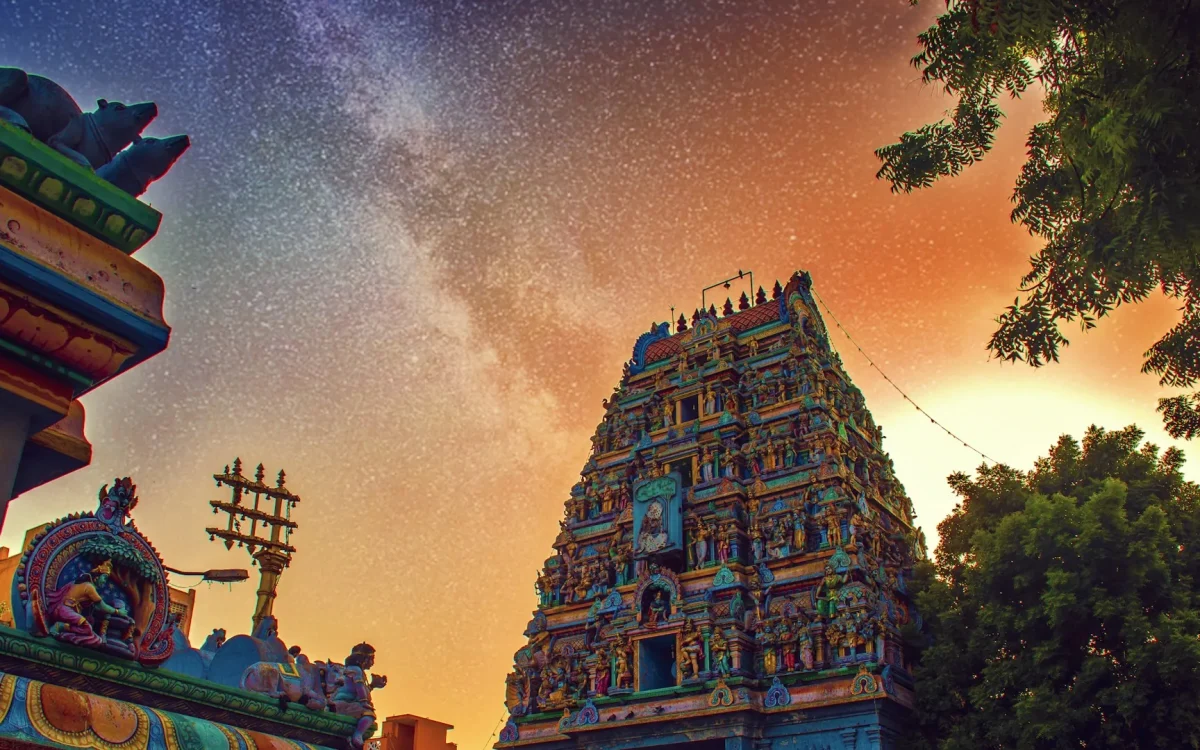
Mylapore, one of Chennai’s oldest neighbourhoods, is a hub of the season, with several major sabhas and the Kapaleeshwarar Temple. During Margazhi, women draw elaborate kolams, decorative patterns made from rice powder, in front of their homes in the early morning. Walking through Mylapore in the morning is a lovely way to experience the season’s atmosphere.
Practical tips
Study the programmes in advance and plan your days, but leave room for spontaneous choices. For popular concerts, arrive early to find a seat. Dress modestly and comfortably; traditional clothing is common but not required. Carry water and be prepared for crowded halls. Book accommodation early, as the season attracts visitors from across India and abroad.
A closer look: the Thyagaraja Aradhana
Many music lovers combine the season with a visit to Thiruvaiyaru, near Thanjavur, for the Thyagaraja Aradhana, an annual festival honouring the composer Tyagaraja, held in January. Hundreds of musicians gather to sing his compositions together on the banks of the Kaveri River, in a moving tribute to one of the greatest composers of Carnatic music.
Putting it into practice
Before your trip, listen to recordings of leading Carnatic musicians and learn to keep adi tala. The Music Festival Trip Planner AI can help plan your visit, and the World Music Genre Explorer AI can explain the ragas you will hear. See also Indian classical music.
Frequently asked questions
When is the Chennai Music Season?
Mainly from mid-December to mid-January, during the Tamil month of Margazhi.
Are concerts free?
Many morning and afternoon concerts are free; evening concerts by stars often require tickets.
What is a sabha?
A cultural association that organises concerts, often with its own hall.


Questions and notes