Carnatic Music: The Classical Tradition of South India
Carnatic music is South India's classical tradition, centred on song, devotion and dazzling improvisation. The Trinity of composers, the melakarta system, the kriti, the instruments of the stage and the great Chennai music season.
In this guide
In the concert halls of Chennai, Bengaluru and other South Indian cities, audiences gather to hear singers and instrumentalists perform Carnatic music, the classical tradition of South India. The music is richly ornamented, deeply devotional and rhythmically intricate, with listeners often keeping the tala with their hands as they follow the performance. Carnatic music shares the concepts of raga and tala with the northern Hindustani tradition, but it has its own history, repertoire and style. This guide introduces its main features.
A song-centred tradition
Carnatic music is fundamentally vocal. Even when instruments play, they usually perform songs and imitate the voice, and instrumentalists are expected to know the words of the compositions they play. Most of the repertoire consists of devotional compositions, written in Telugu, Sanskrit, Tamil and Kannada, praising Hindu deities. Performances combine these fixed compositions with improvised sections, giving the music both structure and freedom.
Purandara Dasa
Purandara Dasa, a fifteenth- and sixteenth-century composer and saint from what is now Karnataka, is often called the father of Carnatic music. He composed thousands of devotional songs and developed a systematic set of exercises for teaching music, which students still learn today. These exercises, starting with simple scales and patterns, form the foundation of Carnatic training.
The Trinity
Three composers who lived in the eighteenth and early nineteenth centuries are known as the Trinity of Carnatic music: Tyagaraja, Muthuswami Dikshitar and Syama Sastri. All three lived in the region of Thanjavur in Tamil Nadu. Tyagaraja, whose compositions in Telugu are deeply devotional and emotionally expressive, is especially revered, and a festival in his honour is held each year at Thiruvaiyaru, where musicians sing his works together. Dikshitar’s compositions, mostly in Sanskrit, are known for their scholarly depth, and Syama Sastri’s for their rhythmic subtlety.
The melakarta system
Carnatic music organises its ragas through the melakarta system, a set of 72 parent scales that contain all seven notes in ascending and descending order. This system, formalised in the seventeenth century, allows every raga to be classified as a parent raga or a derived raga. Derived ragas may omit notes, use them in a zigzag order or add special phrases. Hundreds of ragas are in use today.
| Concept | Meaning |
|---|---|
| Melakarta | One of 72 parent scales |
| Janya raga | A raga derived from a melakarta |
| Gamaka | Ornamentation: oscillations, slides and inflections of notes |
| Kriti | The main composition form |
| Adi tala | The most common tala, of eight beats |
Gamakas
One of the most distinctive features of Carnatic music is the use of gamakas, ornaments that make notes oscillate, slide or bend. In many ragas, notes are rarely held still; they are shaped with gamakas that give the raga its identity. The same notes played without gamakas can sound like a different raga. Learning the correct gamakas is one of the most challenging parts of Carnatic training.
The kriti
The kriti is the main form of composition in Carnatic music. It usually has three sections: the pallavi, a refrain; the anupallavi, a second section; and the charanam, one or more verses. Singers and instrumentalists perform the kriti and may add improvisations on particular lines, such as neraval, where a single line of text is varied melodically, and kalpanaswaram, improvised passages sung with note names.
Improvisation
Carnatic music has several forms of improvisation, collectively called manodharma. Alapana is a free, unmetered exploration of a raga, similar to the Hindustani alap. Tanam is a rhythmic improvisation without a tala. The ragam-tanam-pallavi, often the centrepiece of a concert, combines alapana, tanam and an elaborate improvisation on a single line of text. These forms test the musicians’ skill and creativity.
Instruments of the Carnatic stage
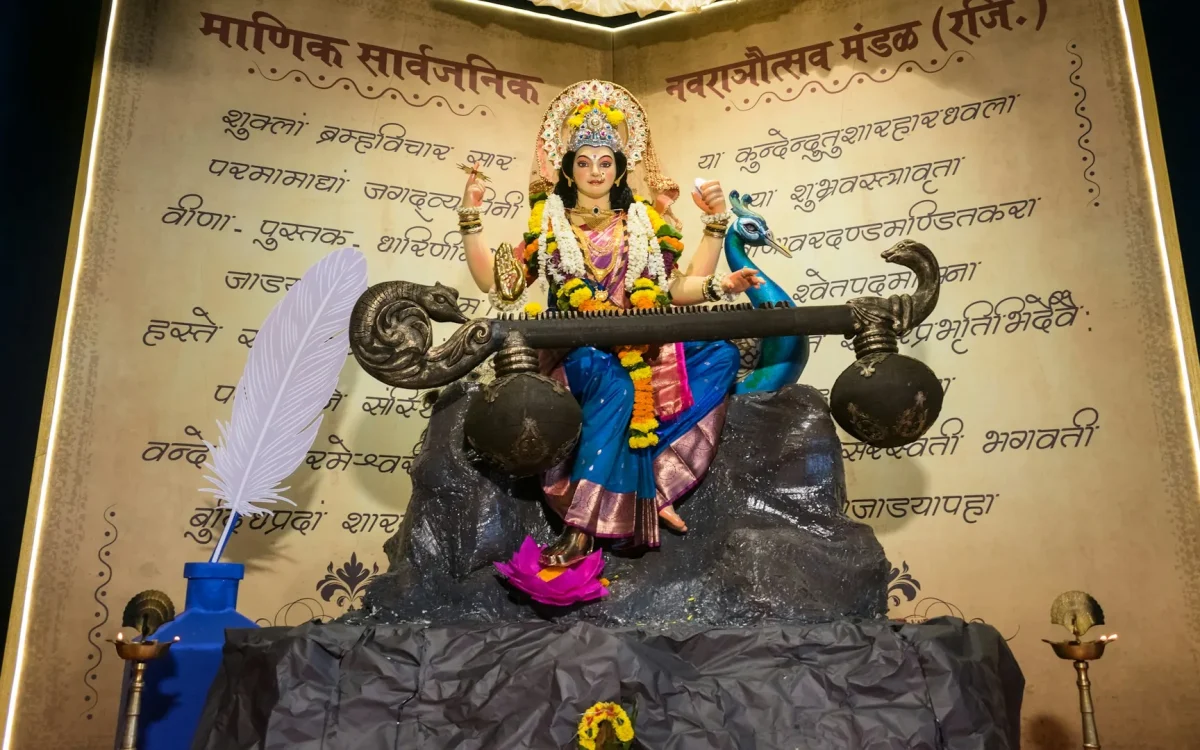
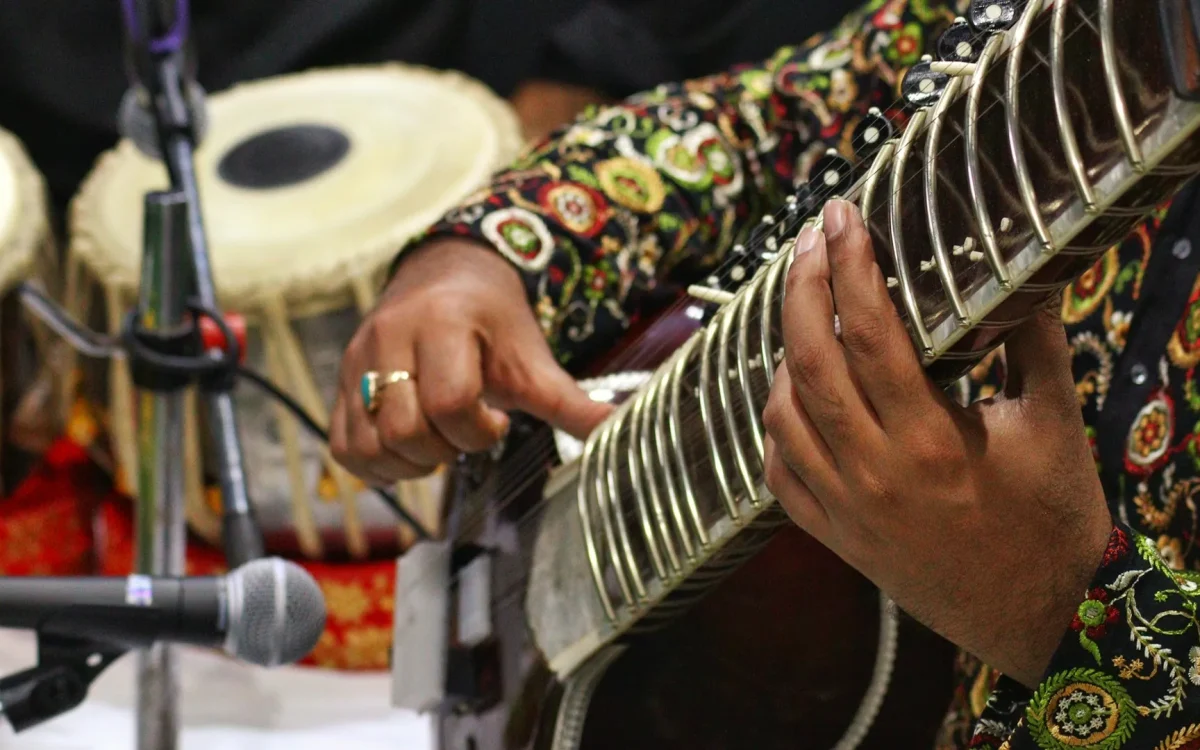
A typical Carnatic concert features a lead singer accompanied by violin, mridangam and often ghatam or kanjira. The violin, introduced to South India in the eighteenth and nineteenth centuries, was adapted to Carnatic style and is played sitting down, resting between the chest and the foot. The veena, a large plucked string instrument associated with the goddess Saraswati, is the classic Carnatic string instrument. The mridangam is a double-headed barrel drum, the ghatam a clay pot played with the hands and fingers, and the kanjira a small frame drum. Percussionists perform a solo called tani avartanam during concerts.
M.S. Subbulakshmi
M.S. Subbulakshmi (1916–2004) was one of the most beloved Carnatic singers. Her devotional singing reached audiences across India and abroad, and she performed at the United Nations in 1966. She became the first musician to receive the Bharat Ratna, India’s highest civilian award, in 1998. Many other great singers and instrumentalists have shaped the tradition.
The Chennai music season
Every December and January, Chennai hosts the music season, when hundreds of concerts take place in sabhas (music organisations) across the city. It is one of the largest cultural festivals in the world, attracting performers and listeners from India and abroad. See the Chennai music season.
A closer look: keeping the tala
At a Carnatic concert, you will see audience members keeping the tala with their hands, clapping, tapping fingers and waving to mark each beat. For adi tala, the most common cycle of eight beats, the pattern is a clap followed by three finger counts, then a clap and wave, and a clap and wave. Learning this pattern helps you follow the rhythm and feel the music as the audience does.
Putting it into practice
Listen to a kriti by Tyagaraja sung by a well-known vocalist, then a veena recital and a mridangam solo. The World Music Genre Explorer AI can explain the differences between Carnatic and Hindustani music, and the Music Festival Trip Planner AI can help plan a visit to the Chennai season.
Frequently asked questions
What is the difference between Carnatic and Hindustani music?
Carnatic is South India’s song-centred tradition with its own ragas, forms and instruments; Hindustani is the northern tradition.
Who are the Carnatic Trinity?
Tyagaraja, Muthuswami Dikshitar and Syama Sastri.
What is a kriti?
The main Carnatic composition form, with pallavi, anupallavi and charanam sections.
Questions and notes