Sitar and Tabla: The Sound of Hindustani Music
The sitar and tabla are the most famous sounds of North Indian classical music. How the sitar's sympathetic strings and curved frets work, how the tabla's two drums speak in syllables, and the masters who took them worldwide.
In this guide
For many people around the world, the sound of Indian music is the shimmering, buzzing sitar accompanied by the crisp, singing tabla drums. This combination became famous in the West in the 1960s, when Ravi Shankar performed at rock festivals and George Harrison of the Beatles took up the sitar. But the sitar and tabla have a long history in Hindustani classical music, and each is a sophisticated instrument with its own techniques and traditions. This guide explains how they work and how they play together.
The sitar
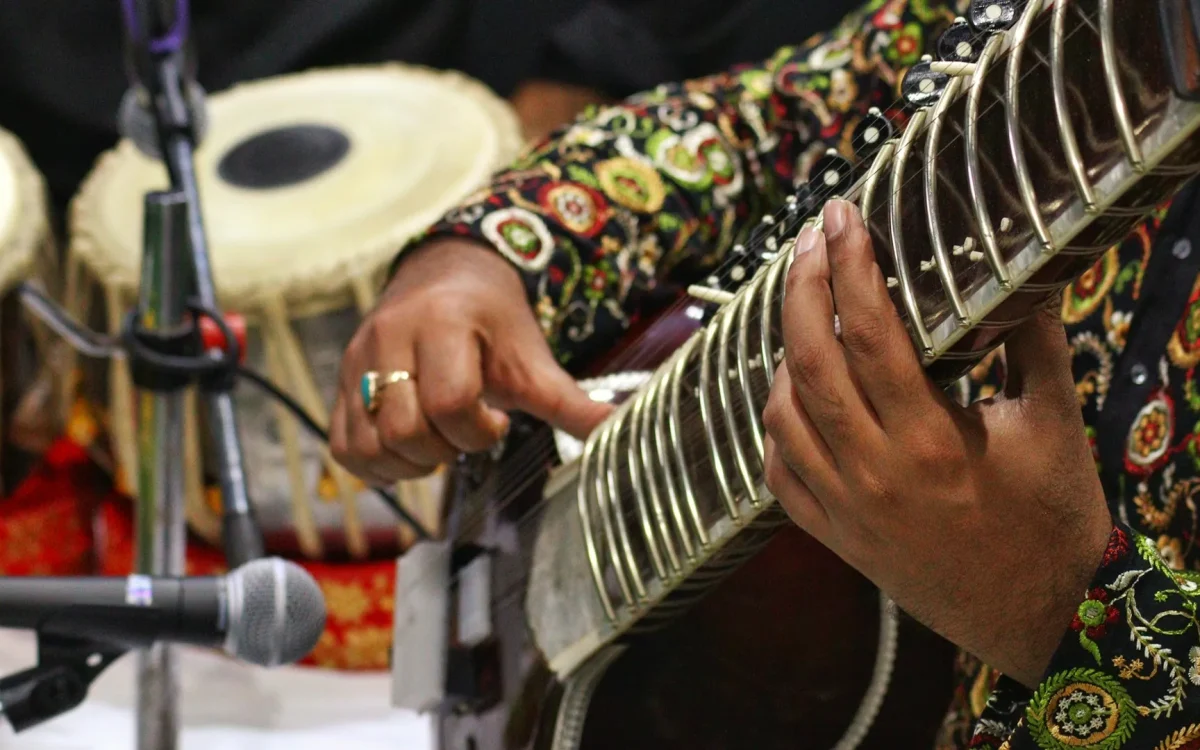
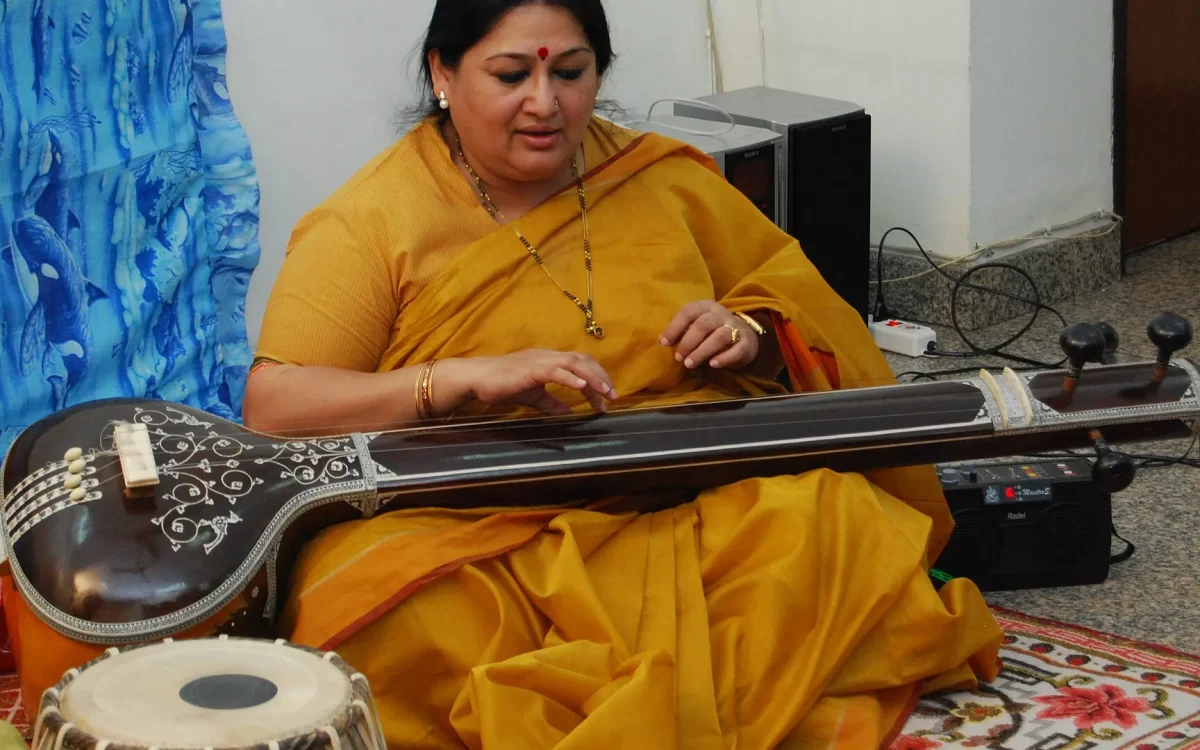
The sitar is a long-necked plucked string instrument. Its body is usually made from a large dried gourd, attached to a long, hollow wooden neck. Many sitars have a second, smaller gourd near the top of the neck that adds resonance. A typical sitar has around 18 to 21 strings: six or seven main strings that run over curved metal frets and are played directly, and eleven to thirteen sympathetic strings that run beneath the frets and are not usually plucked.
Sympathetic strings
The sympathetic strings, called taraf, are tuned to the notes of the raga being played. When the player plucks a main string, the sympathetic strings tuned to the same or related pitches vibrate on their own, adding a shimmering halo of resonance to every note. Before a performance, sitar players spend time retuning these strings for each raga, which is part of what gives each performance its unique colour.
Frets and bending
The sitar’s frets are curved and movable, tied to the neck so they can be adjusted for different ragas. Because the frets are high and curved, the player can pull the string sideways across the fret to raise the pitch smoothly, sometimes by several notes. This technique, called meend, lets the sitar imitate the gliding, ornamented style of Indian singing. Skilled players produce long, expressive glides that are central to the sitar’s sound.
The jawari bridge
The characteristic buzzing tone of the sitar comes from its bridge, called jawari. The bridge has a wide, gently curved surface, and the strings brush against it as they vibrate, producing a rich sound full of overtones. Adjusting the jawari is a delicate craft, and sitar players are very particular about it. The player plucks the strings with a wire plectrum called a mizrab, worn on the index finger of the right hand.
| Part | Function |
|---|---|
| Gourd body | Main resonating chamber |
| Main strings | Melody and drone strings played directly |
| Taraf | Sympathetic strings tuned to the raga |
| Curved frets | Movable; allow meend bending |
| Jawari | Broad bridge that creates the buzzing tone |
| Mizrab | Wire plectrum worn on the finger |
The tabla
The tabla is a pair of hand drums. The smaller, right-hand drum, called the dayan, is made of wood and tuned to a specific pitch, usually the tonic of the raga. The larger, left-hand drum, called the bayan, is made of metal or clay and produces deep bass sounds. Each drum has a black circle on its head, called syahi, made from a paste that includes iron filings, which gives the tabla its clear, ringing tone. By pressing the heel of the hand into the bayan’s head, the player can bend its pitch up and down.
Bols: the language of tabla
Tabla players learn and communicate rhythms using spoken syllables called bols, such as dha, dhin, na, ti, te, ge and ka. Each bol corresponds to a particular stroke or combination of strokes. Students recite compositions before playing them, and tabla players often recite bols in concert to show the composition. A basic pattern that defines a tala, called theka, is played to accompany a soloist. See raga and tala.
How sitar and tabla play together
In a typical performance, the sitar player begins alone with the alap, exploring the raga without rhythm. When the composition begins, the tabla joins, playing the theka of the chosen tala. As the performance develops, the musicians engage in a dialogue: the sitar player improvises phrases, and the tabla player responds with variations, sometimes imitating the sitar’s rhythms. Moments of call and response, called sawal-jawab (“question and answer”), and dramatic landings on sam delight audiences.
Ravi Shankar and the world
Ravi Shankar (1920–2012) became the most famous sitar player in the world. He toured internationally from the 1950s, collaborated with the violinist Yehudi Menuhin and performed at the Monterey Pop Festival in 1967 and Woodstock in 1969. George Harrison played sitar on the Beatles’ “Norwegian Wood” in 1965 and studied with Shankar. Other great sitar players include Vilayat Khan, known for his singing style, and Shankar’s daughter Anoushka Shankar, who continues the tradition and explores new fusions.
Zakir Hussain and the tabla masters
Zakir Hussain (1951–2024), son of the tabla master Alla Rakha, who accompanied Ravi Shankar, became the world’s best-known tabla player. He performed classical music with leading artists and collaborated with musicians from jazz, rock and world music, including the fusion group Shakti. His virtuosity and charisma brought the tabla to new audiences. Tabla playing has several gharanas, schools with distinctive techniques and repertoires.
A closer look: the sound of resonance
Listen closely to a sitar recording in a quiet room. After each plucked note, you will hear a faint shimmer continuing, which is the sympathetic strings. Then listen for the meend glides, where the pitch slides smoothly. On the tabla, listen for the deep bass of the bayan bending in pitch, a sound almost like a voice. These details make the instruments so expressive.
Putting it into practice
Listen to a Ravi Shankar recording with tabla, then a Zakir Hussain tabla solo, and notice how each instrument shapes the music. The Instrument Origins Guide AI can tell you more about how they are built, and our article on how the sitar works goes deeper into its acoustics.
Frequently asked questions
How many strings does a sitar have?
Usually 18 to 21, including six or seven main strings and eleven to thirteen sympathetic strings.
What are tabla bols?
Spoken syllables, such as dha and dhin, that represent tabla strokes.
Who made the sitar famous worldwide?
Ravi Shankar, who toured internationally and influenced George Harrison and many others.


Questions and notes