Pacific Island Music: Polynesian Song, Log Drums and Harmony
Across the vast Pacific, island cultures created powerful drumming, dance and choral singing. Tahitian log drums, Māori haka and waiata, Tongan lakalaka, Solomon Islands panpipes, church harmonies and today's island pop.
In this guide
The Pacific Ocean covers a third of the Earth’s surface, scattered with thousands of islands whose peoples developed rich musical traditions. Across Polynesia, Melanesia and Micronesia, music is closely connected with dance, storytelling, genealogy and community. You can hear thunderous log drums in Tahiti and the Cook Islands, the powerful haka of the Māori, the elegant group dances of Tonga and Samoa, bamboo panpipe ensembles in the Solomon Islands and some of the world’s most beautiful church harmony singing. This guide offers an introduction to this vast musical region.
Three regions
| Region | Examples | Musical highlights |
|---|---|---|
| Polynesia | Hawaii, Tahiti, Samoa, Tonga, Cook Islands, Aotearoa New Zealand | Log drums, group dance songs, haka, choral singing |
| Melanesia | Fiji, Papua New Guinea, Solomon Islands, Vanuatu | Panpipes, slit drums, meke dance, string bands |
| Micronesia | Guam, Palau, Kiribati, Federated States of Micronesia | Chanted songs, stick dances, sitting dances |
Each island group has its own languages, traditions and styles, and the categories above are broad generalisations. See also Hawaiian music.
Log drums of Tahiti and the Cook Islands
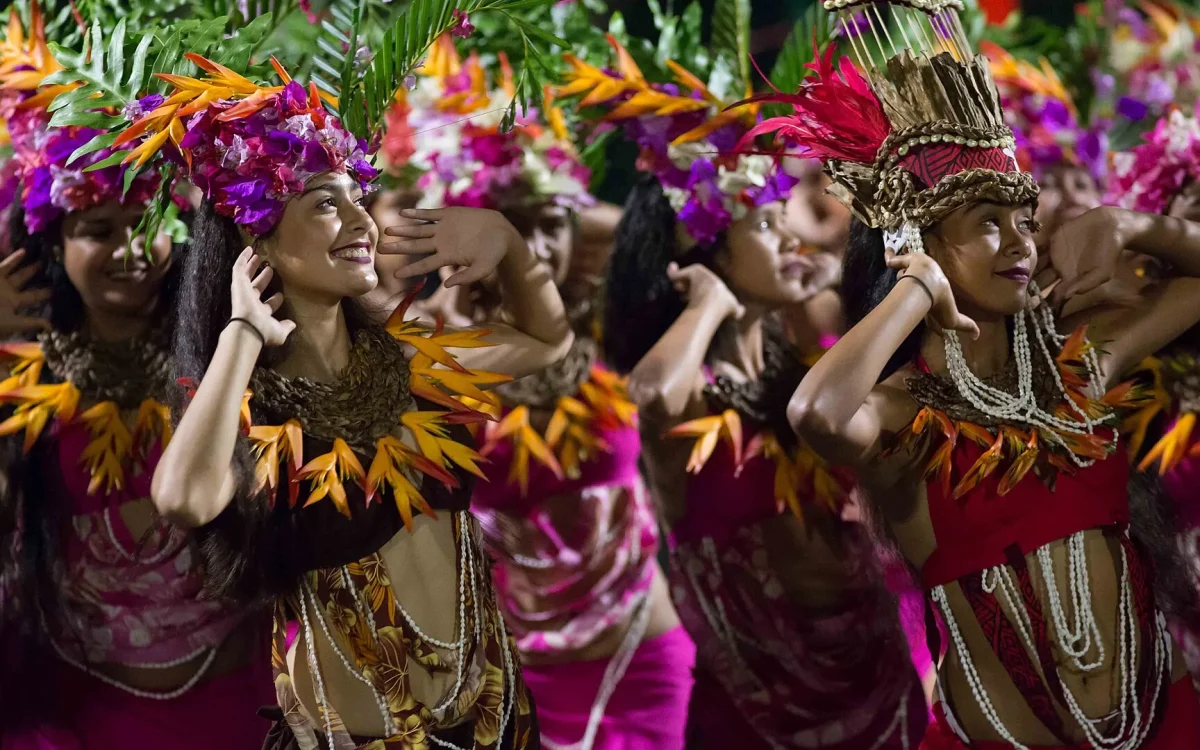
In French Polynesia and the Cook Islands, wooden slit drums, called to’ere in Tahiti and pate in the Cook Islands, are carved from hollowed logs with a long slit and struck with sticks. Played in ensembles with larger skin drums, they produce fast, intricate, thunderous rhythms that accompany energetic dances. The Tahitian ‘ōte’a, a dance with rapid hip movements, is performed to these drums. Every July, the Heiva festival in Papeete brings together dance groups and musicians from across French Polynesia for competitions and celebrations.
Māori music: haka and waiata
In Aotearoa New Zealand, the Māori have a rich tradition of song and dance. The haka is a posture dance performed with chanting, stamping, facial expressions and rhythmic movement, traditionally used to welcome guests, mark important occasions and prepare for challenges. The most famous haka, “Ka Mate”, composed in the early nineteenth century by the chief Te Rauparaha, is performed by New Zealand’s rugby team. Waiata are songs, ranging from laments to love songs and songs recording history. Kapa haka, the performing art combining song and dance, is celebrated at the national Te Matatini festival.
Taonga pūoro
Māori traditional instruments, called taonga pūoro, include flutes made of wood, bone and stone, such as the kōauau, gourd instruments and spinning instruments that produce humming sounds. Many of these instruments fell out of use after colonisation, but from the late twentieth century, researchers and musicians, notably Hirini Melbourne and Richard Nunns, revived them, and they are now used in contemporary music and film.
Samoa and Tonga
In Samoa, the siva is a graceful dance often performed by women, and the fa’ataupati, or slap dance, is a vigorous men’s dance in which performers slap their bodies in rhythm. In Tonga, the lakalaka is a large group dance in which men and women stand in rows and perform coordinated arm movements while singing poetry, often composed for special occasions. The lakalaka was recognised by UNESCO as Intangible Cultural Heritage. Samoa and Tonga both have strong traditions of choral singing.
Melanesian panpipes and percussion
In the Solomon Islands, ensembles of bamboo panpipes play interlocking melodies, with different players covering different notes. The ‘Are’are people of Malaita are particularly known for their panpipe music. In Vanuatu, slit drums standing upright can be several metres tall and are carved with faces representing ancestors. Women in parts of Vanuatu perform water music, slapping and scooping the surface of the sea or river to create rhythms. In Fiji, the meke combines dance, song and storytelling, performed by men and women.
Church harmony
Missionaries arrived in the Pacific in the nineteenth century, and Christian hymns were adopted and transformed by island communities. Pacific church choirs became famous for their powerful, richly harmonised singing, often unaccompanied, with distinctive vocal styles. In the Cook Islands, the imene tuki style features rhythmic grunts and calls alongside harmony. Sunday services in Tonga, Samoa and other islands offer extraordinary choral music.
String bands and island pop
In the twentieth century, guitars and ukuleles spread across the Pacific, and string bands became popular in many islands, playing songs for dances and parties. Later, reggae became hugely popular in the Pacific, inspiring a style known as island reggae, which blends reggae rhythms with Pacific melodies and harmonies. The group Te Vaka, led by Opetaia Foa’i, became known for combining Pacific drumming and languages with modern production, and Foa’i co-wrote songs for the 2016 animated film Moana. See reggae.
The Festival of Pacific Arts
Since 1972, the Festival of Pacific Arts, held every four years in a different Pacific nation, has brought together performers from across the region to share music, dance and culture. It is one of the best opportunities to experience the variety of Pacific music in one place.
A closer look: the role of dance
In most Pacific traditions, music and dance are inseparable, and many songs tell stories through gestures. In Polynesian dances, the hands often depict elements of the story, such as waves, birds or people. When you watch a performance, try to follow the hand movements as well as the music: they are part of the meaning.
Putting it into practice
Watch a Tahitian drum dance from the Heiva, a Māori kapa haka performance and a Pacific church choir, and compare them. The Music Culture Storyteller AI can tell you more about Pacific traditions, and the Music Festival Trip Planner AI can help plan a trip around a Pacific festival.
Frequently asked questions
What is a to’ere?
A Tahitian slit drum carved from a hollowed log, used in fast drum ensembles.
What is a haka?
A Māori posture dance with chanting, stamping and expressive movement.
Why are Pacific choirs famous?
Island communities transformed missionary hymns into powerful, richly harmonised singing styles.
Questions and notes