Reggae: Roots, Rhythm and Message
Reggae grew from ska and rocksteady in late-1960s Jamaica and carried a message of resistance and spirituality around the world. How the rhythm works, the key artists, dub, dancehall and how to start listening.
In this guide
Reggae is one of the world’s most influential musical styles. Its laid-back rhythm, deep bass lines and messages of love, resistance and spirituality spread from Jamaica to every corner of the globe. Reggae shaped hip-hop, punk, pop and electronic music, and its icons are recognised worldwide. In 2018, UNESCO added the reggae music of Jamaica to its list of the Intangible Cultural Heritage of Humanity. This guide explains where reggae came from, how its rhythm works and how to explore it.
Before reggae: mento, ska and rocksteady
Jamaican popular music developed through several stages. Mento, a rural folk style with banjo, guitar and rumba box, was popular in the early twentieth century. In the late 1950s and early 1960s, ska emerged, combining Jamaican rhythms with American rhythm and blues and jazz. Ska was fast and energetic, with horns and a strong off-beat guitar. Around 1966, the tempo slowed and the bass became more prominent, creating rocksteady, a smoother, soulful style. By the late 1960s, rocksteady evolved into reggae, with an even more relaxed tempo and a new rhythmic feel. The Toots and the Maytals song “Do the Reggay” (1968) is often cited as one of the first to use the word.
How the reggae rhythm works
Reggae’s rhythm has a distinctive feel built from a few key elements.
| Element | What it does |
|---|---|
| Skank | Guitar or keyboard chords on the off-beats (2 and 4, or the “and”s) |
| One drop | Drum pattern with the main accent on the third beat, leaving beat one empty |
| Bass | Deep, melodic lines that are often the main hook |
| Organ bubble | Keyboard pattern adding a rolling rhythm |
| Space | Room between the notes, giving a relaxed groove |
The “one drop” pattern, where the bass drum and snare land together on the third beat, is one of reggae’s signatures. Other drum styles, such as rockers and steppers, add more drive.
Rastafari and the message
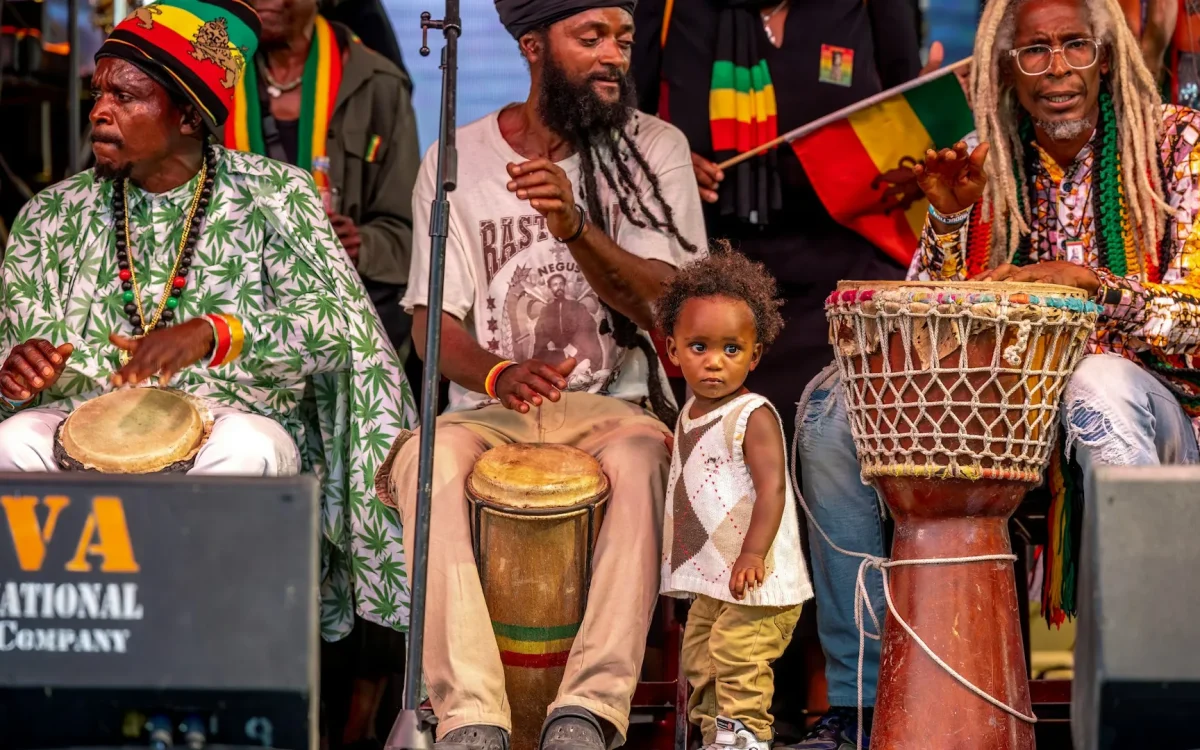
Many reggae artists were influenced by Rastafari, a spiritual movement that arose in Jamaica in the 1930s, which emphasises African identity, the rejection of oppression (“Babylon”) and spiritual devotion. Reggae lyrics often address social justice, poverty, peace, love and faith. This combination of music and message gave reggae its power and helped it become a voice for people around the world.
Bob Marley and the international breakthrough
Bob Marley, with the Wailers, became reggae’s most famous ambassador in the 1970s. Albums released internationally by Island Records brought reggae to rock audiences, and songs about love, unity and struggle made Marley a global icon. Other members of the original Wailers, Peter Tosh and Bunny Wailer, also had important careers. Artists such as Jimmy Cliff, Toots and the Maytals, Burning Spear and Gregory Isaacs helped make the 1970s a golden era of reggae.
Dub: the producer’s art
Dub emerged in the late 1960s and 1970s when producers and engineers began creating instrumental remixes of reggae songs, stripping them down to drums and bass and adding echo, reverb and dramatic effects. Engineers such as King Tubby and producers like Lee “Scratch” Perry turned the mixing desk into an instrument. Dub’s ideas, including remixing and the version B-side, deeply influenced hip-hop, electronic music and modern production.
Dancehall and beyond
In the late 1970s and 1980s, dancehall emerged in Jamaica, with DJs (vocalists) chatting and singing over riddims, often digital from the mid-1980s. Dancehall’s energy and sound-system culture influenced hip-hop and later reggaeton. Today, reggae and dancehall continue to evolve in Jamaica and in scenes across Africa, Europe, Latin America and the Pacific.
A closer look: the riddim system
In Jamaican music, a riddim is an instrumental track that many different singers can use for their own songs. A popular riddim might be voiced by dozens of artists, each adding their own lyrics and melody. This collaborative approach, rooted in sound-system culture, means that listeners often recognise a riddim instantly and enjoy hearing how different artists interpret it. Exploring “riddim albums” is a fascinating way to understand how Jamaican music works.
Putting it into practice
Listen to a ska track, a rocksteady track and a roots reggae track in a row, and notice how the tempo slows and the bass grows. Then listen to a dub version of a reggae song and focus on the effects. Clap the skank on the off-beats while tapping your foot on the beat. The Global Playlist Curator AI can build a reggae history playlist, and the World Rhythm Coach AI can explain the one drop in detail.
Frequently asked questions
What is the difference between ska and reggae?
Ska is faster and more upbeat. Reggae is slower, with heavier bass and a more relaxed groove.
What is dub?
A style of remixing reggae that strips songs to drums and bass and adds echo and effects.
Is reggae still popular in Jamaica?
Yes, alongside dancehall, and it remains central to Jamaican culture.
Questions and notes