Latin Jazz: Where Cuba Meets New York
Latin jazz was born when Afro-Cuban rhythms met New York jazz in the 1940s. The pioneers, the landmark meeting of Dizzy Gillespie and Chano Pozo, the great bandleaders and the Brazilian branch of the family.
In this guide
Latin jazz is one of the most exciting meeting points in music history. When the improvisation and harmony of jazz encountered the powerful rhythms of Cuba, a new sound was born, full of energy, complexity and joy. From the big bands of 1940s New York to the virtuoso combos of Havana and the bossa nova of Brazil, Latin jazz has produced some of the most thrilling music of the twentieth century. This guide introduces its history, key figures and sounds.
Early connections
Connections between Latin music and jazz go back to jazz’s beginnings in New Orleans, a port city with strong ties to the Caribbean. The jazz pioneer Jelly Roll Morton spoke of the “Spanish tinge” in early jazz, referring to rhythms like the habanera. But Latin jazz as a distinct style took shape in New York in the 1940s, when Cuban musicians and American jazz players began working together intensively.
Machito and Mario Bauzá
The band Machito and his Afro-Cubans, led by the singer Machito (Frank Grillo) with the trumpeter and musical director Mario Bauzá, was central to the birth of Afro-Cuban jazz in the 1940s. Bauzá had played in American swing bands and wanted to combine jazz harmony and arranging with Cuban rhythm. The band’s 1943 recording “Tanga” is often cited as one of the first true Afro-Cuban jazz pieces.
Dizzy Gillespie and Chano Pozo
In 1947, the bebop trumpeter Dizzy Gillespie hired the Cuban conga player and composer Chano Pozo for his big band, a meeting that became legendary. Together they created pieces such as “Manteca” and “Cubana Be, Cubana Bop”, which combined bebop with Afro-Cuban rhythms and chants. Gillespie became one of the great champions of Latin jazz for the rest of his career, and the term “Cubop” was used for this fusion.
The mambo kings
In the 1950s, the mambo craze swept New York and beyond, and bandleaders such as Tito Puente, Tito Rodríguez and Machito played at the famous Palladium Ballroom. Tito Puente, a virtuoso timbales player, vibraphonist and composer, became known as “El Rey del Timbal” and recorded prolifically for decades. Mongo Santamaría, Cal Tjader, Ray Barretto and Eddie Palmieri also contributed to the growth of Latin jazz.
Key elements of Latin jazz
| Element | From jazz | From Latin music |
|---|---|---|
| Harmony | Extended chords, improvisation | Montuno patterns |
| Rhythm | Swing, drum kit | Clave, congas, timbales, bongos |
| Form | Solos over chord changes | Montuno sections, mambo riffs |
| Instruments | Saxophones, trumpets, piano | Congas, timbales, bongos, güiro |
As in salsa, the clave organises the rhythm section in Afro-Cuban jazz.
Cuban jazz from Havana
In Cuba, musicians developed their own jazz traditions. The band Irakere, founded in the 1970s by the pianist Chucho Valdés, combined jazz, rock and Afro-Cuban music with spectacular virtuosity. Irakere included the trumpeter Arturo Sandoval and the saxophonist Paquito D’Rivera, who later became stars in the United States. Cuban pianists such as Gonzalo Rubalcaba continued this tradition of brilliant playing.
The Brazilian branch
Latin jazz also includes Brazilian jazz. The bossa nova boom of the 1960s introduced many jazz musicians to Brazilian rhythms and harmonies, and collaborations such as the album Getz/Gilberto became huge successes. Brazilian instrumentalists continue to blend samba, choro and jazz. See bossa nova explained and Brazilian music beyond samba.
A closer look: the conga in jazz
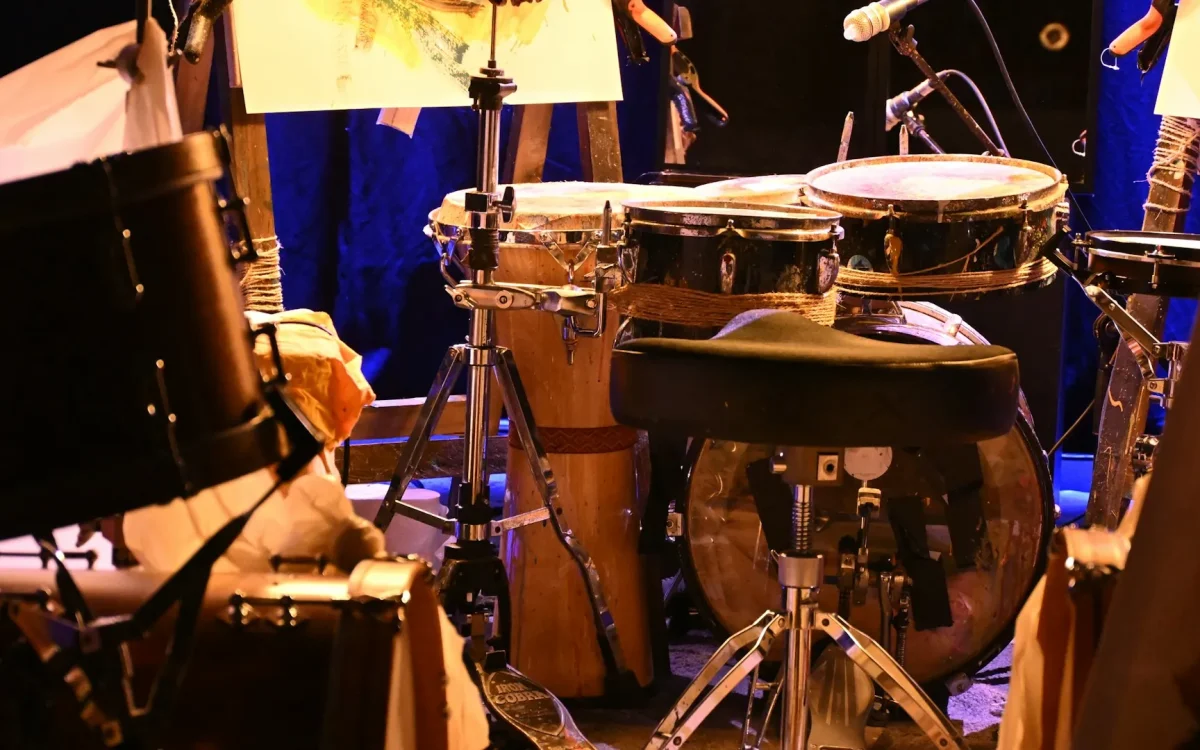
The conga drum’s arrival in jazz bands changed how rhythm sections worked. The drum kit and conga had to find ways to share space: often the drummer simplified the pattern while the conga player provided the Afro-Cuban groove. Listen to early recordings with Chano Pozo or Mongo Santamaría and notice how the conga adds a warm, rolling layer under the horns. Then listen to modern Latin jazz, where drummers often play complex patterns derived from Cuban percussion on the kit itself.
Putting it into practice
Listen to “Manteca”, a Tito Puente recording and a piece by Irakere, and notice how each blends jazz and Cuban music. Try to find the clave in each. The Global Playlist Curator AI can build a Latin jazz playlist through the decades, and the World Music Genre Explorer AI can explain the connections between styles.
Latin jazz today
Latin jazz remains a vibrant scene. Musicians from Cuba, Puerto Rico, the Dominican Republic, Venezuela, Colombia and beyond blend their own national rhythms with jazz, from Venezuelan joropo to Colombian cumbia and Peruvian landó. Festivals and jazz clubs in New York, Miami, Havana and Europe regularly feature Latin jazz bands, and many conservatories now teach Afro-Cuban rhythms alongside swing. For listeners, it is a style that rewards both dancing and close listening.
Frequently asked questions
What is Afro-Cuban jazz?
A form of Latin jazz combining jazz harmony and improvisation with Cuban rhythms and percussion.
Who was Chano Pozo?
A Cuban conga player and composer who worked with Dizzy Gillespie in the late 1940s.
Is bossa nova a type of Latin jazz?
It is closely related; Brazilian jazz and bossa nova are often included in the Latin jazz family.

Questions and notes