Bossa Nova Explained: The Quiet Revolution from Rio
Bossa nova turned samba into an intimate, sophisticated style in late-1950s Rio de Janeiro. The people who created it, the guitar rhythm at its core, its jazz connection and the essential recordings to start with.

In this guide
Bossa nova is music that whispers rather than shouts. A nylon-string guitar plays gentle, syncopated chords, a voice sings softly as if confiding a secret, and the harmonies drift in rich, unexpected directions. Born in Rio de Janeiro in the late 1950s, bossa nova transformed Brazilian music and went on to charm the world, becoming one of the most recognisable sounds of the twentieth century. This guide explains what bossa nova is, how it was created and where to start listening.
What “bossa nova” means
In Brazilian Portuguese, “bossa” is a slang word for a particular flair or way of doing something, and “nova” means new. Bossa nova therefore means something like “the new style” or “the new trend”. The name captured the feeling of young musicians in Rio who wanted a fresh, modern sound that reflected their urban, middle-class lives by the beach.
The people who created it
Three figures stand at the centre of bossa nova. João Gilberto, a singer and guitarist from Bahia, developed the distinctive guitar rhythm and a soft, understated vocal style. Antônio Carlos Jobim, a composer and pianist, wrote many of the songs that became standards, with sophisticated harmonies influenced by jazz and classical music. Vinicius de Moraes, a poet and diplomat, wrote lyrics full of love, longing and the beauty of Rio. Their collaboration produced the song “Chega de Saudade”, whose 1958 recording by João Gilberto is often described as the starting point of bossa nova.
The guitar at the heart of bossa nova
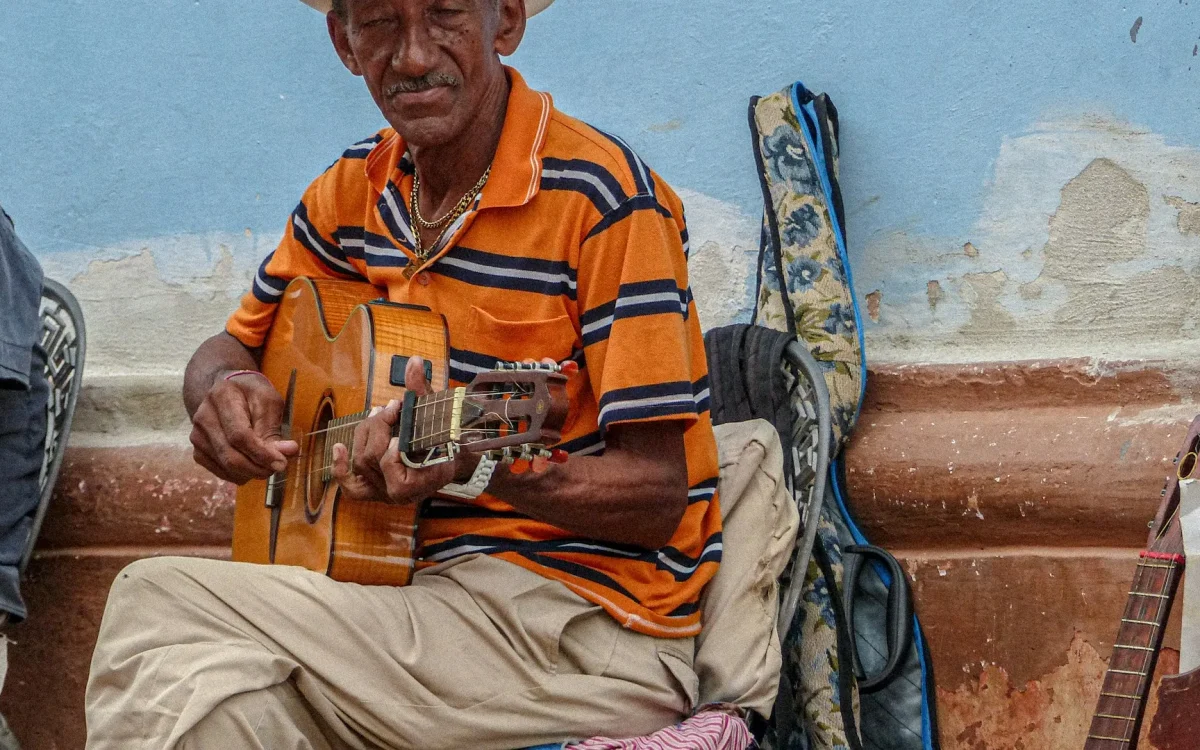
The key to bossa nova is João Gilberto’s guitar pattern, sometimes called the batida. It takes the rhythmic feel of samba, usually played by a whole percussion section, and condenses it onto the guitar. The thumb plays a steady bass, while the fingers play off-beat chords in a syncopated pattern. The result is a gentle, swaying groove that sounds simple but is surprisingly hard to master. You can explore the underlying rhythm with our free World Rhythm Machine, which includes a bossa nova pattern.
Harmony and melody
Bossa nova uses rich chords, often with added sevenths, ninths and altered notes, giving the music its dreamy, sophisticated colour. Melodies frequently move in small steps and sometimes stay on one note while the chords change underneath, creating a feeling of gentle tension. Jobim’s “One Note Samba” playfully demonstrates this idea. Many bossa nova songs are now jazz standards, played by musicians around the world.
Bossa nova and jazz
Bossa nova and American jazz influenced each other. Brazilian musicians admired cool jazz from the West Coast of the United States, while American jazz musicians fell in love with bossa nova in the early 1960s. The album Getz/Gilberto, recorded by the saxophonist Stan Getz with João Gilberto and Antônio Carlos Jobim and released in 1964, became a huge international success. Its version of “The Girl from Ipanema”, sung partly in English by Astrud Gilberto, became one of the most recorded songs in history.
Bossa nova at a glance
| Feature | In bossa nova |
|---|---|
| Origin | Rio de Janeiro, late 1950s |
| Roots | Samba rhythm, jazz harmony |
| Key instrument | Nylon-string guitar |
| Vocal style | Soft, intimate, understated |
| Famous figures | João Gilberto, Tom Jobim, Vinicius de Moraes |
| Landmark album | Getz/Gilberto (1964) |
After the first wave
By the mid-1960s, Brazilian music was moving in new directions. Political changes in Brazil, new influences from rock and a desire for more socially engaged music led to styles such as MPB and tropicália. But bossa nova never disappeared. Its songs remained standards, and later generations of Brazilian and international musicians have returned to it again and again. See Brazilian music beyond samba.
A closer look: listening for the space
One of bossa nova’s secrets is restraint. Notice how little the musicians play: the drummer often uses brushes and plays very softly, the bass is gentle and the voice rarely rises above a conversational level. This space allows the harmonies and the guitar rhythm to shine. When you listen, try turning the volume slightly down rather than up, and notice the details: the way the guitar anticipates chord changes, the soft breaths of the singer, the gentle brush strokes. Bossa nova rewards close, quiet listening.
Where to start listening
Start with João Gilberto’s early albums and the Getz/Gilberto collaboration. Explore Jobim’s own recordings as a composer and pianist. Listen to versions of bossa nova standards by different singers to hear how the songs adapt to different voices. The Global Playlist Curator AI can build a playlist that moves from the classics to modern Brazilian artists inspired by bossa nova.
Putting it into practice
Listen to three bossa nova songs and tap the bass on beats one and three while noticing the off-beat chords. If you play guitar, try a simplified bossa pattern on a few chords. Visit our samba guide to hear the rhythm bossa nova grew from.
Frequently asked questions
Is bossa nova a type of samba?
It grew from samba but became its own style, quieter and more harmonically sophisticated.
What is the most famous bossa nova song?
“The Girl from Ipanema” by Antônio Carlos Jobim and Vinicius de Moraes is the best known worldwide.
Is bossa nova hard to play on guitar?
The basic pattern is learnable, but mastering its relaxed feel and rich chords takes practice.

Questions and notes