Mariachi: Instruments, Songs and Traditions
Mariachi is Mexico's most famous musical tradition, with trumpets, violins, guitars and powerful voices. Its origins in western Mexico, the instruments of the ensemble, its song styles and where to hear it.
In this guide
Few sights are as joyful as a mariachi band in full flow: musicians in embroidered charro suits, violins soaring, trumpets blazing, guitars driving the rhythm and voices filling the air with emotion. Mariachi is Mexico’s best-known musical tradition, played at weddings, birthdays, serenades, festivals and in plazas across the country and around the world. In 2011, UNESCO recognised mariachi as part of the Intangible Cultural Heritage of Humanity. This guide explains where mariachi comes from, how the ensemble works and how to enjoy it.
Origins in western Mexico
Mariachi developed in western Mexico, especially in the state of Jalisco and neighbouring regions, during the nineteenth century. Early mariachi groups were rural string ensembles playing for local celebrations, using violins, harp and various guitars. The music blended Spanish string traditions with local Indigenous and mestizo culture. In the twentieth century, mariachi moved to Mexico City and became part of radio, film and national identity, and the trumpet was added, giving the modern mariachi its brilliant sound.
The modern mariachi ensemble
| Instrument | Role |
|---|---|
| Violins | Melodies and harmonies, often several playing together |
| Trumpets | Bright melodies, fanfares and harmonies, usually two |
| Vihuela | Small, round-backed five-string guitar with a percussive strum |
| Guitarrón | Large, deep-bodied bass guitar providing the bass line |
| Guitar | Rhythm and harmony |
| Harp | Used in some traditional groups for bass and melody |
| Voices | Singers, often all musicians sing, with powerful solos |
The vihuela and guitarrón together create the distinctive rhythmic engine of mariachi, with the vihuela’s bright strum and the guitarrón’s deep plucked bass.
Song styles
Mariachi plays a wide range of styles. The son jalisciense, from Jalisco, is lively and danceable, often in a mix of triple and duple feels. The canción ranchera is a sentimental song about love, homeland and longing, sung with great emotion. The huapango features falsetto singing and a rhythm related to the son huasteco. Mariachis also play boleros, polkas, waltzes and corridos. A single performance might move from a fiery son to a heartbreaking ranchera.
The charro suit
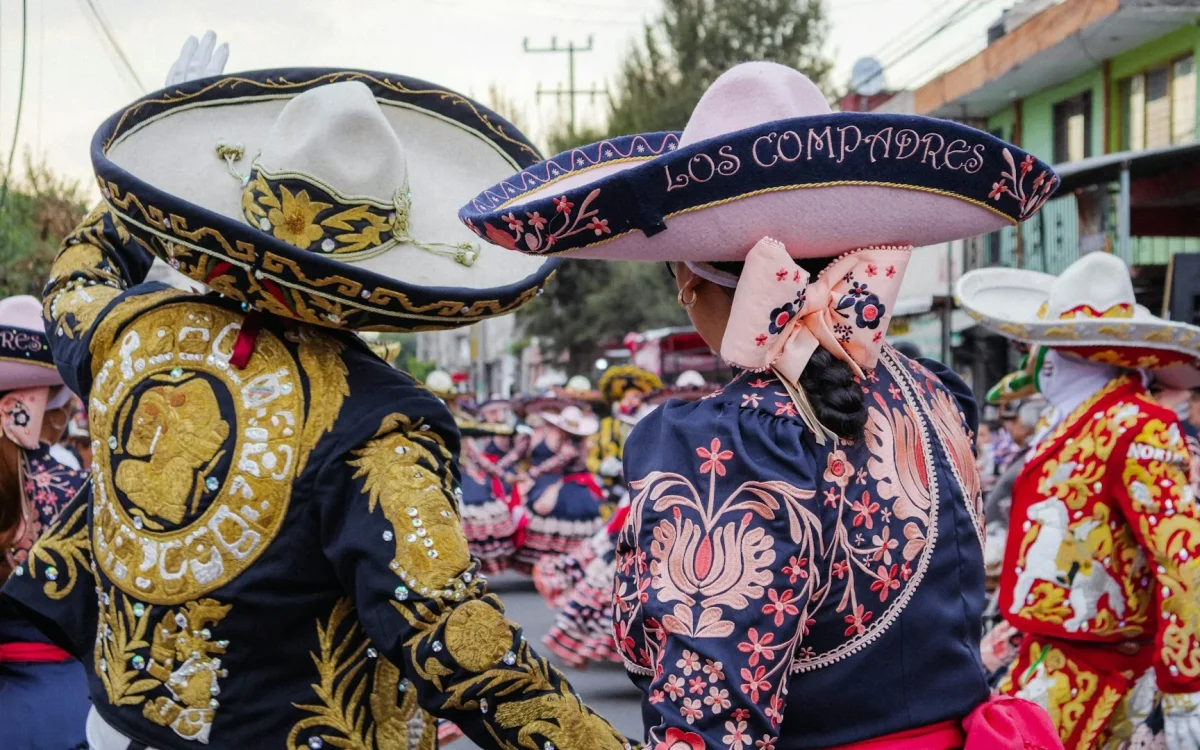
Mariachi musicians usually wear the traje de charro, a fitted suit inspired by Mexican horsemen, with decorative buttons along the trousers, a short jacket, a bow tie and often a wide-brimmed sombrero. The suit became the standard mariachi costume in the twentieth century and is a symbol of Mexican culture.
Famous mariachi
Mariachi Vargas de Tecalitlán, founded in the 1890s, is often called the world’s most famous mariachi and has shaped the modern style through its recordings and arrangements. Singers such as Pedro Infante, Jorge Negrete and later Vicente Fernández became national icons, combining mariachi with Mexican cinema and ranchera song. Many modern artists continue to record with mariachi.
Where to hear mariachi
In Mexico City, Plaza Garibaldi is famous for mariachi groups who play for visitors and can be hired for a song. Guadalajara, the capital of Jalisco, hosts an international mariachi festival each year. In the United States, mariachi is part of Mexican-American communities and school music programmes, and many cities have mariachi festivals and competitions. See the world’s great music festivals.
A closer look: the grito
During mariachi performances, you may hear the grito, a joyful, often long and wavering cry from a musician or audience member. It expresses emotion, excitement or pride and is part of the atmosphere. At a mariachi concert or celebration in Mexico, audiences often sing along to well-known songs and add gritos at dramatic moments. Learning to recognise these moments helps you feel the communal spirit of mariachi.
Putting it into practice
Listen to a son jalisciense, a ranchera and a huapango, and notice the different rhythms and vocal styles. Focus on the vihuela and guitarrón, which create mariachi’s rhythmic base. The Global Playlist Curator AI can suggest classic mariachi recordings, and the Music Culture Storyteller AI can tell you more about the traditions behind them.
Hiring a mariachi
In Mexico and in Mexican communities abroad, hiring a mariachi is a cherished tradition for birthdays, anniversaries, weddings and serenades. A group might arrive early in the morning to sing “Las Mañanitas”, the traditional birthday song, outside someone’s window, or play at a party for an hour or more. Prices are usually agreed per song or per hour, depending on the number of musicians. Requests are part of the fun: guests call out their favourite rancheras, and the musicians adapt their set to the mood of the celebration. If you visit Plaza Garibaldi, agree the price before the music starts and enjoy the experience of having a song played just for you.
Frequently asked questions
Where does mariachi come from?
From western Mexico, especially the state of Jalisco.
What is a guitarrón?
A large, deep-bodied six-string bass guitar that provides mariachi’s bass line.
When were trumpets added to mariachi?
Trumpets became standard in the twentieth century, as mariachi moved to Mexico City and onto radio and film.
Questions and notes