Samba: Rhythms, Schools and the Sound of Carnival
Samba is Brazil's national rhythm, born from Afro-Brazilian traditions and made famous by Rio's carnival. Its history, the instruments of the bateria, the samba schools and the many styles of samba.
In this guide
When people imagine the sound of Brazil, they often hear samba: a thunder of drums, a bright cavaquinho, voices singing together and an infectious rhythm that seems to make the whole street move. Samba is Brazil’s best-known musical style and a symbol of national identity. It is also a deep tradition with roots in Afro-Brazilian communities, a world of neighbourhood samba schools and a variety of styles far beyond carnival. This guide introduces samba’s history, its instruments and its many faces.
Afro-Brazilian roots
Samba’s roots lie in the music and dance traditions of Africans brought to Brazil and their descendants, especially in the northeastern state of Bahia. Rhythms, circle dances and call-and-response singing travelled with communities who moved to Rio de Janeiro in the late nineteenth century after the abolition of slavery in 1888. In Rio, these traditions mixed with other urban music, and samba took shape in the homes and gatherings of the Afro-Brazilian community, including the famous house of Tia Ciata, a meeting place for musicians.
Early samba
The song “Pelo Telefone”, registered in 1916 and recorded in 1917, is often cited as the first recorded samba, although its exact status is debated. In the 1920s and 1930s, samba spread through radio and records and became the music of carnival. Composers such as Cartola, Noel Rosa and Ismael Silva shaped the early urban samba, and the first escolas de samba, or samba schools, were founded in Rio’s neighbourhoods and hillside communities.
The bateria: samba’s drum section
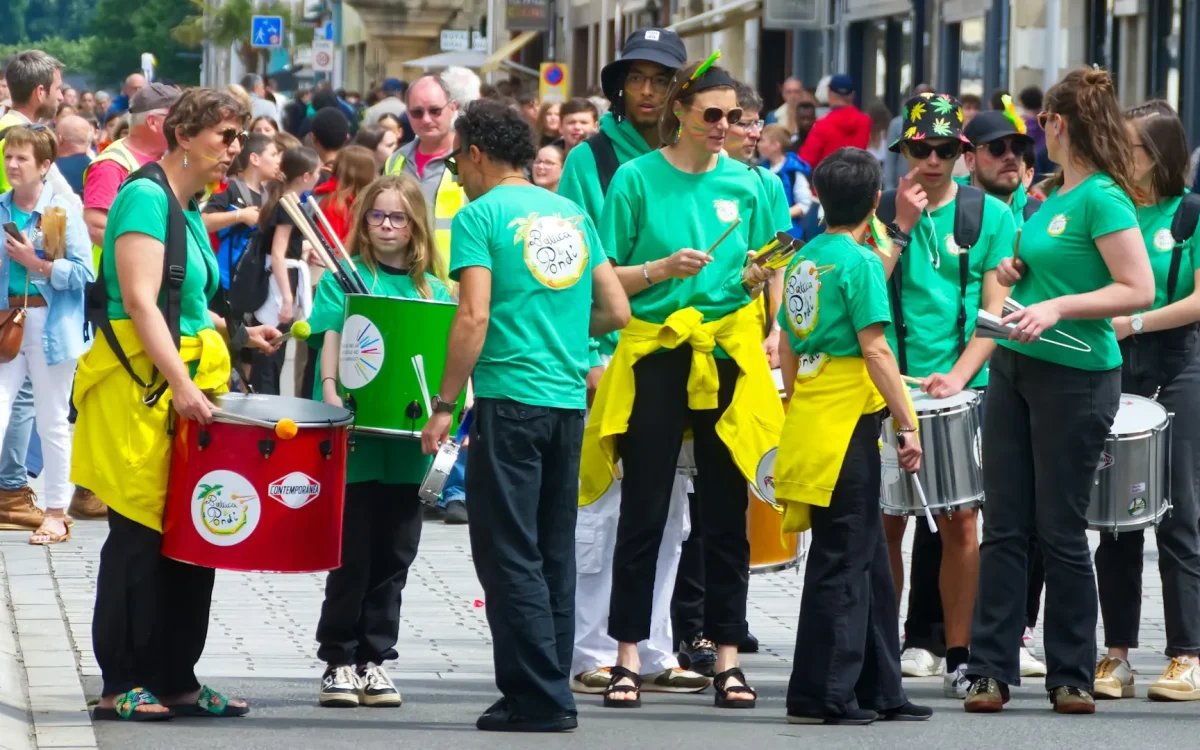
At carnival, a samba school’s bateria can include hundreds of percussionists. Each instrument plays a specific role.
| Instrument | Sound and role |
|---|---|
| Surdo | Large bass drums that mark the beat, with the second beat accented |
| Caixa | Snare drum playing a steady, driving pattern |
| Repinique | High drum that leads calls and signals |
| Tamborim | Small frame drum played with a stick, sharp syncopated patterns |
| Cuíca | Friction drum with a squeaking, “laughing” sound |
| Agogô | Double bell with high and low tones |
| Chocalho | Metal shaker adding a shimmering texture |
| Pandeiro | Tambourine, central in smaller samba groups |
The cavaquinho, a small four-string guitar, and the seven-string guitar often provide harmony in smaller samba groups. See Brazilian music beyond samba for more on these instruments.
The samba schools
Rio’s samba schools are community organisations that prepare all year for carnival. Each school chooses a theme, composes a samba-enredo (a theme song), designs costumes and floats, and rehearses its bateria and dancers. During carnival, the schools parade through the Sambadrome, judged on music, costumes, harmony and other categories. Schools such as Mangueira and Portela are famous for their long histories. Rehearsals in the months before carnival are open to visitors and are a wonderful way to experience samba. See our Rio carnival guide.
Many styles of samba
Samba is a family of styles. Samba-enredo is the anthemic music of the carnival parades. Samba de roda, from Bahia, is a circle dance tradition recognised by UNESCO. Samba-canção is slower and more romantic. Pagode emerged in the 1970s and 1980s from informal gatherings around a table, with banjo, pandeiro and a relaxed, singalong feel. Samba-reggae, from Salvador in Bahia, blends samba drumming with reggae influences and is famous through groups like Olodum. Bossa nova, too, grew out of samba; see bossa nova explained.
Feeling the samba rhythm
Samba is usually felt in two beats per bar, with a strong emphasis on the second beat played by the low surdo. Over this, the other instruments create a dense web of syncopated patterns. A good way to feel it is to tap a steady pulse with your foot, emphasising every second tap, while listening to the tamborim and caixa patterns above. Our free World Rhythm Machine can help you practise.
A closer look: the roda de samba
Away from the spectacle of carnival, samba lives in the roda de samba, an informal circle of musicians and singers gathered around a table, often in a bar or backyard. Instruments are passed around, everyone knows the songs and the audience sings along. The atmosphere is relaxed and inclusive, and the music can continue for hours. For many Brazilians, the roda is the true heart of samba. Visitors to Rio can find rodas in neighbourhoods like Lapa and in suburban communities on weekends.
Putting it into practice
Listen to a carnival samba-enredo and then a pagode recording, and notice the difference in mood and instrumentation. Tap the surdo pulse with your foot and try to pick out the tamborim. The World Rhythm Coach AI can teach you a simple samba pattern to play on a table or drum.
Frequently asked questions
Where did samba originate?
Its roots are Afro-Brazilian, especially from Bahia, and it took its urban form in Rio de Janeiro in the early twentieth century.
What is a samba school?
A community organisation that prepares music, costumes and a parade for carnival.
Is samba only played at carnival?
No. Samba is played all year round in rodas, bars, concerts and recordings.
Questions and notes