Andalusian Music: A Shared Heritage of Spain and North Africa
The court music of medieval al-Andalus survives today in the orchestras of Morocco, Algeria, Tunisia and Libya. Ziryab's legacy, the nuba suite, muwashshah poetry, the instruments and the Sephardic songs that carried the same memory.
In this guide
For nearly eight centuries, from 711 to 1492, much of the Iberian peninsula was ruled by Muslim dynasties, a land known in Arabic as al-Andalus. Its cities, such as Córdoba, Seville and Granada, became centres of science, philosophy, poetry and music, where Muslims, Christians and Jews lived side by side. When al-Andalus came to an end, its music did not disappear: it travelled across the Mediterranean with exiles and became the classical music of North Africa. Today, orchestras in Morocco, Algeria, Tunisia and Libya still perform this heritage. This guide explains its story.
The courts of al-Andalus
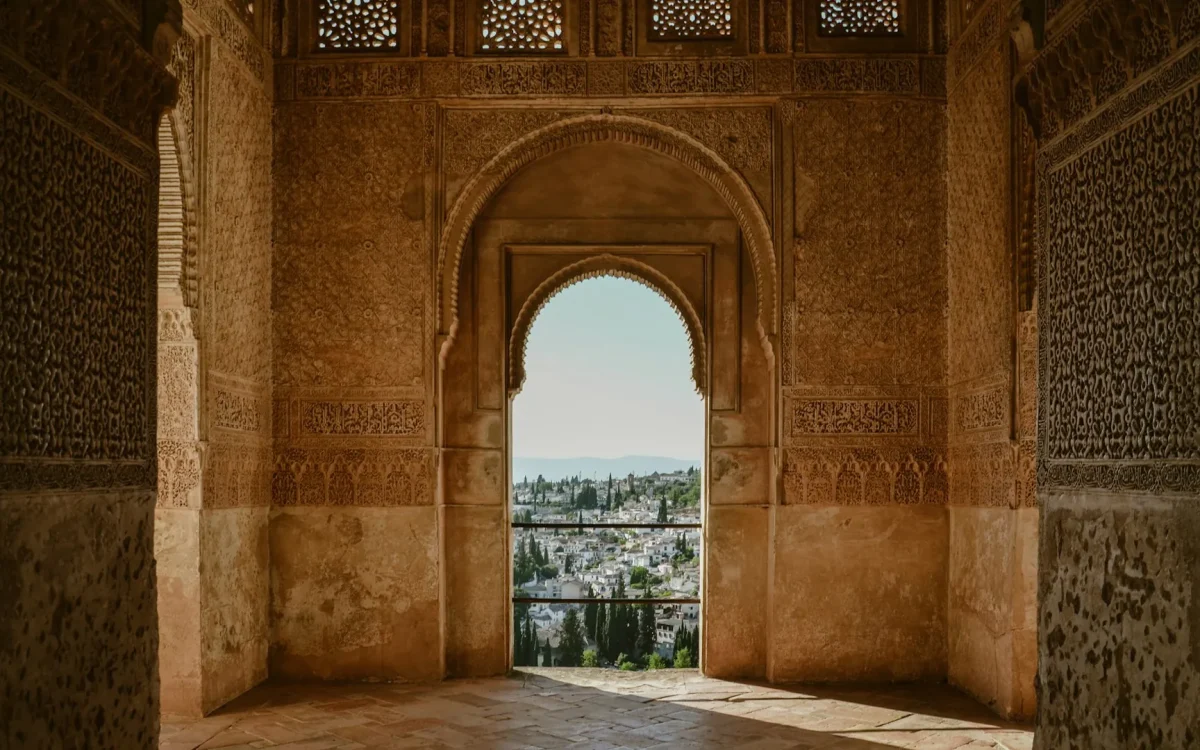
In the courts of al-Andalus, music was part of a refined culture of poetry, gardens and learning. Rulers patronised musicians and singers, and music theory drew on the Greek, Persian and Arabic traditions. The Umayyad caliphate of Córdoba in the tenth century was one of the most brilliant centres of culture in Europe, and later the Nasrid kingdom of Granada, builders of the Alhambra, continued the tradition until 1492.
Ziryab
According to tradition, the musician Ziryab arrived in Córdoba from Baghdad in the ninth century and transformed its musical life. He is credited with founding a music school, adding a fifth course of strings to the oud and establishing an order of songs in performances, which some see as the origin of the nuba suite. He is also said to have introduced new fashions in clothing, cuisine and hairstyles. Many stories about Ziryab are legendary, but he symbolises the cultural brilliance of al-Andalus. See the oud.
Muwashshah and zajal
Al-Andalus developed new forms of strophic poetry designed to be sung. The muwashshah, written in classical Arabic, has a complex structure of verses and refrains, often ending with a final couplet in colloquial Arabic or Romance language. The zajal is a similar form written in colloquial Arabic. These forms spread throughout the Arab world, and muwashshahat are still sung in Syria, Egypt and North Africa.
The nuba
The central form of Andalusian music is the nuba, a long suite of vocal and instrumental pieces in a single mode, moving through a sequence of rhythms from slow to fast. Tradition holds that there were once 24 nubas, one for each hour of the day, but only some survive. In Morocco, eleven nubas are preserved in the tradition known as al-Ala; Algeria and Tunisia preserve their own sets. A complete nuba can last several hours, so performances usually present selections.
| Country | Tradition | Centres |
|---|---|---|
| Morocco | Al-Ala | Fez, Tetouan, Rabat, Chefchaouen |
| Algeria | Gharnati, Sanaa, Malouf | Tlemcen, Algiers, Constantine |
| Tunisia | Malouf | Tunis, Testour |
| Libya | Malouf | Tripoli |
Each school traces its roots to different Andalusian cities: the Algerian gharnati tradition, for example, takes its name from Granada (Gharnata in Arabic).
Exile and preservation
As the Christian kingdoms of the north conquered al-Andalus, many Muslims and Jews emigrated to North Africa, especially after the fall of Granada in 1492 and the expulsions that followed. They brought their music to cities such as Fez, Tetouan, Tlemcen, Algiers and Tunis, where it was preserved in families, brotherhoods and schools. In the eighteenth century, the Moroccan scholar Muhammad al-Ha’ik compiled an anthology of nuba texts that became a reference for the al-Ala tradition.
The instruments
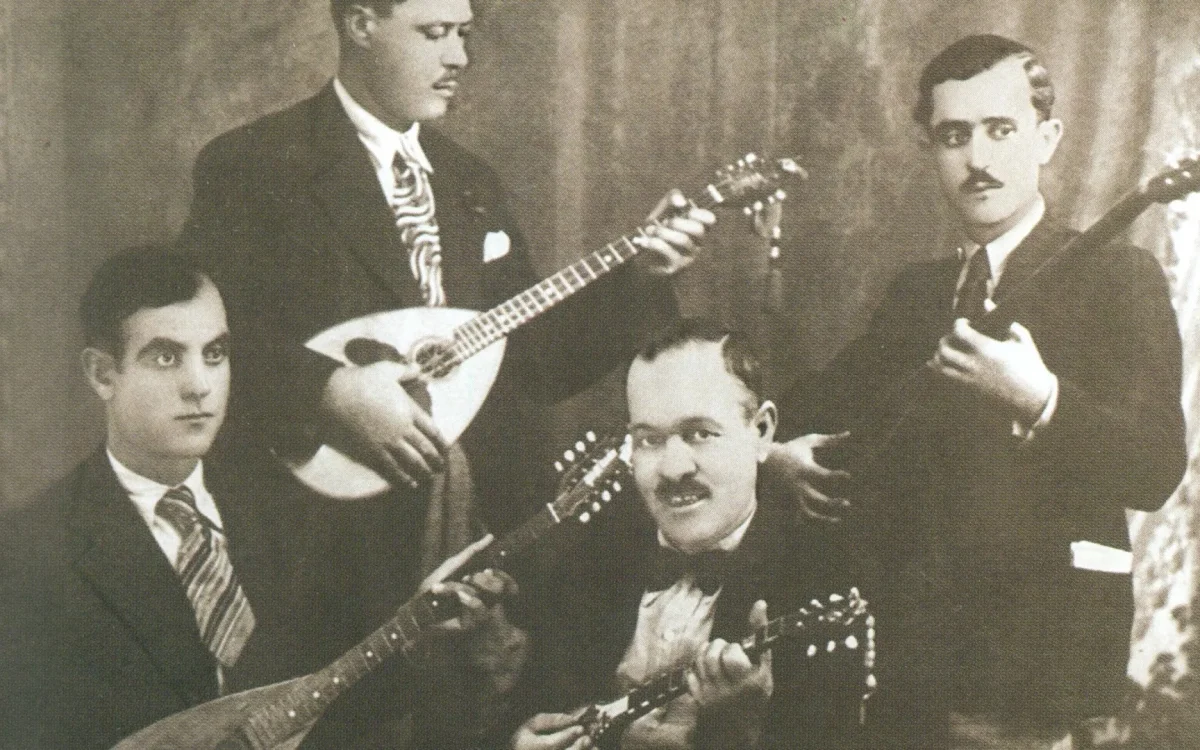
A traditional Andalusian orchestra includes the oud; the rabab, a boat-shaped bowed instrument; the kamanja, a violin or viola played upright on the knee; the qanun, a plucked zither; the darbuka; and the tar, a tambourine with jingles. Singers, often including all the instrumentalists, sing the poetry in unison. The sound is dignified and flowing, with a strong sense of rhythm.
Sephardic song
Jews expelled from Spain in 1492, known as Sephardim, settled across North Africa, the Ottoman Empire and beyond. They preserved songs in Judeo-Spanish (Ladino), including romances, ballads dating back to medieval Spain, and songs for weddings and life events. Sephardic musicians also played Andalusian music in North Africa, and many Jewish musicians were among its leading performers in Morocco and Algeria.
Andalusian music and flamenco
Many people wonder whether Andalusian music influenced flamenco. There are certainly shared features, such as modal melodies and ornamentation, and some scholars suggest connections through the Moriscos, Muslims who remained in Spain after 1492. However, flamenco developed much later, and its origins are complex. The relationship remains a subject of debate. See Flamenco.
Revival in Spain
In recent decades, Spanish musicians and early music ensembles have explored the shared heritage of al-Andalus, collaborating with Moroccan orchestras and reconstructing medieval repertoires, such as the Cantigas de Santa María, a thirteenth-century collection of songs compiled at the court of Alfonso X of Castile, whose illustrations show many instruments of Arabic origin. Festivals in Spain and Morocco celebrate this common heritage.
A closer look: hearing the nuba
When you listen to a nuba recording, notice how the rhythms change gradually from slow and stately to faster and more lively. Listen also for the unison singing, where the whole ensemble sings the same melody together, and for instrumental passages played by the oud or rabab. The gradual acceleration creates a sense of building energy across the suite.
Putting it into practice
Listen to a Moroccan al-Ala recording, an Algerian gharnati performance and a Sephardic romance. If you visit Fez, look for performances of Andalusian music. The Music Culture Storyteller AI can tell you more about al-Andalus, and the Music Festival Trip Planner AI can help plan a trip. See also the Fès Festival of World Sacred Music.
Frequently asked questions
What is a nuba?
A long suite of vocal and instrumental pieces in one mode, the central form of Andalusian music.
Where is Andalusian music played today?
Mainly in Morocco, Algeria, Tunisia and Libya, as well as in revivals in Spain.
Who was Ziryab?
A ninth-century musician who, according to tradition, brought Baghdad’s music to Córdoba.


Questions and notes