Irish Traditional Music: Sessions, Jigs and Reels
Irish traditional music lives in kitchens, pubs and festivals, passed on by ear from player to player. The tune types from reels to slip jigs, the instruments from fiddle to uilleann pipes, sean-nós singing, the session and the bands that took it worldwide.
In this guide
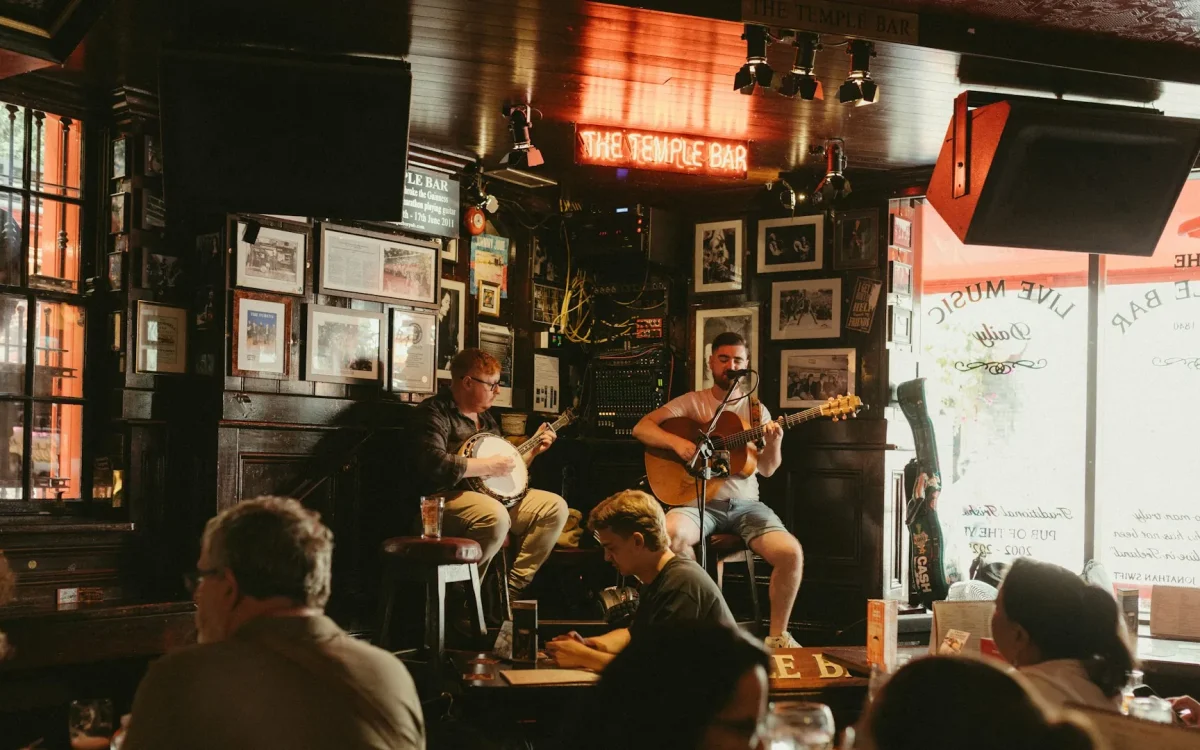
Walk into a pub in County Clare on a weeknight and you may find a group of musicians around a table, playing fiddles, flutes, accordions and whistles, moving from one tune to the next with a nod or a shout. This is an Irish session, the living heart of Irish traditional music. Passed down by ear from generation to generation, Irish music is both a vibrant community practice and one of the world’s most popular folk traditions, heard in concert halls, festivals and pubs across the globe. This guide explains its tunes, instruments and customs.
Dance music at the core
Most Irish traditional instrumental music is dance music, originally played for set dancing, step dancing and social dances at house parties and crossroads gatherings. Today, the tunes are often played for listening, but their dance rhythms remain essential. Each tune type has its own rhythm and character.
| Tune type | Time | Character |
|---|---|---|
| Reel | 4/4 | Fast, flowing, the most common type |
| Jig (double jig) | 6/8 | Lively, bouncing, “diddly-dee” feel |
| Slip jig | 9/8 | Graceful, lilting |
| Hornpipe | 4/4 with a dotted swing | Stately, emphatic |
| Polka | 2/4 | Quick and punchy, especially in Sliabh Luachra |
| Slide | 12/8 | Driving, associated with Kerry and Cork |
| Air | Free | Slow, expressive melodies, often from songs |
How tunes are built
Most dance tunes have two parts, called A and B, each usually eight bars long and each played twice: AABB. The whole tune is then repeated, usually two or three times. Musicians often combine two or three tunes of the same type into a set, moving from one to the next without stopping. The change to a new tune is one of the most exciting moments in a session.
Learning by ear
Irish music is traditionally learned by ear, by listening to other players, imitating them and gradually absorbing the style. Although many tunes have been written down, notably in the large collections published by Francis O’Neill, a Chicago police chief, in the early twentieth century, most players learn from recordings, teachers and sessions. This oral transmission means that each tune exists in many versions, and regional styles and personal variations are valued.
Ornamentation
Irish musicians decorate melodies with ornaments such as cuts (a quick higher note before the main note), taps (a quick lower note), rolls (a combination of notes around the main note) and slides. These ornaments are not written into the tune; each player adds them according to their instrument and style. Good ornamentation gives the music its lift and rhythmic drive.
The instruments
The fiddle is the most widely played instrument in Irish music. The tin whistle and the wooden flute are also very popular. The uilleann pipes, a bellows-blown bagpipe developed in the eighteenth century, have a sweet, complex sound and include drones and regulators that can play chords. The button accordion and concertina, the latter associated especially with County Clare, became popular in the late nineteenth and twentieth centuries. The tenor banjo, harp and guitar are also played.
Bodhrán and bouzouki
The bodhrán, a frame drum played with a stick called a tipper, became widely used in Irish music from the 1960s, partly through the influence of the composer Seán Ó Riada. The bouzouki, adapted from the Greek instrument, was introduced in the 1960s and 1970s by musicians such as Johnny Moynihan, Andy Irvine and Dónal Lunny, and is now common as an accompanying instrument. See frame drums of the world.
Sean-nós singing
Sean-nós, meaning “old style”, is a tradition of unaccompanied solo singing, mainly in the Irish language. Singers decorate the melody with intricate ornaments and shape the rhythm freely according to the words. Sean-nós songs include laments, love songs and humorous songs, and the style is especially strong in Connemara, Donegal and other Irish-speaking regions. Irish music also includes songs in English, from ballads to rebel songs.
The harp and O’Carolan
The harp is a national symbol of Ireland, appearing on coins and the national coat of arms. In earlier centuries, harpers were respected musicians at the courts of Gaelic lords. Turlough O’Carolan (1670–1738), a blind harper and composer, wrote many tunes still played today, combining Irish melody with influences from Italian Baroque music. See the Celtic harp.
Revival and bands
In the twentieth century, Irish music experienced a revival. Comhaltas Ceoltóirí Éireann, founded in 1951, organised classes and festivals, including the annual Fleadh Cheoil. The Chieftains, formed in 1962, brought Irish music to international audiences. In the 1970s, bands such as Planxty, The Bothy Band and De Dannan created exciting arrangements that inspired a new generation. Riverdance, first performed in 1994, made Irish dance and music a global phenomenon.
Session etiquette
Sessions have unwritten rules: listen before joining, play tunes the group knows, follow the lead of the regulars and do not play too loudly. Beginners are often welcome at slow sessions designed for learners. See how to join a folk session.
A closer look: feeling the jig
To feel the difference between a jig and a reel, count a jig as “one-two-three, four-five-six”, with accents on one and four, and a reel as “one-and-two-and-three-and-four-and”. Listen to a set that moves from jigs to reels and notice how the energy changes. You can practise these rhythms with our metronome.
Putting it into practice
Listen to a recording by The Bothy Band, a solo uilleann piper and a sean-nós singer. If you want to start playing, the tin whistle is an inexpensive and accessible instrument. The Learn a World Instrument Coach AI can build a practice plan, and the Music Festival Trip Planner AI can help plan a trip to Ireland. See Ireland’s music towns.
Frequently asked questions
What is the difference between a jig and a reel?
A jig is in 6/8 time with a bouncing feel; a reel is in 4/4 and flows quickly.
What are uilleann pipes?
Irish bellows-blown bagpipes with drones and regulators, known for their sweet tone.
What is sean-nós?
A tradition of unaccompanied, highly ornamented solo singing, mostly in Irish.
Questions and notes