Celtic Music Beyond Ireland: Brittany and Galicia
Brittany and Galicia have their own Celtic-identified music, with bagpipes, chain dances and festivals. The Breton fest-noz, kan ha diskan and bagad, Alan Stivell's harp revival, and Galicia's gaita, muiñeira, pandeireteiras and Carlos Núñez.
In this guide
When people think of Celtic music, they usually think of Ireland and Scotland. But Brittany, in northwestern France, and Galicia, in northwestern Spain, also have vibrant musical traditions that identify strongly with Celtic culture. Brittany has its own Celtic language, chain dances that last all night and bagpipe bands, while Galicia has its gaita bagpipe, lively muiñeira dances and powerful women singers with tambourines. This guide explores the music of these two regions and their place in the wider Celtic world.
Brittany: a Celtic land in France
Brittany’s Celtic heritage goes back to migrations from Britain in the early Middle Ages, which brought the Breton language, closely related to Welsh and Cornish. Although Breton declined sharply in the twentieth century, Breton music and dance have remained strong and experienced a powerful revival from the 1950s. Today, Breton music is a source of regional pride, played at festivals, dances and concerts throughout the region.
The fest-noz
The fest-noz, meaning “night festival”, is a traditional Breton dance party where people of all ages dance in chains and circles to live music. Its roots lie in rural celebrations marking the end of farm work, and it was revived in the 1950s as a festive community gathering. A fest-noz can last late into the night, with musicians and singers taking turns. In 2012, UNESCO recognised the fest-noz as Intangible Cultural Heritage.
Kan ha diskan
Kan ha diskan, meaning “song and counter-song”, is a style of call-and-response singing for dancing. Two singers alternate, the second repeating the first singer’s line, overlapping at the end of each phrase so that the song never stops. The steady rhythm drives the dancers, and the overlapping voices create a hypnotic effect. The Goadec sisters were famous singers who helped revive the style in the 1960s and 1970s.
Binioù and bombarde
| Instrument | Region | Description |
|---|---|---|
| Bombarde | Brittany | Loud double-reed oboe |
| Binioù kozh | Brittany | Small, high-pitched bagpipe |
| Binioù braz | Brittany | Large bagpipe, similar to the Highland pipe |
| Gaita galega | Galicia | Bagpipe with a chanter and drones |
| Pandeireta | Galicia | Tambourine played by women singers |
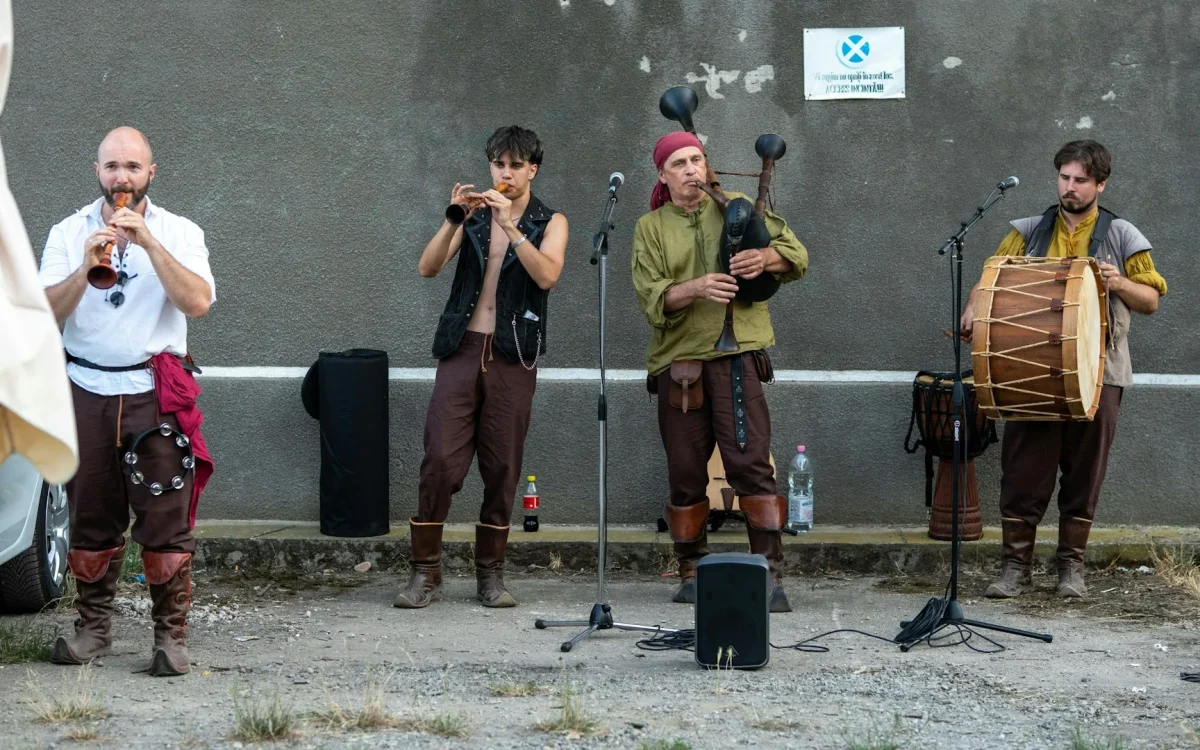
A traditional Breton duo, called sonneurs de couple, consists of a bombarde player and a binioù kozh player who alternate phrases, the binioù playing continuously while the bombarde player rests and joins in turn. Their piercing sound carries over dancing crowds.
The bagad
From the late 1940s, Bretons created the bagad, a band combining bagpipes, bombardes and drums, inspired by Scottish pipe bands but playing Breton music. Bagadoù compete in championships and perform at festivals, and they have become a symbol of Breton identity. See Scottish folk and bagpipes.
Breton dances
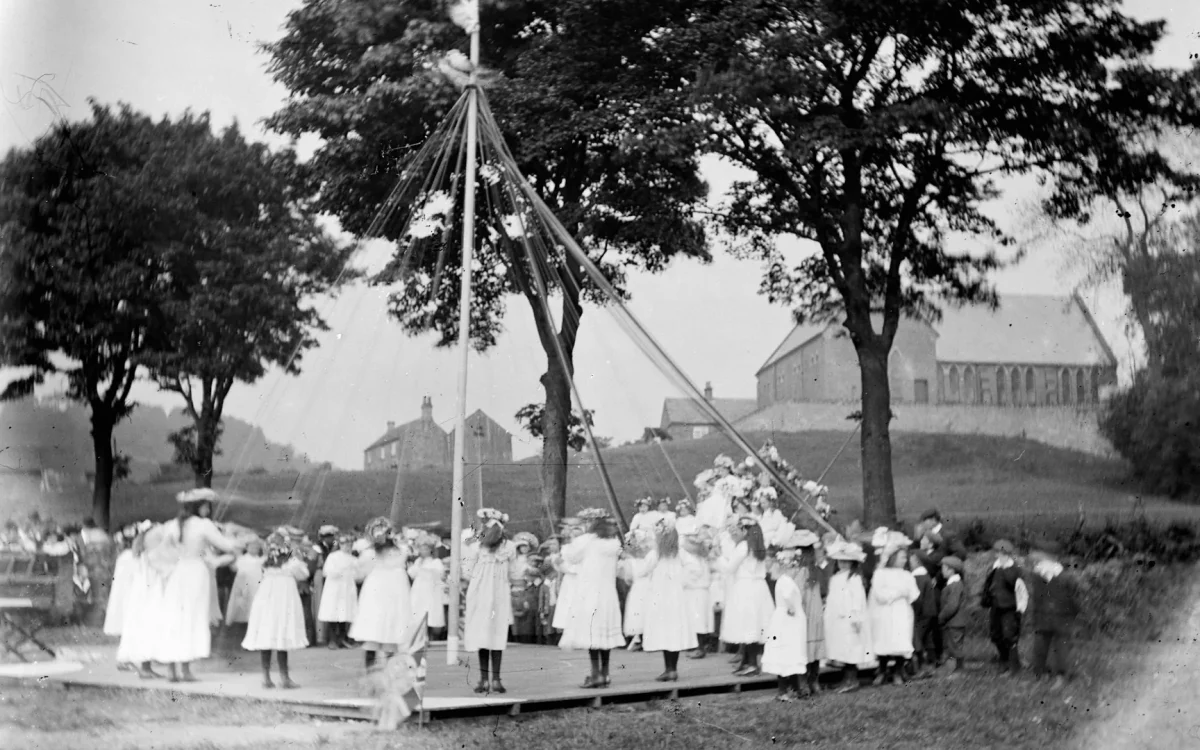
Breton dances are mainly chain or circle dances, in which dancers hold hands or link little fingers. The gavotte, the an dro and the hanter dro are among the most popular, each with variations by region. Learning a few basic steps is enough to join in at a fest-noz, where experienced dancers often help newcomers.
Alan Stivell and the revival
Alan Stivell played a key role in bringing Breton music to wider audiences. His album Renaissance of the Celtic Harp (1971) and a famous concert at the Olympia in Paris in 1972 sparked enthusiasm for Celtic music in France. Bands such as Tri Yann and musicians such as Dan Ar Braz and Denez Prigent followed. The Festival Interceltique de Lorient, held every August since 1971, brings together musicians from all the Celtic nations. See the Celtic harp.
Galicia: Spain’s Celtic corner
Galicia, in northwestern Spain, has its own language, Galician, close to Portuguese, and a strong regional identity. In the nineteenth century, Galician writers and intellectuals emphasised the region’s Celtic heritage, and today Galician music is often presented as part of the Celtic world. Galicia’s green landscapes, rainy climate and bagpipes reinforce the connection in the popular imagination.
The gaita and muiñeira
The gaita galega is the emblem of Galician music, a bagpipe with a chanter and one or more drones. Gaiteiros play at festivals, processions and celebrations, often with drums. The most characteristic Galician dance is the muiñeira, in a lively 6/8 rhythm, danced by couples or groups. Other forms include the jota and the alalá, a slow, ancient style of song.
The pandeireteiras
Galician women have a strong tradition of singing while playing the pandeireta (tambourine) and other percussion instruments. Groups of pandeireteiras sing rhythmic songs for dancing, with powerful voices and driving rhythms. This tradition has been revived by young musicians and is one of the most exciting sounds of Galician music.
Modern Galician music
The gaita player Carlos Núñez became internationally known for his virtuosity and collaborations with musicians from Ireland, Scotland, Brittany, Latin America and beyond. Bands such as Milladoiro, formed in the late 1970s, helped revive Galician music. The Ortigueira festival, held since 1978, is a major gathering for Celtic music in Spain. Neighbouring Asturias also has a strong bagpipe tradition.
A closer look: chain dances
When you watch a fest-noz or a Galician festival, notice how the music and dance are linked. The repetitive patterns of kan ha diskan or the gaita encourage dancers to keep moving for long periods, creating a sense of community. If you get the chance, join a chain dance: follow your neighbours’ steps and let the music carry you.
Putting it into practice
Listen to a kan ha diskan recording, a Breton bagad, an Alan Stivell harp piece and a Carlos Núñez gaita performance. The Music Festival Trip Planner AI can help plan a trip to Lorient or Ortigueira, and the Music Culture Storyteller AI can tell you more about Celtic traditions.
Frequently asked questions
What is a fest-noz?
A Breton night festival of chain dancing to live music.
What is kan ha diskan?
Breton call-and-response dance singing by two alternating singers.
What is the gaita galega?
The Galician bagpipe, emblem of Galicia’s music.
Questions and notes