The Celtic Harp: History and Revival
The harp is the emblem of Ireland and a treasured instrument in Scotland, Wales and Brittany. The wire-strung harps of Gaelic courts, the Belfast Harp Festival of 1792, the Welsh triple harp and the modern lever harp revival led by Alan Stivell.
In this guide
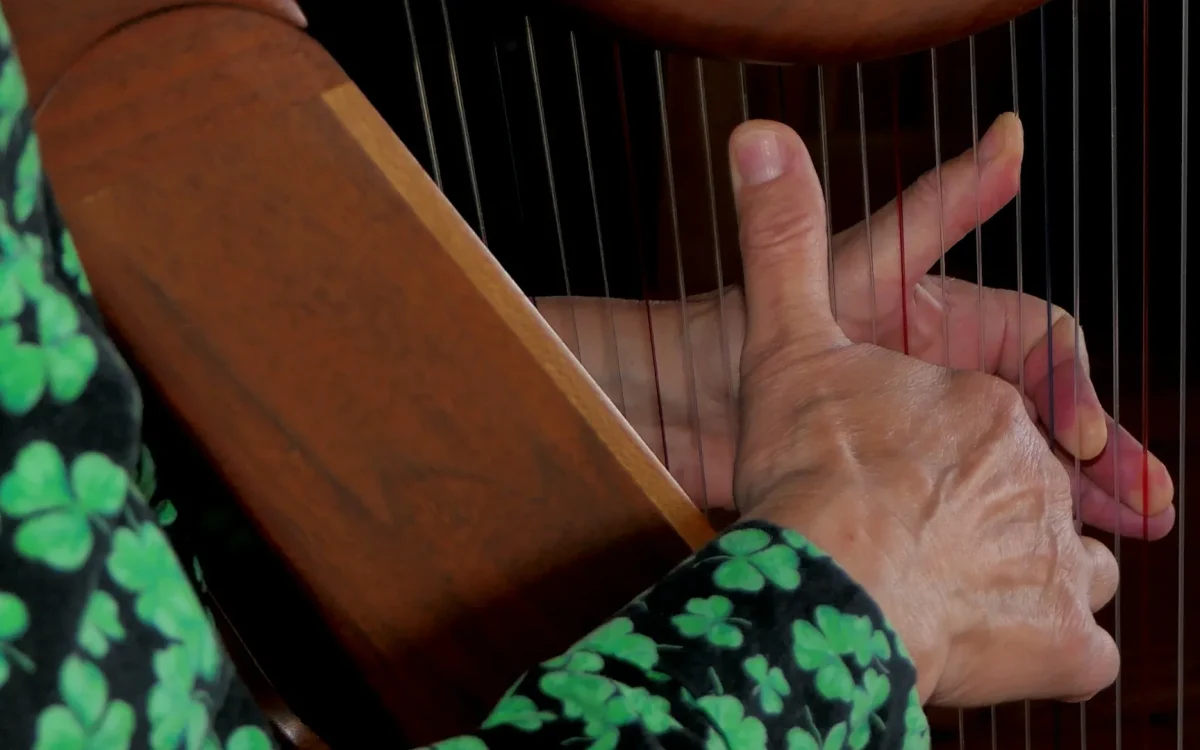
The harp is one of the oldest and most symbolic instruments of the Celtic world. It appears on Irish coins, the Irish coat of arms and the label of a famous Irish stout. For centuries, harpers held a place of honour at the courts of Gaelic chieftains in Ireland and Scotland, playing wire-strung harps with their fingernails. After a long decline, the harp experienced a remarkable revival in the twentieth century and is now played by thousands of musicians around the world. This guide tells the story of the Celtic harp.
Early harps
Harps have existed in many cultures for thousands of years, and harp-like instruments appear in early medieval carvings in Ireland and Scotland. The distinctive Gaelic harp, called cláirseach in Irish and clàrsach in Scottish Gaelic, developed by the later Middle Ages. It had a heavy, solid soundbox carved from a single piece of willow, a strong curved neck and a forepillar, and its strings were made of wire, usually brass.
The wire-strung harp
The wire-strung harp produced a bright, ringing, bell-like sound with a long sustain. Harpers played with their fingernails, which they grew long, and had to damp strings carefully to prevent notes from blurring together. The harp was played resting on the left shoulder, with the left hand playing the higher strings. This technique was very different from that of modern harps.
| Harp | Region | Feature |
|---|---|---|
| Cláirseach / clàrsach | Ireland, Scotland | Wire strings, played with fingernails |
| Welsh triple harp | Wales | Three rows of gut strings |
| Lever harp | Modern, widespread | Gut or nylon strings, levers to change key |
| Pedal harp | Orchestral | Pedals to change key; not traditionally Celtic |
Surviving instruments
A few medieval Gaelic harps survive. The Trinity College harp in Dublin, sometimes called the Brian Boru harp, although it dates from long after that king’s time, is one of the oldest, from around the fourteenth or fifteenth century. It served as the model for the harp on the Irish coat of arms and coins. In Scotland, the Queen Mary harp and the Lamont harp, both preserved in the National Museum of Scotland, date from the fifteenth century.
Harpers at court
In the Gaelic world, harpers were among the most respected members of a chieftain’s household, alongside poets and historians. They played at feasts, accompanied poets reciting verse and performed laments and celebratory music. Harpers were trained for many years and enjoyed high status. Some harp music was linked with the bardic tradition of praise poetry.
Decline
From the seventeenth century, the collapse of the Gaelic aristocratic order in Ireland and Scotland deprived harpers of their patrons. Many became travelling musicians, playing for wealthy families. Turlough O’Carolan (1670–1738), a blind Irish harper, composed many tunes for his patrons that blended Irish style with Italian Baroque influences, and his music is still widely played. By the late eighteenth century, the old harping tradition was in danger of disappearing. See Irish traditional music.
The Belfast Harp Festival
In 1792, the Belfast Harp Festival gathered ten of the last traditional harpers in Ireland, most of them elderly. A young organist, Edward Bunting, was employed to transcribe their music. Bunting went on to collect and publish many tunes, preserving a large part of the harp repertoire. One harper at the festival, Denis Hempson, still played in the old style with his fingernails. The festival is a landmark in the preservation of Irish music.
The Welsh triple harp
In Wales, the triple harp, with three parallel rows of strings, arrived from Italy in the seventeenth century and became so popular that it is known as the Welsh harp. The outer rows are tuned to the same scale, and the middle row provides the sharps and flats, allowing the player to play in different keys. The triple harp became a national symbol of Wales and was preserved by traditional players, including Romani families, into the twentieth century. Harp playing remains central to Welsh musical life, including at eisteddfodau, festivals of music and poetry.
Revival and the lever harp
In the nineteenth century, instrument makers created new small harps with gut strings, inspired by the Irish harp. In the twentieth century, the lever harp, a small harp with gut or nylon strings and levers that raise the pitch of individual strings, became the standard “Celtic harp”. It is lighter and easier to play than a pedal harp, making it popular with amateurs and folk musicians.
Alan Stivell and the modern revival
The Breton musician Alan Stivell, whose father built harps, played a central role in the modern revival. His album Renaissance of the Celtic Harp (1971) inspired a generation of harpers and listeners. In Ireland, harpers such as Derek Bell of The Chieftains and Máire Ní Chathasaigh developed new techniques for traditional music. Some musicians have revived the wire-strung harp, reconstructing historical instruments and techniques. See Breton and Galician music.
A closer look: wire versus gut
If you can, compare a recording of a wire-strung harp with a recording of a modern lever harp. The wire-strung harp sounds bright and bell-like, with long, ringing notes. The lever harp sounds warmer and softer, with shorter notes. Each produces a very different atmosphere, and listening to both helps you imagine the sound of medieval Gaelic courts.
Putting it into practice
Listen to an O’Carolan tune on harp, a recording of a wire-strung harp, a Welsh triple harp piece and Alan Stivell’s Renaissance of the Celtic Harp. The Instrument Origins Guide AI can tell you more about harp construction, and the Learn a World Instrument Coach AI can suggest how to start playing.
Frequently asked questions
What were Celtic harps strung with?
Traditionally wire, usually brass, played with the fingernails.
What is the Trinity College harp?
One of the oldest surviving Gaelic harps, model for the Irish national emblem.
What was the Belfast Harp Festival?
A 1792 gathering of Ireland’s last traditional harpers, whose music was transcribed by Edward Bunting.
Questions and notes