Polka and the Folk Dances of Central Europe
The polka swept from Bohemian villages to the ballrooms of Paris and the dance halls of America. Its story, alongside the Polish mazurka, Hungarian csárdás, Alpine yodelling and ländler, and the dance-house revival that keeps folk dance alive.
In this guide
Few dances have travelled as far as the polka. Born in the villages of Bohemia in the nineteenth century, it swept through the ballrooms of Prague, Vienna, Paris and London, crossed the Atlantic with emigrants and became the soundtrack of dance halls from Texas to Wisconsin. The polka is part of a rich family of Central European folk dances, including the Polish mazurka, the Hungarian csárdás and the Alpine ländler. This guide explores these traditions and the music that accompanies them.
The birth of the polka
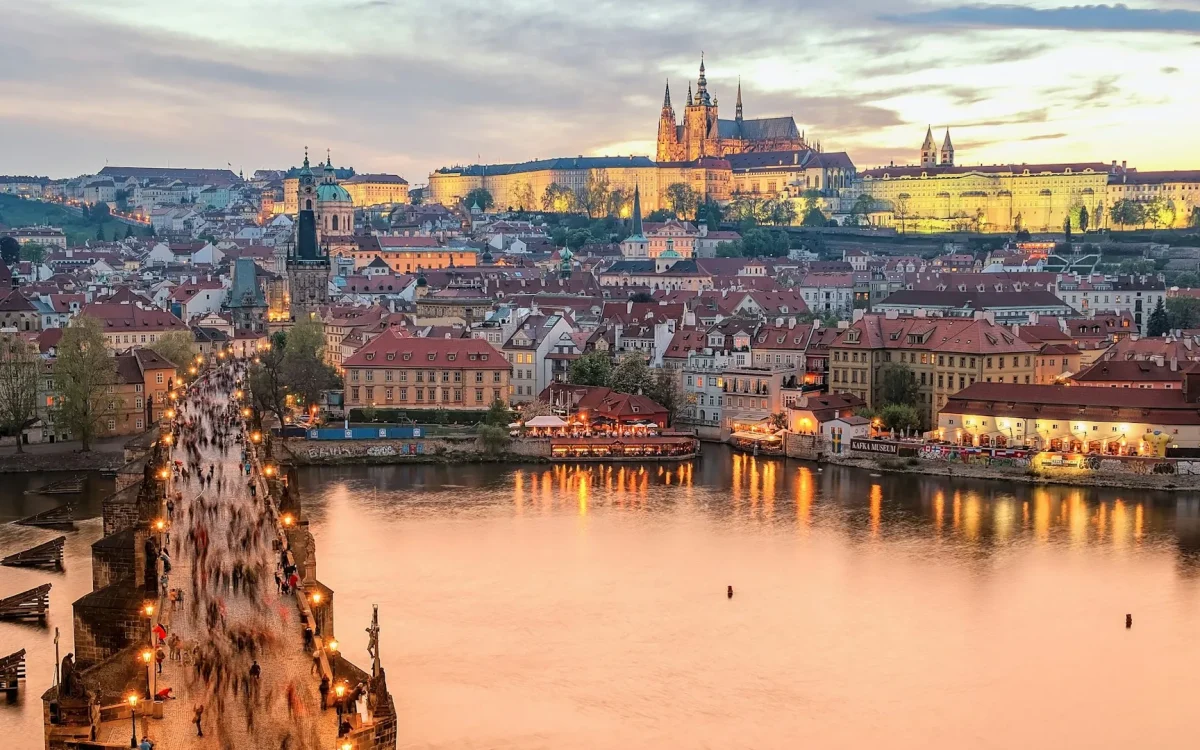
The polka originated in Bohemia, in what is now the Czech Republic, around the 1830s. According to a popular story, a young woman invented the dance’s characteristic steps in a village. Whatever its exact origin, the polka quickly became popular in Prague, and from the 1840s, it caused a craze in Paris and London known as “polkamania”, with dance teachers, publishers and fashion all embracing it. The name may come from the Czech word půlka, meaning “half”, referring to the dance’s short half-steps.
The polka rhythm
The polka is in a lively 2/4 time, with a bouncy “oom-pah” accompaniment: a bass note on the first beat and a chord on the second. Dancers perform a quick hop-step-close-step pattern while turning as couples. The rhythm is simple and infectious, which helps explain the polka’s enormous popularity.
Czech brass bands
In Bohemia and Moravia, village brass bands known as dechovka play polkas, waltzes and marches at festivals, weddings and celebrations. One of the most famous Czech polkas is “Škoda lásky”, composed by Jaromír Vejvoda in the 1920s, which became known in English as the “Beer Barrel Polka” and was hugely popular during the Second World War. Czech brass band music remains popular, especially among older generations.
Polish dances
| Dance | Meter | Character |
|---|---|---|
| Mazurka | 3/4 | Accents on the second or third beat, proud and lively |
| Oberek | 3/4 | Very fast, whirling |
| Krakowiak | 2/4 | Syncopated, from the Kraków region |
| Polonaise | 3/4 | Stately processional dance |
The mazurka, from the region of Mazovia, became popular in European ballrooms in the nineteenth century, and Frédéric Chopin wrote more than fifty mazurkas for piano, inspired by Polish folk music. Polish village bands often feature fiddles, bass and drums, and in the Tatra mountains, the Górale people have their own fiery fiddle music.
The Hungarian csárdás
The csárdás is Hungary’s most famous dance, named after the csárda, a roadside tavern. It typically begins with a slow section (lassú) and accelerates into a fast, exciting section (friss). Hungarian folk music is often played by string bands with violins, viola and double bass, sometimes with the cimbalom, a large hammered dulcimer. Romani musicians have long played a central role in Hungarian music. See Eastern European folk instruments.
Bartók, Kodály and the folk song
In the early twentieth century, the Hungarian composers Béla Bartók and Zoltán Kodály travelled through villages in Hungary and neighbouring regions with phonographs, recording thousands of folk songs. Their research revealed the richness of authentic village music, which differed from the urban “gypsy” style popular in cafés. Both composers drew on folk music in their own works, and Kodály developed a famous method of music education based on folk songs.
The táncház movement
In the 1970s, young people in Budapest began organising táncház, or “dance house”, events, where they learned village dances and music directly from traditional musicians, especially from Transylvania. The movement revived interest in authentic folk music and dance, and dance houses are now held throughout Hungary and abroad. UNESCO recognised the táncház method as a model for safeguarding intangible heritage.
Alpine traditions
In the Alps of Austria, Switzerland, Bavaria and northern Italy, folk music includes the ländler, a dance in 3/4 time that was a precursor of the waltz, and the schuhplattler, a dance in which men slap their thighs, knees and shoes. Yodelling, singing with rapid switches between chest voice and falsetto, was originally used to communicate across mountain valleys and became a beloved part of Alpine music. The zither and the accordion are typical Alpine instruments.
Polka in America
Central European immigrants brought the polka to the United States in the nineteenth and early twentieth centuries, and it took root in Polish, Czech, Slovenian and German communities, especially in the Midwest. Different styles developed, such as the Slovenian-style polka of Cleveland, popularised by Frankie Yankovic, and Polish-American polka in Chicago. The polka also influenced the music of Mexican communities in Texas and northern Mexico, where accordion-based norteño and conjunto music incorporated it. The Grammy Awards had a polka category from the mid-1980s until 2009.
A closer look: feeling the mazurka
To feel the difference between a waltz and a mazurka, count “one-two-three” and clap loudly on “one” for a waltz. Then shift the accent to “two” or “three” for a mazurka. The unexpected accent gives the mazurka its proud, stamping character. Listen to a Chopin mazurka and a village mazurka from Poland, and notice the accent pattern.
Putting it into practice
Listen to a Czech brass band polka, a Polish oberek, a Hungarian csárdás and an Alpine yodel. The World Rhythm Coach AI can help you feel these dance rhythms, and the Global Playlist Curator AI can suggest recordings. Practise with our metronome.
Frequently asked questions
Where does the polka come from?
From Bohemia, in what is now the Czech Republic, around the 1830s.
What is a csárdás?
A Hungarian dance that starts slowly and becomes fast and exciting.
What is the táncház movement?
A Hungarian revival in which people learn village music and dance at “dance house” events.
Questions and notes