Bulgarian Choral Singing: Odd Meters and Haunting Harmonies
The open-throated voices of Bulgarian women's choirs stunned the world in the 1980s. The village singing behind them, close harmonies in seconds, the odd meters of Bulgarian dance, the gaida, kaval and gadulka, and Le Mystère des Voix Bulgares.
In this guide
When the album Le Mystère des Voix Bulgares reached Western audiences in the 1980s, listeners were astonished. The bright, open-throated voices of Bulgarian women, singing harmonies full of clashing seconds, sounded unlike any choir they had heard. Behind that sound lies a village tradition of singing that goes back centuries, along with a dance music full of complex odd meters and instruments with ancient roots. This guide explores Bulgarian singing and folk music and explains what makes them so distinctive.
Village singing
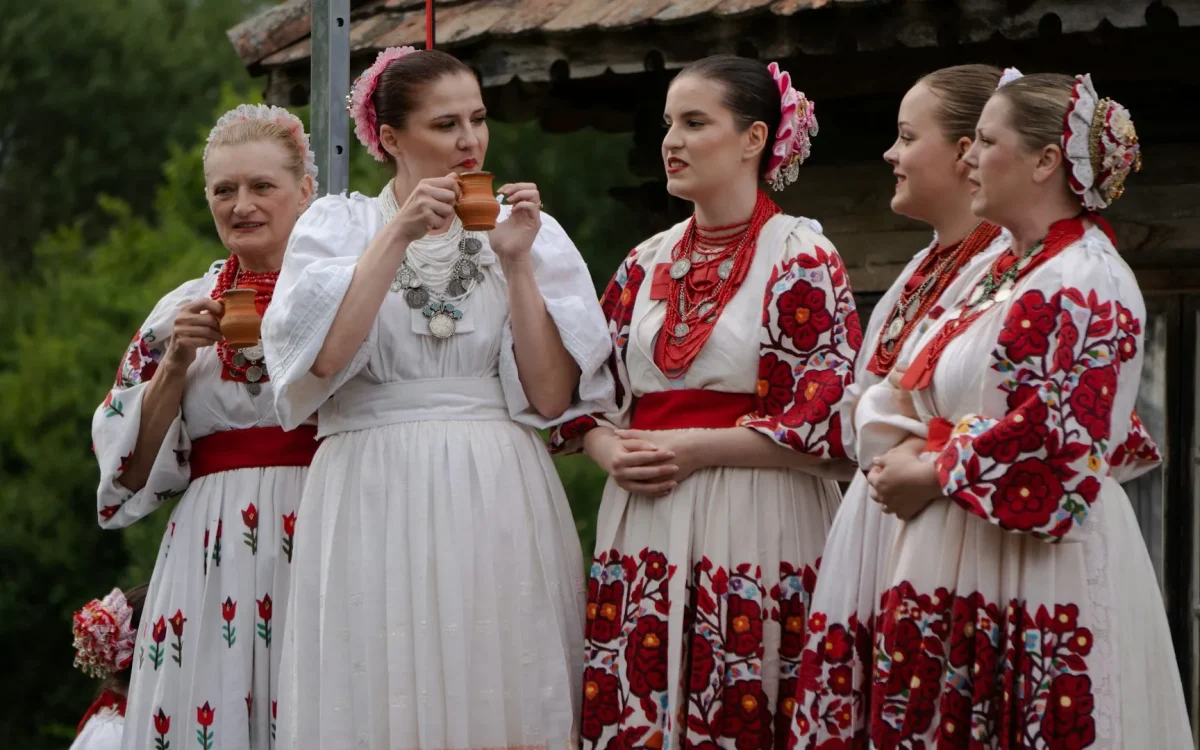
Bulgarian folk singing grew from village life. Women sang while working in the fields, at harvest, at weddings and during seasonal rituals and celebrations. Songs marked the cycle of the year and the stages of life, from birth and courtship to marriage and death. Many songs were sung outdoors, and the singing style developed to carry across fields and valleys.
The open-throated voice
Bulgarian singers use a powerful, bright chest voice, often described as open-throated, with little vibrato. The sound is direct and penetrating, more like a call than the rounded tone of Western classical singing. Singers decorate melodies with quick ornaments and shouts called izvikvane, and some songs end with a characteristic upward glide or yelp.
Harmony in seconds
In many regions, especially the Shope region around Sofia, women sing in two parts: one voice sings the melody, while another holds a drone or moves close to it. The two voices often meet at the interval of a second, two adjacent notes, which in Western harmony is considered dissonant. In Bulgarian singing, these close intervals are prized for the way they make the voices ring and vibrate together. Groups of women from the village of Bistritsa, near Sofia, preserve an archaic form of this polyphony recognised by UNESCO.
Regional styles
| Region | Style |
|---|---|
| Shopluk (around Sofia) | Two-part singing in seconds, bright voices |
| Pirin (southwest) | Polyphonic songs, links with Macedonian traditions |
| Rhodopes (south) | Long, slow songs, deep bagpipe sound |
| Thrace (south-central) | Ornamented solo singing, lively dances |
| Dobrudzha (northeast) | Distinctive dances and songs |
Each region has its own songs, dances, instruments and costumes, and Bulgarian musicians often identify strongly with their regional style.
Odd meters
Bulgarian dance music is famous for its odd meters, rhythms that combine groups of two and three pulses. The rachenitsa is in 7/8, counted 2+2+3; the kopanitsa is in 11/8, counted 2+2+3+2+2; the paidushko is in 5/8, counted 2+3; and the daichovo is in 9/8, counted 2+2+2+3. For Bulgarian dancers, these rhythms feel natural, and they dance them at great speed. See Balkan brass.
The instruments
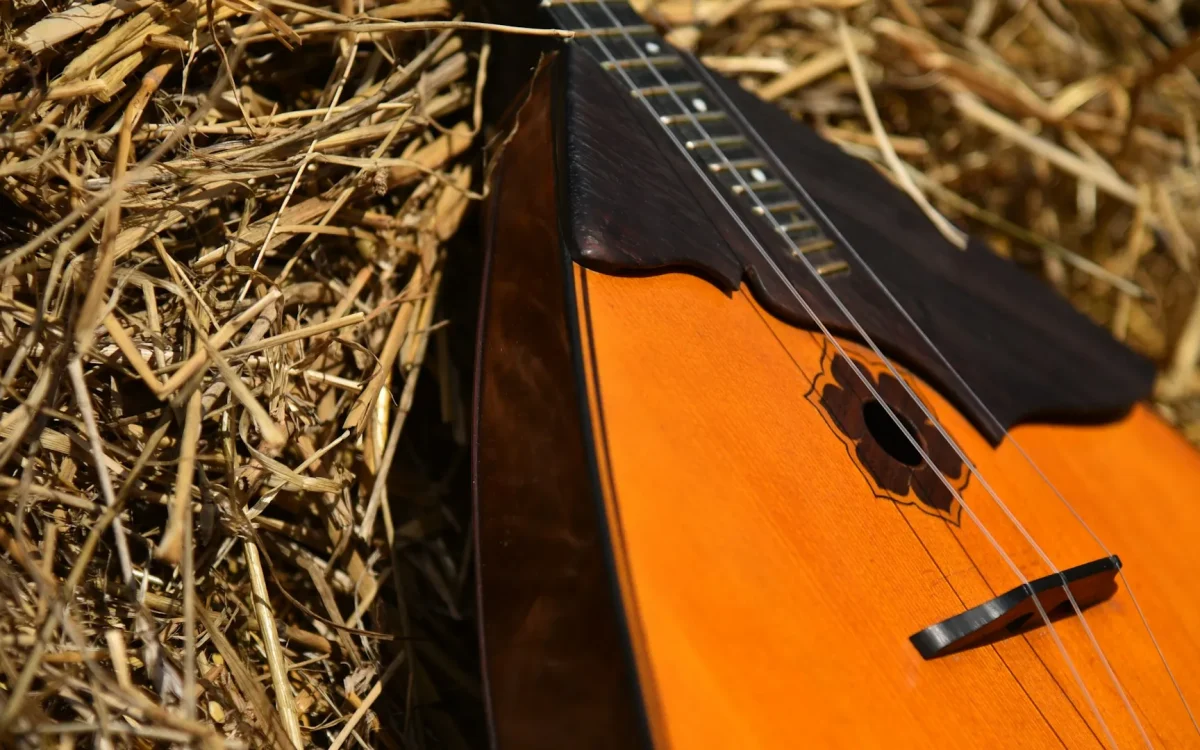
The gaida is a Bulgarian bagpipe made from goatskin, with a chanter and a single drone. The deep-toned kaba gaida of the Rhodopes is especially famous. The kaval is an end-blown flute with a soft, breathy tone, played with circular breathing in some styles. The gadulka is a pear-shaped bowed instrument held upright, with sympathetic strings. The tambura is a long-necked lute, and the tapan is a large double-headed drum. See bagpipes around the world.
State ensembles and arrangers
After the Second World War, Bulgaria’s communist government created professional state ensembles of folk song and dance. Composers such as Filip Kutev arranged village songs for large choirs, adding harmonies inspired by the folk style while preserving its vocal technique. The female choir of Bulgarian Radio and Television became one of the most famous of these ensembles. These arrangements created a new, concert version of Bulgarian folk music.
Le Mystère des Voix Bulgares
The Swiss producer Marcel Cellier, who had recorded Bulgarian music for years, released a compilation of choral recordings titled Le Mystère des Voix Bulgares in 1975. When the British label 4AD reissued it in 1986, it reached a large international audience, and a second volume won a Grammy Award in 1990. Musicians from rock, pop and classical music cited the recordings as an inspiration, and the choir toured internationally.
Wedding music
In the 1970s and 1980s, a style called wedding music, played by bands with clarinet, saxophone, accordion, electric guitar and drums, became hugely popular in Bulgaria. Musicians such as the clarinettist Ivo Papazov combined folk melodies and odd meters with jazz-like improvisation and astonishing virtuosity. The style was initially frowned upon by the authorities but became a symbol of musical freedom.
Bulgarian music in space
In 1977, NASA’s Voyager spacecraft carried a Golden Record with sounds and music from Earth, including a Bulgarian folk song from the Rhodopes sung by Valya Balkanska, accompanied by bagpipes. It remains one of the most remarkable recognitions of Bulgarian folk music.
A closer look: hearing the seconds
When you listen to a Shope-style song, focus on the moment when the two voices meet a second apart. The sound may seem harsh at first, but notice how it seems to buzz or vibrate, creating a kind of shimmer. Singers say the voices should ring together like bells. Once you hear it, the effect becomes thrilling rather than dissonant.
Putting it into practice
Listen to a track from Le Mystère des Voix Bulgares, a village recording from the Shope region and a Rhodope song with kaba gaida. Then try clapping a rachenitsa as 1-2, 1-2, 1-2-3 with our metronome. The World Rhythm Coach AI can teach you Bulgarian meters step by step.
Frequently asked questions
Why does Bulgarian singing sound so unusual?
Singers use a bright, open-throated voice and harmonies in seconds, which ring together.
What is a rachenitsa?
A Bulgarian dance in 7/8 time, counted 2+2+3.
What is Le Mystère des Voix Bulgares?
A famous series of recordings of Bulgarian choral music, compiled by Marcel Cellier.

Questions and notes