Learning the Darbuka: Doum, Tek and First Rhythms
The darbuka is a compact goblet drum with a crisp, ringing voice, and a few strokes are enough to play along with Arabic and Turkish songs. Egyptian and Turkish styles, how to hold it, doum, tek and ka, first rhythms and practice tips.
In this guide
The darbuka, also called doumbek or goblet drum, is one of the most exciting hand drums to learn. Its crisp, ringing high sounds and deep bass let you play the rhythms of Arabic, Turkish, Persian, Balkan and North African music. It is compact, loud enough for small groups and responsive to subtle techniques. With just a few basic strokes, you can play along with countless songs. This guide helps you choose a darbuka, learn the basic sounds and play your first rhythms.
Egyptian or Turkish?
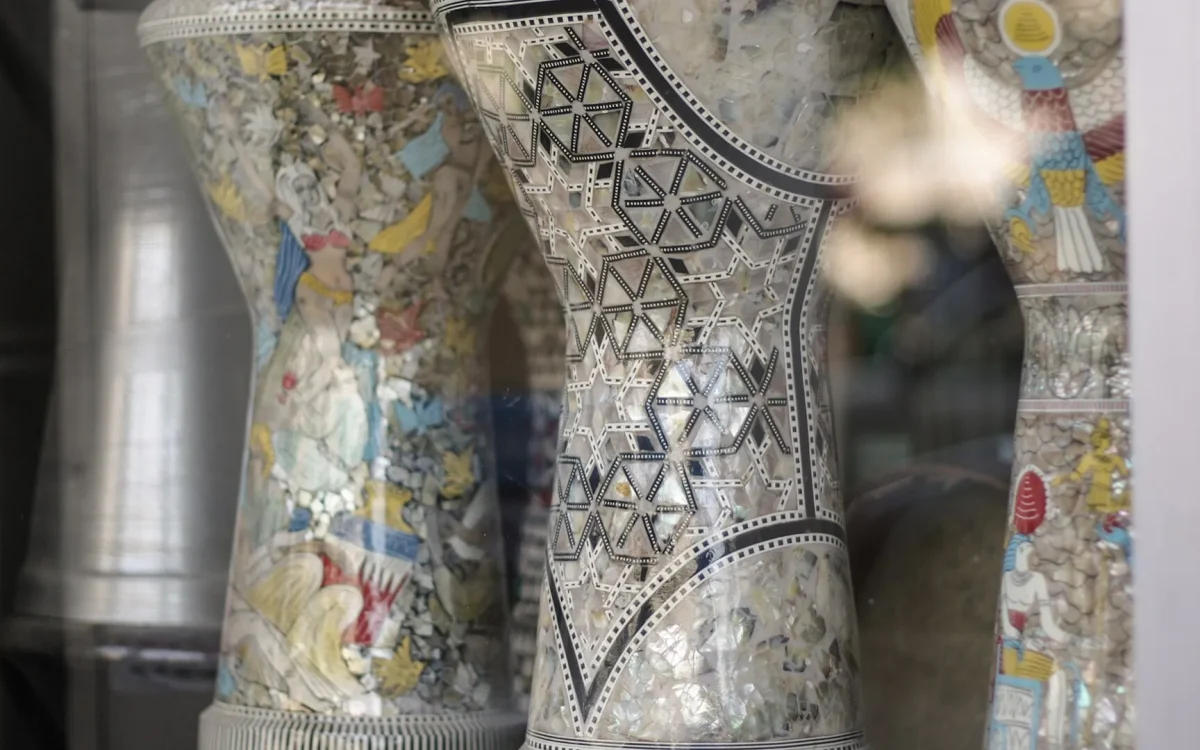
There are two main styles of modern darbuka. The Egyptian darbuka, usually cast in aluminium, has rounded edges where the head meets the body, which make it comfortable to play and produce a clear, round sound. The Turkish darbuka, often made of copper or other metals, has sharp edges, which allow very crisp, articulate high sounds and techniques such as the split-finger method. Traditional darbukas made of clay and goat skin are also available and have a warm, earthy sound but are more fragile. See Middle Eastern percussion.
| Type | Edge | Sound | Good for |
|---|---|---|---|
| Egyptian | Rounded | Clear, round, powerful | Arabic music, belly dance, beginners |
| Turkish | Sharp | Crisp, bright, articulate | Turkish and Balkan styles, finger techniques |
| Clay | Varies | Warm, earthy | Traditional sound, gentle playing |
For most beginners, a medium-sized Egyptian-style darbuka with a synthetic head is a good choice. See our guide to the best darbukas.
Holding the darbuka
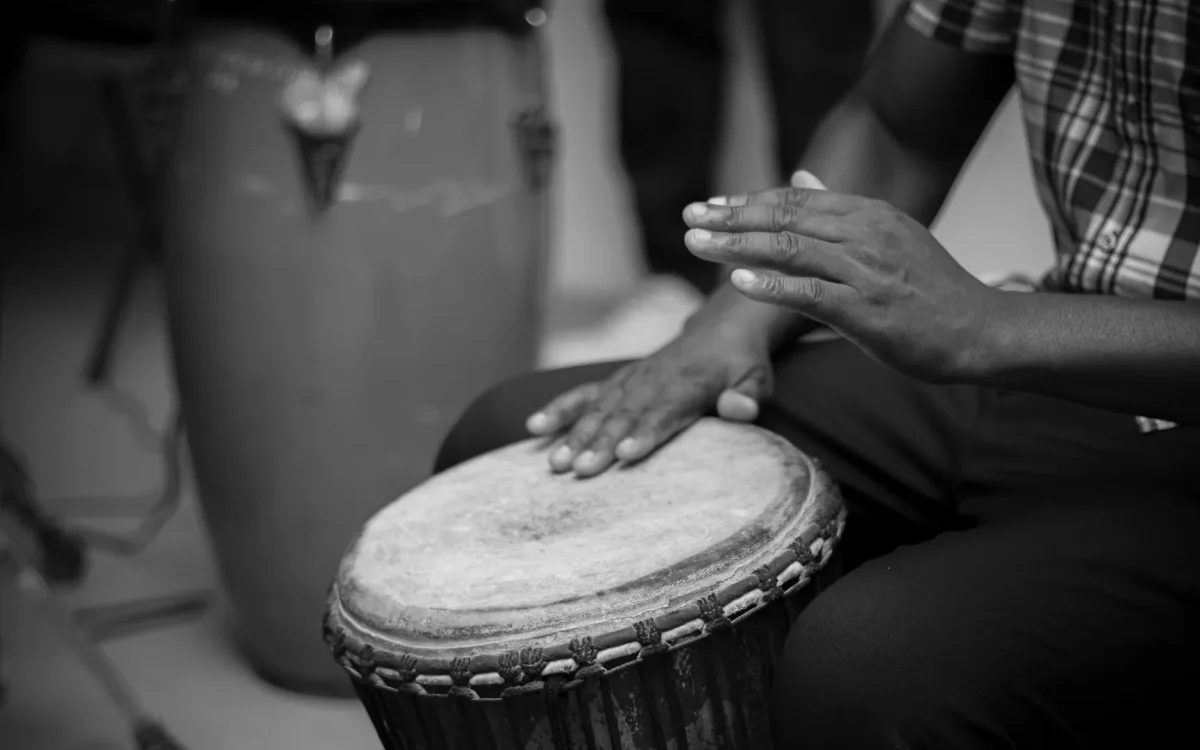
The most common way to hold the darbuka is to sit and rest it sideways across your non-dominant thigh, with the head facing forward and the body tucked under your arm. Your dominant hand plays near the centre and edge, while your other hand rests on the edge to play high sounds. Another position is to hold the drum upright between your knees. Choose the position that feels comfortable and allows you to reach the head easily.
The doum
The doum is the deep bass sound, played with the dominant hand. Strike the head about halfway between the centre and the edge with a relaxed, slightly cupped hand, and let it bounce off immediately so the drum can resonate. The doum should sound deep and full. If it sounds dull, you may be leaving your hand on the head too long.
The tek and ka
The tek is a high, sharp sound played with the fingers of the dominant hand striking the edge of the head, near the rim. The ring finger or middle finger typically strikes the edge, producing a crisp ring. The ka is the same high sound played with the fingers of the other hand. Practise alternating tek and ka until they sound equal in volume and tone.
The slap
The slap is a sharp, explosive sound produced by striking the head with a slightly cupped hand and keeping it in contact with the skin, which mutes the vibration. It is used for accents and adds excitement to rhythms. Learn it after you are comfortable with doum, tek and ka.
First exercises
Practise each sound separately, slowly and evenly. Then combine them: doum, tek, ka, tek, repeating the pattern smoothly. Say the syllables aloud as you play: this helps internalise the rhythm. Use a metronome to keep a steady tempo, starting slowly and increasing gradually.
Your first rhythm: maqsoum
Maqsoum is the most common Arabic rhythm. In eight counts: doum, tek, rest, tek, doum, rest, tek, rest. Say “doum tek – tek doum – tek -” and play it slowly. Once it feels comfortable, fill the rests with soft ka strokes to make the rhythm flow. Maqsoum will let you play along with a great deal of Arabic pop and folk music. Hear it in our World Rhythm Machine.
Baladi and saidi
Next, learn baladi: “doum doum – tek doum – tek -“, with a double doum at the start. Then saidi: “doum tek – doum doum – tek -“. Switching between these three rhythms will give you a solid foundation. See Arabic rhythms for beginners.
Simple fills and rolls
Once you can play the basic rhythms, add simple ornaments. A roll is a rapid series of tek and ka strokes, often played before a doum to build tension. Start by playing “tek ka tek ka” quickly before the first doum of a rhythm. Over time, you can learn more advanced techniques such as finger rolls and snaps.
Tuning and care
Most modern darbukas have synthetic heads with tuning lugs, which can be tightened with a key to raise the pitch. A higher tuning gives crisper teks; a lower tuning gives deeper doums. Tighten lugs evenly, a little at a time. Clay darbukas should be handled carefully and protected from knocks. Keep your drum in a padded bag.
A closer look: playing with music
Play along with recordings of Arabic songs. Start with slow songs in maqsoum, keeping the basic rhythm steady without ornaments. As you gain confidence, add fills at the ends of phrases. Listening to how professional drummers decorate the rhythm will give you ideas for your own playing.
Putting it into practice
Practise doum, tek and ka for ten minutes a day, then maqsoum, baladi and saidi. Play along with music. The Learn a World Instrument Coach AI can build a practice plan, and the World Rhythm Coach AI can teach you more rhythms.
Frequently asked questions
What is the difference between doum and tek?
Doum is the deep bass sound near the centre; tek is the high sound on the edge.
Should I buy an Egyptian or Turkish darbuka?
Egyptian darbukas, with rounded edges, are usually easier for beginners.
What is the first rhythm to learn?
Maqsoum, the most common Arabic rhythm.

Questions and notes