Arabic Rhythms for Beginners: Maqsoum, Baladi and Saidi
A handful of rhythms drive most Arabic pop, folk and dance music. How to read doum and tek, then learn maqsoum, baladi, saidi, malfuf, ayoub and masmoudi step by step, with tips for clapping, drumming and dancing.
In this guide
If you have ever tapped along to an Egyptian pop song or watched a belly dancer, you have heard the rhythms that power Arabic music. Most of them are built from just two basic sounds, a deep doum and a sharp tek, combined into short patterns that repeat throughout a song. Learning a few of these rhythms will transform how you listen to Arabic music and give you a foundation for playing the darbuka or frame drum. This guide introduces the most common rhythms step by step, with simple charts you can clap or drum.
Doum, tek and ka
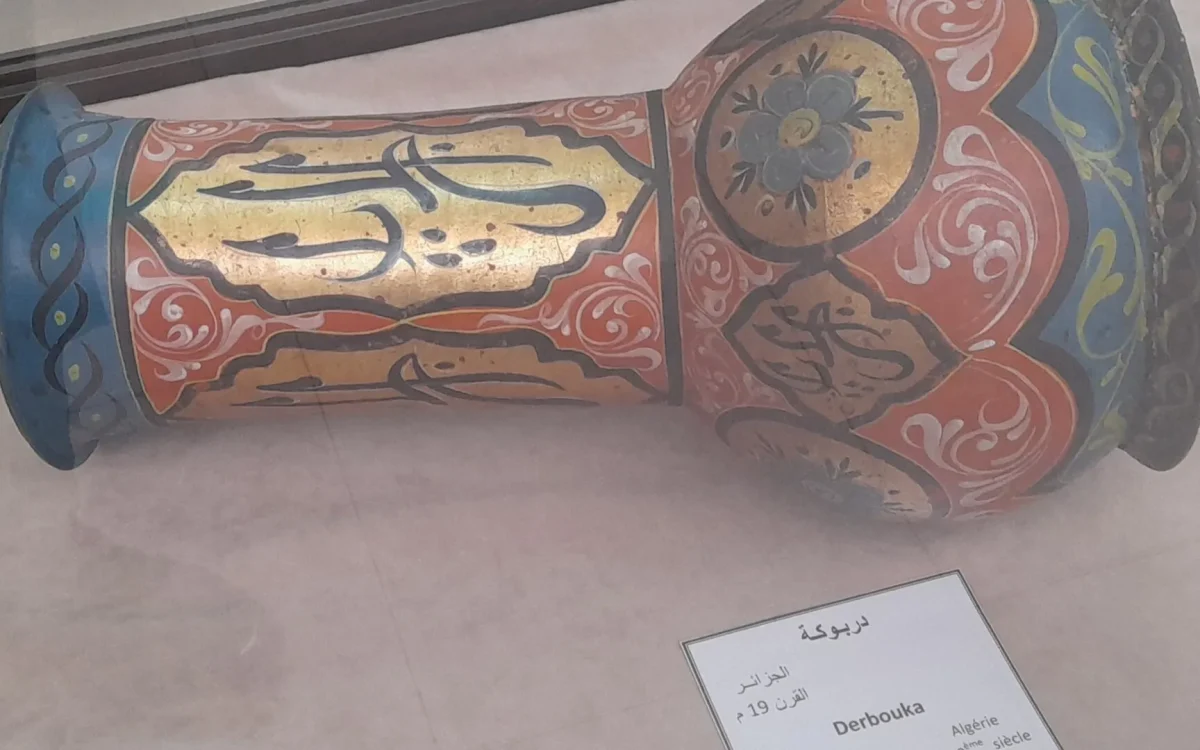
Arabic rhythms are traditionally learned by voice, using syllables that represent drum sounds. Doum (written D) is the deep sound made by striking the centre of the drum. Tek (T) is the sharp sound made by striking the edge with the strong hand. Ka (K) is the same sharp sound made with the other hand. A dash (-) means a silence or rest. On a table, you can play doum with your palm in the centre and tek with your fingertips near the edge. See Middle Eastern percussion.
Iqa’: the rhythmic cycle
In Arabic, a rhythmic cycle is called iqa’ (plural iqa’at). Each iqa’ has a fixed number of beats and a characteristic pattern of doums and teks. Drummers keep this skeleton steady and decorate it with additional strokes, rolls and fills, but the underlying pattern remains recognisable. Classical Arabic music uses many iqa’at, some very long, but popular and folk music mostly uses a handful of short ones.
Maqsoum
Maqsoum is the most common rhythm in Arabic pop and folk music. It has four beats, counted in eight half-beats:
| Count | 1 | & | 2 | & | 3 | & | 4 | & |
|---|---|---|---|---|---|---|---|---|
| Maqsoum | D | T | – | T | D | – | T | – |
| Baladi | D | D | – | T | D | – | T | – |
| Saidi | D | T | – | D | D | – | T | – |
Say “doum tek – tek doum – tek -” slowly, then play it. Once you can play maqsoum, you can accompany a huge number of songs. Hear it in our World Rhythm Machine.
Baladi
Baladi, meaning “of the country” or “folk”, is closely related to maqsoum but begins with two doums: “doum doum – tek doum – tek -“. The double doum gives it a heavier, earthier feel. Baladi is associated with Egyptian folk music and is a favourite rhythm for belly dance, where dancers often accent the two opening doums with their hips. Many drummers switch between maqsoum and baladi within a single song.
Saidi
Saidi comes from Upper Egypt, the region known as the Sa’id. Its pattern, “doum tek – doum doum – tek -“, places two doums in the middle of the cycle, creating a strong, bouncing feel. Saidi is associated with the tahtib, a traditional stick dance performed by men, and with folk dances in which dancers use canes. It also appears in pop songs and belly dance performances with a folk character.
Malfuf
Malfuf is a fast, two-beat rhythm: “doum – – tek – – tek -” over eight pulses, often played very quickly. It is used for energetic entrances and exits in dance performances and for exciting passages in songs. Because it is fast, beginners should practise it slowly at first, counting carefully.
Ayoub
Ayoub is another two-beat rhythm, “doum – ka doum tek -“, with a driving, rolling feel. It is associated with the zar, a ritual of healing and trance in Egypt and Sudan, and is often played as the music builds to a climax. In dance performances, ayoub can create a hypnotic, intense atmosphere.
Masmoudi
Masmoudi is a longer rhythm of eight beats, with a heavy, stately character. A common form is “doum doum – tek doum – tek -” played over a slower, broader count, with an extra doum at the start of the second half. It is used for slower, more dramatic songs and dances. Learning masmoudi introduces you to the longer cycles found in classical music.
Ornamenting rhythms
Once you know the basic patterns, you can begin to ornament them. Drummers fill the rests with soft ka strokes, add rolls before a doum and vary the rhythm at the end of a musical phrase. The key is to keep the main doums and teks in place so that musicians and dancers can still feel the underlying rhythm. Listen to experienced drummers and notice how they decorate the basic patterns without losing the groove.
Rhythms and dance
Arabic rhythms are deeply connected with dance, especially raqs sharqi, known in English as belly dance. Dancers respond to the doums with strong movements of the hips and to the teks with lighter, sharper accents. Many dancers learn to recognise rhythms by ear so they can respond to the drummer in improvised performances. Drummers and dancers often communicate in live performance, the drummer following the dancer’s movements and vice versa.
A closer look: hearing rhythms in songs
Choose a popular Egyptian song and listen for the darbuka. Try to identify whether it is playing maqsoum, baladi or another rhythm. Notice how the rhythm may change between verse and chorus or during instrumental breaks. With practice, you will begin to recognise these rhythms instantly, which deepens your enjoyment of Arabic music.
Putting it into practice
Practise maqsoum for five minutes a day with a slow metronome, then add baladi and saidi. Play along with recordings. If you want to learn an instrument, start with a darbuka; see learning the darbuka. The World Rhythm Coach AI can create practice plans for each rhythm.
Frequently asked questions
What is the most common Arabic rhythm?
Maqsoum, a four-beat rhythm played “doum tek – tek doum – tek -“.
What is the difference between maqsoum and baladi?
Baladi starts with two doums, giving it a heavier, earthier feel.
Do I need a drum to learn Arabic rhythms?
No. You can start by speaking the syllables and tapping on a table.

Questions and notes