Best Darbukas for Beginners
A good darbuka has a deep doum, a crisp tek and a comfortable edge. Egyptian versus Turkish styles, aluminium, copper and clay bodies, synthetic and natural heads, sizes, and six well-regarded darbukas for beginners.
In this guide
We may earn a commission when you buy through links on this page, at no extra cost to you. How we choose gear.
The darbuka, also called doumbek or goblet drum, is a compact, expressive drum used in Arabic, Turkish, Persian, Balkan and North African music. A good darbuka produces a deep doum, a crisp tek and a responsive feel that encourages you to practise. With many styles and materials available, choosing the right one can be confusing. This guide explains the main options and suggests six darbukas well suited to beginners.
What to look for in a darbuka
Egyptian or Turkish style?
| Style | Edge | Sound and feel |
|---|---|---|
| Egyptian | Rounded | Comfortable, powerful doum, clear tek |
| Turkish | Sharp | Crisp, articulate high sounds; suits finger techniques |
| Clay | Varies | Warm, earthy, traditional; fragile |
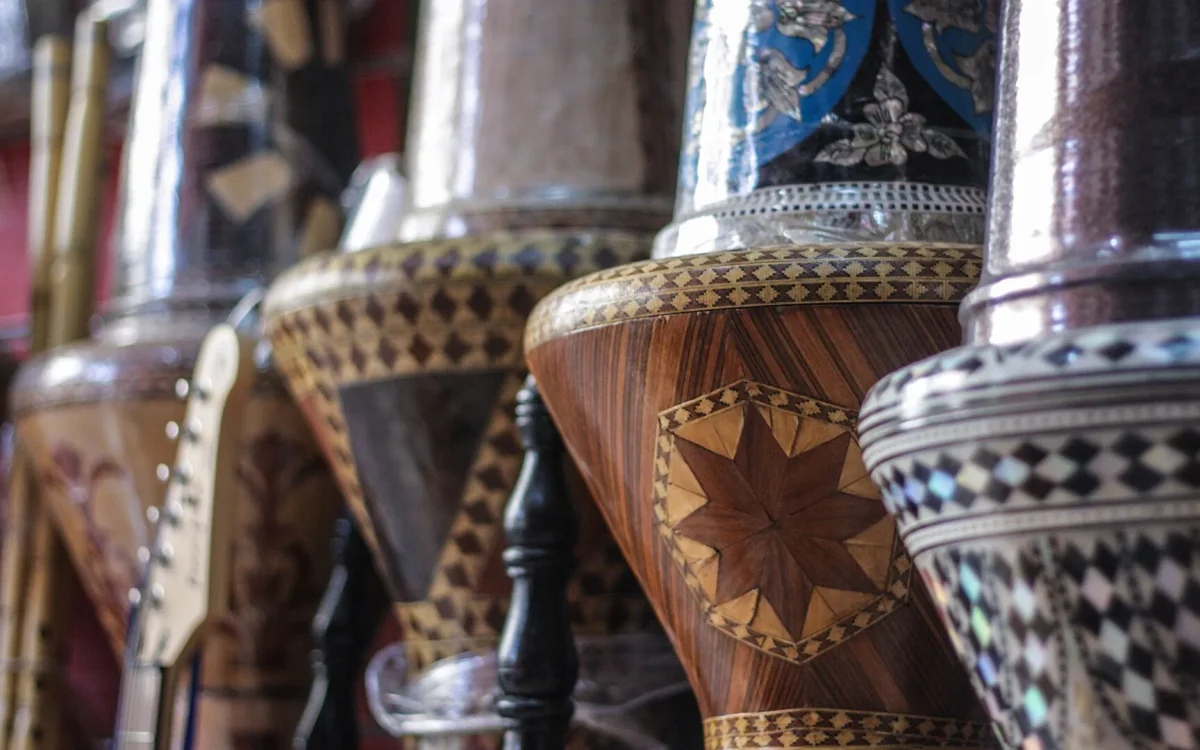
Egyptian-style darbukas, with rounded edges, are generally more comfortable for beginners and are the most common choice for Arabic music and belly dance. Turkish-style darbukas suit players interested in Turkish and Balkan music and advanced finger techniques. See learning the darbuka.
Body material
Most modern darbukas are made of cast aluminium, which produces a bright, powerful sound and is durable. Copper and other metals give different tone colours. Traditional clay darbukas have a warm, earthy sound but break easily. Some drums use synthetic or wooden bodies.
Head and tuning
Synthetic heads are stable in changing weather and easy to tune with a key. Natural heads, such as goat or fish skin, sound warmer but react to humidity and temperature. Most modern darbukas have tuning lugs, while some traditional drums have fixed heads that are tuned by gentle heating.
Size
Darbukas come in several sizes. A medium solo darbuka is the most versatile for beginners. Larger bass darbukas, sometimes called doholla, produce deeper sounds and are often used in ensembles, while small darbukas are easy to carry.
Six darbukas worth a look
These picks are based on reputations with players and teachers, and on published specifications. Availability varies by country.
Best Egyptian darbuka
Gawharet El Fan Darbuka
Egyptian style · cast aluminium · mother-of-pearl decoration options · synthetic head
Gawharet El Fan is one of the best-known Egyptian darbuka makers, used by many professional players. Its drums produce a powerful doum and clear tek, and many come with beautiful decoration.
Suits: players focused on Arabic music and belly dance.
Skip if: you want a sharp-edged Turkish sound.
Check the price on Amazon Price band: $$
Best traditional Egyptian maker
Sombaty Darbuka
Egyptian style · cast aluminium · respected Cairo workshop · synthetic head
Sombaty is another respected Egyptian darbuka maker, known for well-made drums with a classic Egyptian sound.
Suits: beginners and intermediate players who want an authentic Egyptian drum.
Skip if: you cannot buy from a seller who checks quality.
Check the price on Amazon Price band: $$
Best lightweight darbuka
Remo Doumbek
Lightweight synthetic shell · synthetic head · durable · tunable
Remo’s doumbeks use synthetic shells and heads, making them light, durable and affordable. A good choice for beginners, children and travel.
Suits: beginners on a budget and travellers.
Skip if: you want the powerful sound of a metal darbuka.
Check the price on Amazon Price band: $
Best widely available darbuka
Meinl Aluminium Darbuka
Aluminium body · synthetic head · tunable · several sizes and finishes
Meinl’s darbukas are easy to find, affordable and well made, with a bright sound and tuning lugs for easy adjustment.
Suits: beginners who want a reliable drum from a major brand.
Skip if: you want a specialist Egyptian or Turkish drum.
Check the price on Amazon Price band: $
Best Turkish-style darbuka
Kevork Turkish Darbuka
Turkish style · sharp edge · crisp high sounds · suits split-finger technique
Kevork makes Turkish-style darbukas favoured by players of Turkish and Balkan music, with a sharp edge that produces crisp, articulate high sounds.
Suits: players interested in Turkish style and advanced techniques.
Skip if: you mainly play Arabic music and prefer rounded edges.
Check the price on Amazon Price band: $$$
Best traditional sound
Clay Darbuka with Natural Head
Ceramic body · goat or fish skin head · warm, earthy tone · fragile
A traditional clay darbuka offers a warm, earthy sound that many players love. Handle it with care, as clay breaks easily, and protect the natural head from damp.
Suits: players who want a traditional sound for gentle playing.
Skip if: you travel a lot or play loudly.
Check the price on Amazon Price band: $
Useful accessories
- A padded case to protect the drum and its decoration.
- A tuning key, usually supplied with tunable darbukas.
- A strap for playing standing up.
- Finger cymbals (zills) if you are interested in belly dance music.
New or second-hand?
Metal darbukas are durable, so second-hand drums can be good value. Check for cracks in the body, worn tuning lugs and damage to the head. A worn synthetic head can be replaced easily. Clay darbukas should be checked carefully for cracks, which affect the sound.
A closer look: tuning for doum and tek
The tension of the head affects the balance between doum and tek. A tighter head gives crisper teks and a higher doum, while a looser head gives a deeper doum but less crisp high sounds. Experiment with small adjustments, tightening the lugs evenly, until you find a balance you like.
Putting it into practice
Once you have your darbuka, learn the maqsoum rhythm with our Arabic rhythms guide and practise with the World Rhythm Machine. The World Rhythm Coach AI can guide you step by step.
Which size suits you?
If you are unsure, choose a standard solo darbuka, which is the most common size and suits most hands and playing positions. Players with small hands or children may find a smaller drum easier to hold, while those who mainly accompany others may enjoy the deeper doum of a larger bass darbuka. Trying a drum in a shop, or asking a teacher, is the best way to decide.
Frequently asked questions
Which darbuka is best for beginners?
A medium-sized Egyptian-style aluminium darbuka with a synthetic head.
What is the difference between Egyptian and Turkish darbukas?
Egyptian darbukas have rounded edges; Turkish darbukas have sharp edges for crisper high sounds.
Are clay darbukas good?
They sound warm and traditional but are fragile.
Questions and notes