The Kora: West Africa’s Harp and the Griot Tradition
The kora is a 21-string harp-lute from West Africa, played for centuries by griots who carry history in song. How it is built and played, the jali tradition, the epic of Sundiata and the great kora players of today.
In this guide
The kora is one of the most beautiful sounds in African music: shimmering, harp-like notes that ripple and cascade over a gentle, repeating bass. For centuries, it has been played by griots, the hereditary musicians and historians of West Africa, who use it to accompany songs about kings, heroes and families. Today the kora is played on concert stages around the world, in solo recitals, collaborations with jazz and classical musicians and modern pop. This guide explains how the kora is made and played, its role in griot culture and how to start listening.
What is a kora?
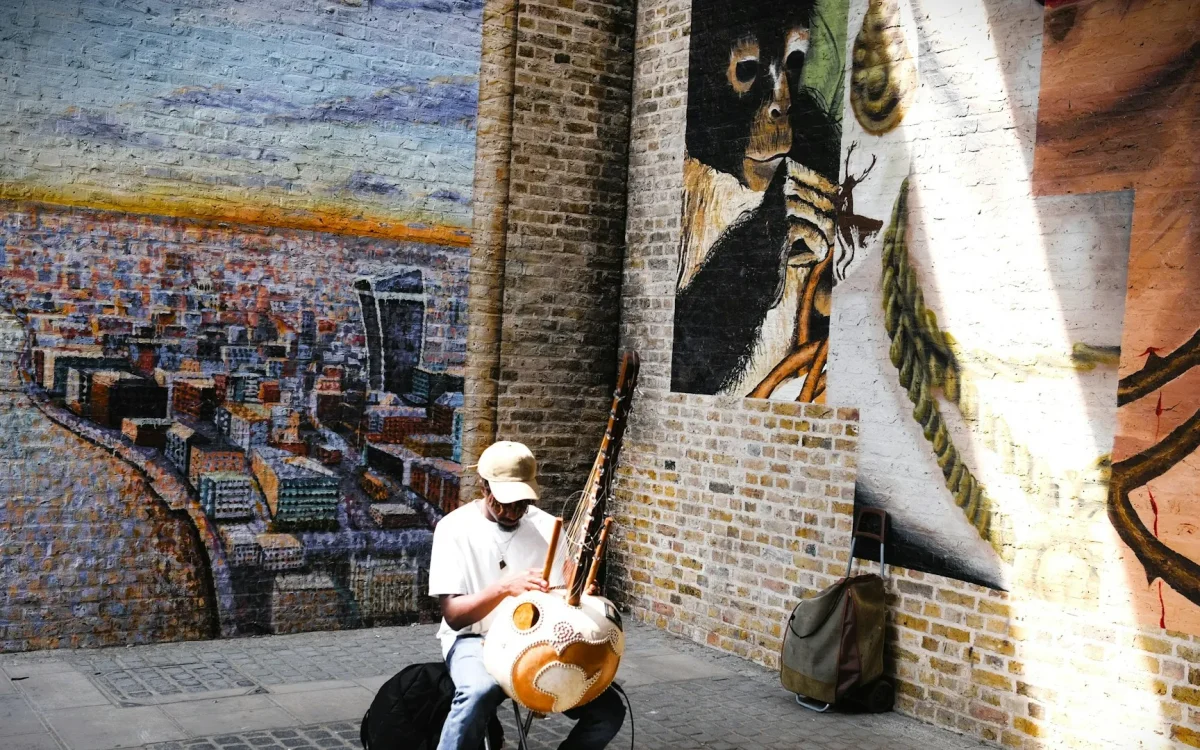
The kora is a harp-lute with 21 strings. Its body is made from a large calabash (a dried gourd) cut in half and covered with cowhide, which acts as a soundboard. A long hardwood neck passes through the calabash, and the strings run from the bottom of the neck over a tall bridge standing on the skin, then up to the top of the neck. Traditionally the strings were made from strips of antelope hide; today most players use nylon fishing line. The player holds the kora facing them, using two wooden handles beside the strings, and plucks with the thumbs and index fingers.
Two rows of strings
The strings are arranged in two rows, one for each hand, set at right angles to the soundboard. The notes alternate between the two rows, so that playing a scale means moving from one hand to the other. This arrangement allows the player to play a bass line with the thumbs and melodies with the index fingers at the same time, producing the kora’s characteristic interlocking texture. Traditionally, the strings were tuned with leather rings around the neck; many modern koras use guitar-style tuning pegs, which make tuning easier.
Tunings
| Tuning | Character |
|---|---|
| Sauta | Common tuning with a raised fourth degree |
| Silaba | Similar to a major scale; widely used |
| Hardino | Traditional tuning with a slightly different flavour |
| Tomora | Another traditional tuning |
The kora uses seven-note scales close to the Western major scale and its relatives, but traditional tunings vary slightly between regions and players. Changing tuning gives each piece its particular colour.
Kumbengo and birimintingo
Kora music is built from two main elements. Kumbengo is the repeating accompaniment pattern, an ostinato that combines bass and melody and identifies the piece. Birimintingo consists of improvised runs and decorative passages, often fast and virtuosic, that the player adds between or over the kumbengo. A good kora player moves smoothly between these two elements, keeping the groove while improvising. When a griot sings, the kora accompanies the voice with the kumbengo, adding birimintingo between verses.
The griot tradition
In the Mandinka culture of West Africa, spread across Mali, Senegal, The Gambia, Guinea and Guinea-Bissau, the kora is played by jalis, known in French as griots. Jalis are hereditary musicians and oral historians: they memorise genealogies, recount the deeds of ancestors, praise patrons, give advice and perform at ceremonies such as weddings and naming ceremonies. Only members of jali families traditionally played the kora, learning from their parents and relatives from childhood. The jali is a respected and sometimes feared figure, because words of praise or criticism carry great weight.
Sundiata and the Mali Empire
Many kora songs are linked with the history of the Mali Empire, founded in the thirteenth century by Sundiata Keita. The epic of Sundiata, recited by griots, tells of his difficult childhood, his exile and his victory over the sorcerer-king Soumaoro Kanté. Griots have passed down this epic for centuries, and certain songs, such as those praising Sundiata and other heroes, form part of the core repertoire. According to tradition, the first kora player was a figure connected with the period of the empire’s expansion, though accounts differ.
Great kora players
Toumani Diabaté (1965–2024), from a long line of Malian griots, became one of the most famous kora players in the world, known for his solo recordings and collaborations with musicians from blues, flamenco and jazz. His father, Sidiki Diabaté, was also a celebrated player. Ballaké Sissoko, another Malian virtuoso, is known for his lyrical style and collaborations with classical musicians. Sona Jobarteh, from a Gambian griot family, became the first female kora virtuoso from such a family to gain international fame, breaking with the tradition that only men played the instrument. Many other players continue the tradition in West Africa and the diaspora.
The kora today
The kora appears in many kinds of music today, from traditional ceremonies to Afropop, jazz, classical crossovers and film soundtracks. Musicians have built koras with extra strings and electric pickups, and kora schools in The Gambia, Senegal and Mali teach students from around the world. Its sound has become an emblem of West African culture.
A closer look: hearing two hands
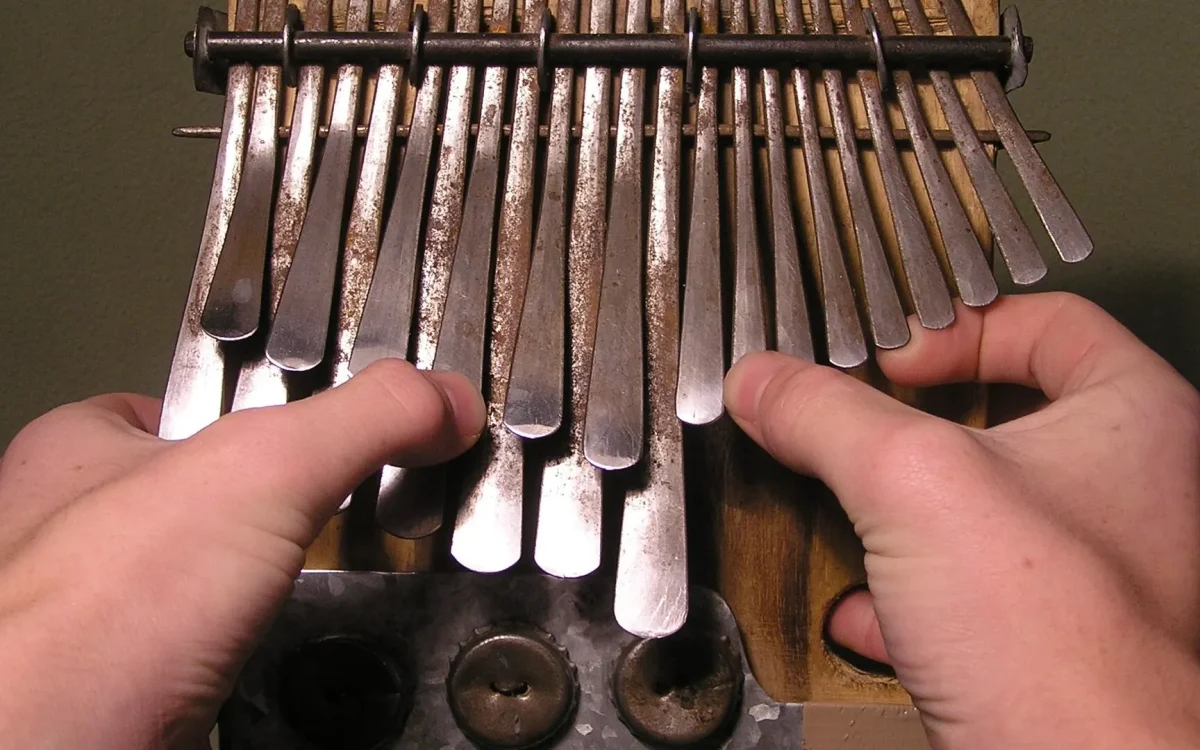
When you listen to a solo kora recording, try to separate the low, repeating bass line played by the thumbs from the higher melody and improvisations played by the index fingers. Although one person is playing, it often sounds like two or three instruments. If you play an instrument such as the guitar or kalimba, you may recognise the idea of combining a bass pattern and melody. Our kalimba player lets you try a related two-handed approach.
Putting it into practice
Listen to a solo recording by Toumani Diabaté, a song by Sona Jobarteh and a collaboration between a kora player and a musician from another tradition. The Instrument Origins Guide AI can tell you more about how the kora is built, and the Music Culture Storyteller AI can share the story of Sundiata.
Frequently asked questions
How many strings does a kora have?
Traditionally 21, arranged in two rows, one for each hand.
What is a griot?
A hereditary West African musician and oral historian, called a jali in Mandinka.
What is the kora made of?
A large calabash covered with cowhide, a hardwood neck and, today, nylon strings.

Questions and notes