African Polyrhythm Explained for Listeners and Players
Polyrhythm is two or more rhythms played at once, and it sits at the heart of much African music. Three against two, the 12/8 bell pattern, interlocking parts and how to feel and play cross-rhythms yourself.
In this guide
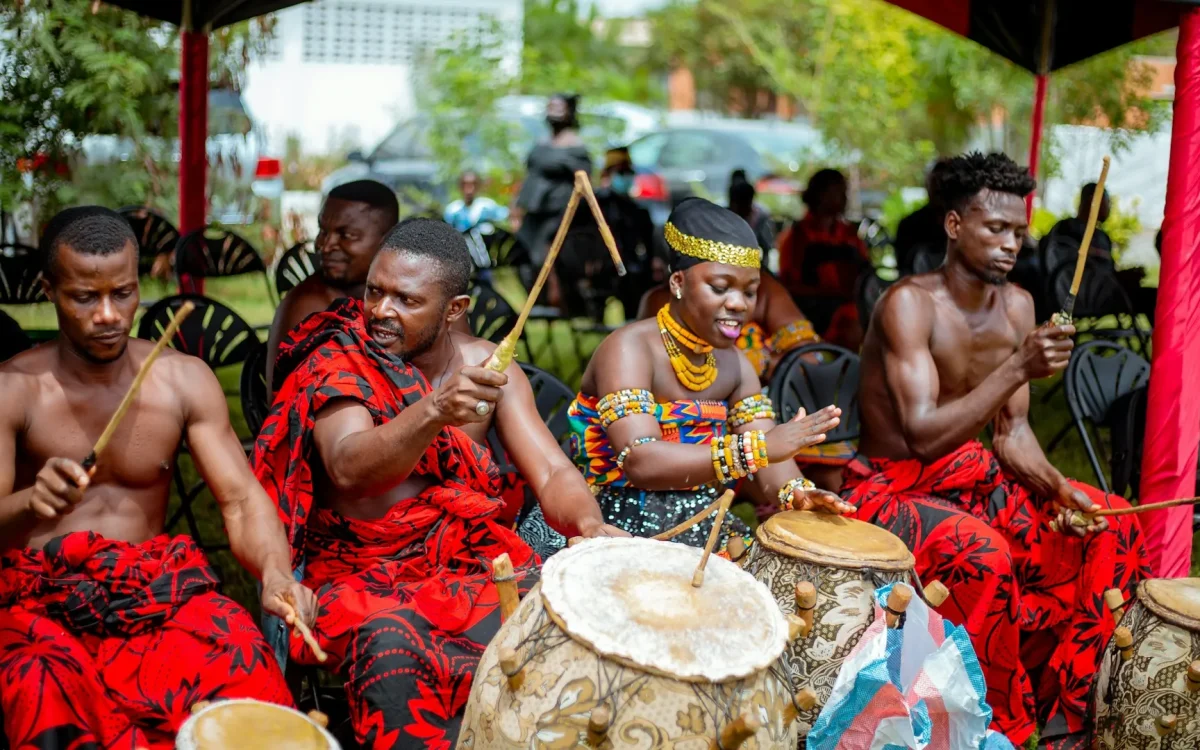
Listen to a West African drum ensemble and you may find it hard to tell where the beat is. A bell repeats a pattern, one drum seems to play in groups of two, another in groups of three, dancers move to yet another pulse, and somehow it all fits together into a powerful, rolling whole. This layering of different rhythms at the same time is called polyrhythm, and it is one of the defining features of much African music. This guide explains polyrhythm in plain language and gives you exercises to feel it in your own body.
What is polyrhythm?
A polyrhythm happens when two or more rhythms that divide time differently are played together. The simplest example is three against two: in the same span of time, one part plays three evenly spaced notes while another plays two. The two parts start together, separate and meet again at the start of the next cycle. When several such relationships are combined, the result is a rich texture in which the listener can focus on different layers and hear different patterns.
Cross-rhythm and the beat
Musicians often use the term cross-rhythm for a rhythm that cuts across the main pulse, such as a pattern of three beats played against a feeling of two. In much African music, there is not a single dominant beat that everything follows. Instead, the ensemble creates a shared framework, and each part relates to it in its own way. Dancers and listeners often feel a slower underlying pulse, sometimes expressed in the dancers’ steps, while the instruments play faster patterns around it.
Three against two
To feel three against two, count “one-two-three” evenly and clap on every number with your right hand. Then tap on “one” and halfway through “two” with your left hand, so that your left hand plays two evenly spaced beats in the time your right plays three. A helpful phrase for the combined rhythm is “nice cup of tea”: “nice” is where both hands play together, “cup” is right hand alone, “of” is left hand alone and “tea” is right hand alone. Practise slowly until the two hands feel independent.
The 12/8 bell pattern
Many West African drum ensembles are organised around a bell pattern, often called a timeline, that repeats throughout a piece. One of the most widespread is a seven-stroke pattern in a cycle of twelve fast pulses. It can be written as x.x.xx.x.x.x, where x is a stroke and . is a silent pulse. The twelve pulses can be felt as four groups of three or six groups of two, which is why the bell pattern supports both duple and triple feelings at once. You can hear this pattern in our World Rhythm Machine.
| Pulse | 1 | 2 | 3 | 4 | 5 | 6 | 7 | 8 | 9 | 10 | 11 | 12 |
|---|---|---|---|---|---|---|---|---|---|---|---|---|
| Bell | X | . | X | . | X | X | . | X | . | X | . | X |
| Felt in 4 | X | . | . | X | . | . | X | . | . | X | . | . |
| Felt in 3 | X | . | . | . | X | . | . | . | X | . | . | . |
Clap the bell pattern while stamping the “felt in 4” row with your feet. Then try stamping the “felt in 3” row instead. The same bell pattern sits comfortably over both, which shows how flexible it is.
Interlocking parts
In many African ensembles, each musician plays a short, simple part, but the parts are designed to fit together like pieces of a puzzle. Often one player fills the gaps left by another, a technique sometimes called interlocking or hocketing. This principle appears in drum ensembles, in Zimbabwean mbira music where two players interweave, in the guitar parts of Afrobeat and soukous, and in the xylophone duets of West Africa. Listening for these interlocking parts is one of the great pleasures of African music. See the mbira.
The role of the master drummer
In many ensembles, such as those of the Ewe people of Ghana and Togo, a master drummer plays a lead drum that improvises, signals changes and communicates with dancers, while the supporting drums and bell keep their patterns steady. The master drummer’s phrases often play against the other parts, creating additional cross-rhythms and excitement. Understanding the steady parts first makes it easier to appreciate the lead drum’s freedom.
Polyrhythm and dance
African rhythms are deeply connected with dance. Dancers may move different parts of their bodies to different layers of the rhythm, for example stepping to one pulse while moving their shoulders or hips to another. Many teachers say the best way to understand a rhythm is to dance it rather than analyse it. If you ever get the chance to take an African dance class with live drummers, you will feel polyrhythm in a way no explanation can match.
Polyrhythm across the world
African polyrhythm travelled with the African diaspora and shaped music across the Americas. The clave patterns of Cuban music, the swing of jazz, the grooves of samba and the rhythms of funk all carry traces of African cross-rhythm. Learning to feel three against two and the 12/8 bell pattern will help you understand many styles. See the clave explained.
A closer look: shifting your focus
Choose a recording of a West African drum ensemble and listen to it three times. The first time, follow the bell. The second time, follow the lowest drum. The third time, follow the dancers’ pulse if you can feel it, or simply tap a slow steady beat. Each time, the music will seem to change character, even though nothing in the recording has changed. This shifting perspective is part of how polyrhythmic music works.
Putting it into practice
Practise three against two with “nice cup of tea” for five minutes a day, then clap the 12/8 bell pattern along with a slow metronome. When this feels comfortable, try playing the bell pattern on a cowbell or a table while a friend plays a steady pulse. The World Rhythm Coach AI can guide you through more exercises, and the djembe beginner’s guide shows how to apply these ideas on a drum.
Frequently asked questions
What is a polyrhythm?
Two or more rhythms that divide time differently, played at the same time, such as three against two.
What is a timeline in African music?
A repeating bell pattern that organises the ensemble, such as the seven-stroke 12/8 pattern.
How can I learn to feel polyrhythm?
Start with three against two using a phrase like “nice cup of tea”, then clap bell patterns over a steady pulse.



Questions and notes