Congolese Rumba and Soukous: Guitars That Make You Dance
Congolese rumba grew from Cuban records heard in 1940s Kinshasa and became Africa's most influential dance music. Its great bands, the sebene guitar break, the faster soukous style and UNESCO recognition.
In this guide
Across much of Africa, the sound of sparkling, interlocking electric guitars over a rolling dance beat is instantly recognisable: it is Congolese rumba and its faster offspring, soukous. Born in the twin cities of Kinshasa and Brazzaville on either side of the Congo River, this music became one of the most influential and widely loved styles on the continent. In 2021, UNESCO inscribed Congolese rumba on its list of the Intangible Cultural Heritage of Humanity. This guide explains how it developed and how to listen to it.
Cuban records on the Congo River
In the 1930s and 1940s, records of Cuban son and rumba, many from the “GV” series released by a European label, became hugely popular in Central Africa. Congolese musicians heard echoes of African rhythms in this music and began creating their own versions, often singing in Lingala and mixing Cuban forms with local guitar styles and rhythms. The result came to be called Congolese rumba, though it is not the same as Cuban rumba. See son cubano.
Le Grand Kallé and African Jazz
Joseph Kabasele, known as Le Grand Kallé, led the band African Jazz, one of the most important groups of the 1950s and 1960s. In 1960, as the Democratic Republic of the Congo gained independence, African Jazz recorded “Indépendance Cha Cha”, which became an anthem of African independence movements. The band trained many musicians who went on to lead their own groups, including the singer Tabu Ley Rochereau.
Franco and TPOK Jazz
François Luambo Makiadi, known as Franco, led OK Jazz (later TPOK Jazz) for more than three decades. A brilliant guitarist and prolific composer, Franco was called the “Sorcerer of the Guitar”. His band was huge, with many singers and guitarists, and his songs ranged from love stories to biting social commentary. Franco and Tabu Ley were the two giants of Congolese music for decades.
The sebene
A classic Congolese rumba song often begins with a slower, sung section, sometimes in the form of a ballad. Then comes the sebene, an instrumental section in which the lead guitar plays fast, cascading, repeating patterns, the rhythm quickens and dancers fill the floor. The sebene is the heart of the music, where the guitarists show their skill and the band builds energy. Atalaku, or animators, often shout encouragement and dance names during this section.
Soukous
From the 1970s and 1980s, a faster style known as soukous became popular, especially among Congolese musicians working in Paris and elsewhere. Soukous focuses even more on the sebene, with high-energy guitar and dance rhythms. Artists such as Kanda Bongo Man, Papa Wemba, Pepe Kalle and later Koffi Olomide brought Congolese music to international audiences, and soukous influenced popular music across East, West and Southern Africa.
Key elements
| Element | Description |
|---|---|
| Lead guitar | Bright, high, fast-picked melodic patterns |
| Rhythm guitars | Interlocking supporting patterns |
| Bass | Melodic, flowing lines |
| Drums and percussion | Driving dance rhythm, snare accents |
| Vocals | Smooth lead singers, harmonised choruses, in Lingala and French |
| Atalaku | Animator who shouts and leads the dance |
A continental sound
Congolese rumba and soukous travelled across Africa through records, radio and touring bands. In Kenya and Tanzania, Congolese musicians influenced benga and other styles. In West Africa, Congolese guitar became a model for many bands. Few African musical styles have had such a widespread impact.
A closer look: following the lead guitar
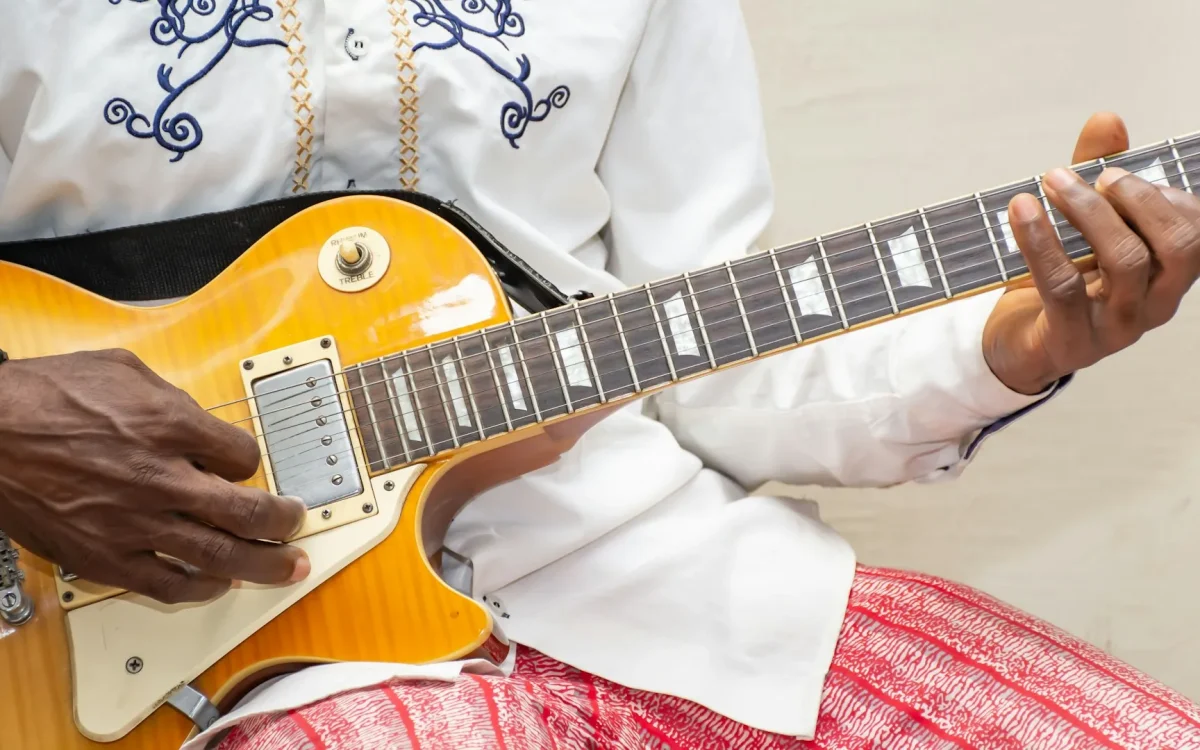
When the sebene begins, focus on the lead guitar. You will hear rapid, repeating phrases high on the neck, often based on short cycles that change gradually. Then listen to how the other guitars fit underneath, each playing a different pattern. The interplay can sound like a conversation among several voices. Watching live videos of Congolese bands helps you see how guitarists divide the parts.
Putting it into practice
Listen to “Indépendance Cha Cha”, a Franco and TPOK Jazz recording and a soukous track from the 1980s, and notice how the sebene develops. The Global Playlist Curator AI can build a Congolese music playlist, and the Music Culture Storyteller AI can tell you about the cities and musicians behind it.
Ndombolo and beyond
In the 1990s, a new dance craze called ndombolo swept Kinshasa and then the rest of Africa. Built on fast sebene grooves with energetic hip movements, it was popularised by bands such as Wenge Musica and singers including Koffi Olomide, Werrason and JB Mpiana. Each generation of Congolese musicians has kept the essential ingredients, interlocking guitars, smooth vocals and a dance section, while updating the sound with new instruments and production.
Frequently asked questions
Is Congolese rumba the same as Cuban rumba?
No. It was inspired by Cuban son records but developed into its own style in Kinshasa and Brazzaville.
What is a sebene?
The instrumental dance section of a Congolese song, led by fast guitar patterns.
Who was Franco?
A Congolese guitarist and bandleader of TPOK Jazz, one of the most influential African musicians.
Questions and notes