Bollywood Film Music: How Indian Cinema Shaped Popular Song
In India, film songs are popular music. How Bollywood's songs are made, the playback singers whose voices the stars mime to, the golden age composers, A.R. Rahman's revolution and the styles Bollywood borrows.
In this guide
In India, film songs are not just soundtracks: they are the country’s most widely heard popular music. Songs from Hindi films made in Mumbai, the industry known as Bollywood, play at weddings, festivals, parties, on the radio and on phones, often months before a film is released. For decades, Bollywood songs combined Indian classical and folk traditions with Western orchestras, jazz, rock, disco and electronic music, creating a uniquely eclectic sound. This guide explains how Bollywood music works and introduces its great voices and composers.
Songs at the heart of cinema
Indian films have included songs since the first Indian sound film, Alam Ara, in 1931. Most Bollywood films include several song-and-dance sequences that express emotions, advance the story or simply entertain. Songs are often released before the film, and a successful soundtrack can make a film a hit. For many Indians, film music provides the soundtrack to their lives, with particular songs associated with love, celebration or grief.
Playback singing
One of the most distinctive features of Bollywood is playback singing. Actors rarely sing their own songs; instead, professional playback singers record the songs in a studio, and the actors lip-sync on screen. Audiences know and celebrate the playback singers as stars in their own right. A singer’s voice might be associated with many different actors over decades.
| Singer | Known for |
|---|---|
| Lata Mangeshkar | Pure, expressive voice; recorded thousands of songs over seven decades |
| Asha Bhosle | Versatility from ghazals to cabaret and pop |
| Mohammed Rafi | Range and emotional depth across every style |
| Kishore Kumar | Warm, playful voice; also an actor |
| Mukesh | Soulful, melancholy songs |
Lata Mangeshkar (1929–2022), often called the “Nightingale of India”, and her sister Asha Bhosle dominated female playback singing for decades.
The music director
In Bollywood, the composer is called the music director. Music directors compose the songs, arrange them for orchestras and supervise recordings. In the golden age of the 1950s and 1960s, music directors such as Naushad, S.D. Burman, Shankar–Jaikishan and Madan Mohan created songs drawing on Indian classical ragas, folk melodies and Western orchestral music. R.D. Burman, son of S.D. Burman, brought rock, jazz, funk and Latin influences in the 1970s and became one of the most influential composers.
The lyricists
Bollywood lyrics, mostly in Hindi and Urdu, are often poetic, drawing on the traditions of the ghazal and Urdu poetry. Lyricists such as Sahir Ludhianvi, Shailendra, Anand Bakshi, Gulzar and Javed Akhtar wrote words that remain beloved. Many songs express love, longing and separation in imagery drawn from classical poetry.
A mix of styles
Bollywood songs borrow from many musical styles. Classical-based songs use ragas and Indian instruments; qawwali-style songs bring Sufi devotional music to the screen; ghazals feature poetic love songs; folk-inspired songs draw on regional traditions such as Punjabi bhangra. At the same time, Bollywood absorbed Western styles: jazz and cabaret in the 1950s and 1960s, rock and funk in the 1970s, disco in the 1980s with composers such as Bappi Lahiri, and hip-hop and electronic dance music later. See qawwali.
A.R. Rahman
A.R. Rahman, from Chennai, transformed Indian film music from the 1990s. Beginning with the Tamil film Roja in 1992, he combined Indian melodies with electronic production, world music and orchestral sounds, working in Tamil and Hindi cinema. His music for Slumdog Millionaire won two Academy Awards in 2009, for Best Original Score and Best Original Song (“Jai Ho”). He remains one of the most celebrated composers in India.
Dance and choreography
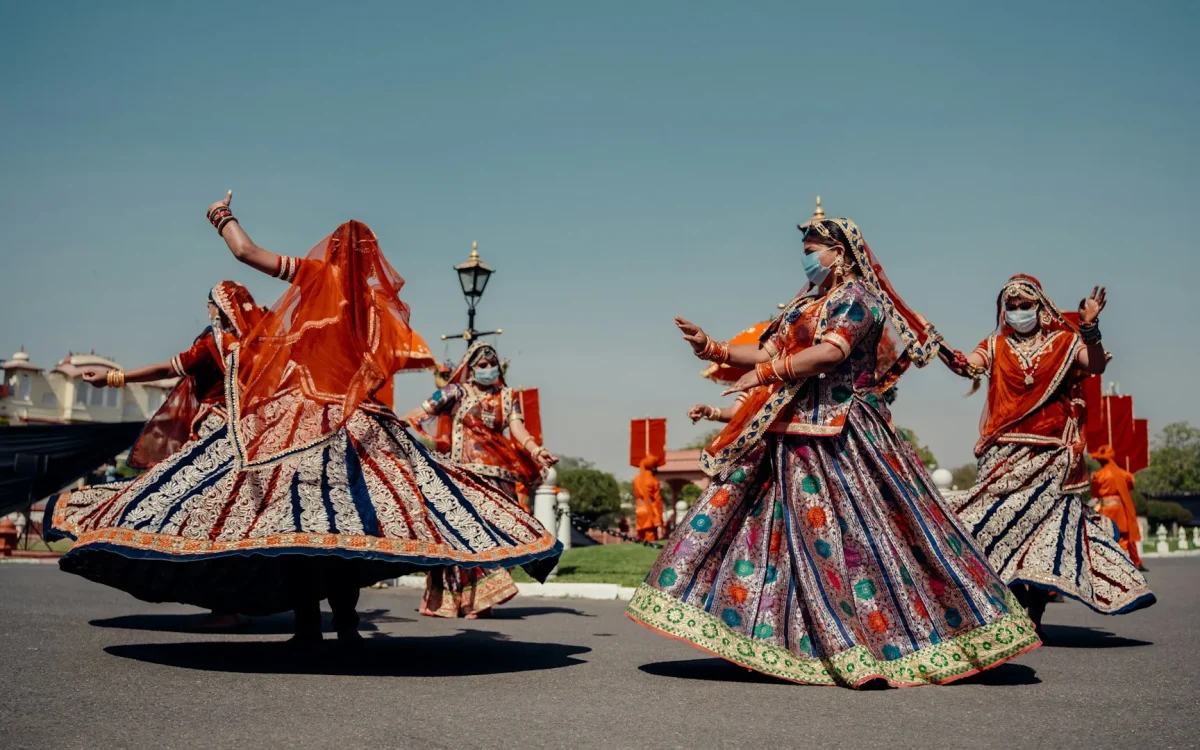
Bollywood songs are inseparable from dance. Choreographers create elaborate routines that combine Indian classical and folk dance with Western styles. Famous song sequences are often imitated at weddings and parties, and Bollywood dance classes are popular around the world.
Bollywood and beyond
Bollywood is only one part of Indian cinema. Films in Tamil, Telugu, Malayalam, Kannada, Bengali and other languages have their own music industries and great composers. In 2023, “Naatu Naatu” from the Telugu film RRR, composed by M.M. Keeravani, won the Academy Award for Best Original Song, showing the global reach of Indian film music.
Bollywood today
Today, Bollywood music is shaped by streaming, remixes and independent artists. Singers such as Arijit Singh have become hugely popular, and songs are often remixed or recreated from older hits. Indian independent musicians also create music outside film, but film songs remain at the centre of Indian popular culture.
A closer look: hearing the orchestra
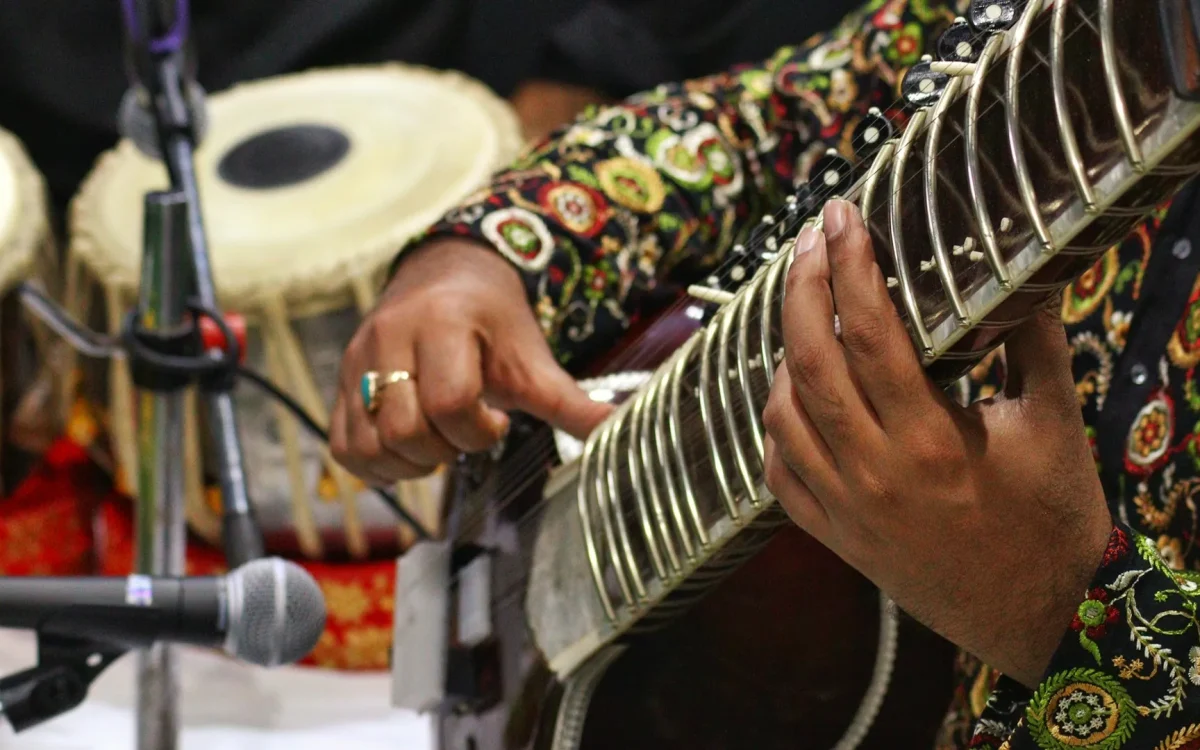
Listen to a golden-age Bollywood song from the 1950s or 1960s and notice the orchestra: strings, accordion, mandolin and flute alongside Indian instruments such as sitar, tabla and shehnai. Then listen to an R.D. Burman song from the 1970s and notice the electric guitars, brass and funk rhythms. Finally, listen to an A.R. Rahman song and notice the electronic production. Each era reflects its musical world.
Putting it into practice
Create a playlist of one song per decade from the 1950s to today. The Global Playlist Curator AI can help, and the World Music Genre Explorer AI can explain the classical and folk styles behind the songs. Read also Indian classical music.
Frequently asked questions
What is playback singing?
Professional singers record film songs, and actors lip-sync to them on screen.
Who is the most famous Bollywood singer?
Lata Mangeshkar, who recorded thousands of songs over seven decades.
What did A.R. Rahman win the Oscars for?
Best Original Score and Best Original Song (“Jai Ho”) for Slumdog Millionaire in 2009.

Questions and notes