Gamelan: The Shimmering Orchestras of Java and Bali
Gamelan is Indonesia's orchestra of bronze gongs and metallophones, played as one instrument. Its two tuning systems, the cycles marked by the great gong, the calm of Javanese court music and the dazzling speed of Balinese gamelan.
In this guide
A gamelan is not a single instrument but an entire orchestra, made mostly of bronze gongs, metallophones and drums, built and tuned together as one set. Its sound can be calm and meditative, like rippling water, or fast and explosive, with shimmering cascades of notes. Gamelan is the traditional ensemble music of Indonesia, especially the islands of Java and Bali, where it accompanies ceremonies, dance, theatre and shadow puppetry. In 2021, UNESCO inscribed gamelan on its list of the Intangible Cultural Heritage of Humanity. This guide explains how a gamelan works and how to listen.
The instruments
| Instrument | Type | Role |
|---|---|---|
| Gong ageng | Large hanging gong | Marks the end of the main cycle |
| Kempul and kenong | Smaller gongs | Divide the cycle into sections |
| Saron | Bronze metallophone | Plays the core melody |
| Bonang | Rows of small kettle gongs | Elaborates the melody |
| Gender | Metallophone with resonators | Plays flowing ornamental patterns |
| Kendang | Hand drums | Leads the tempo and signals changes |
| Rebab, suling, voice | Fiddle, flute, singers | Add lyrical melodies |
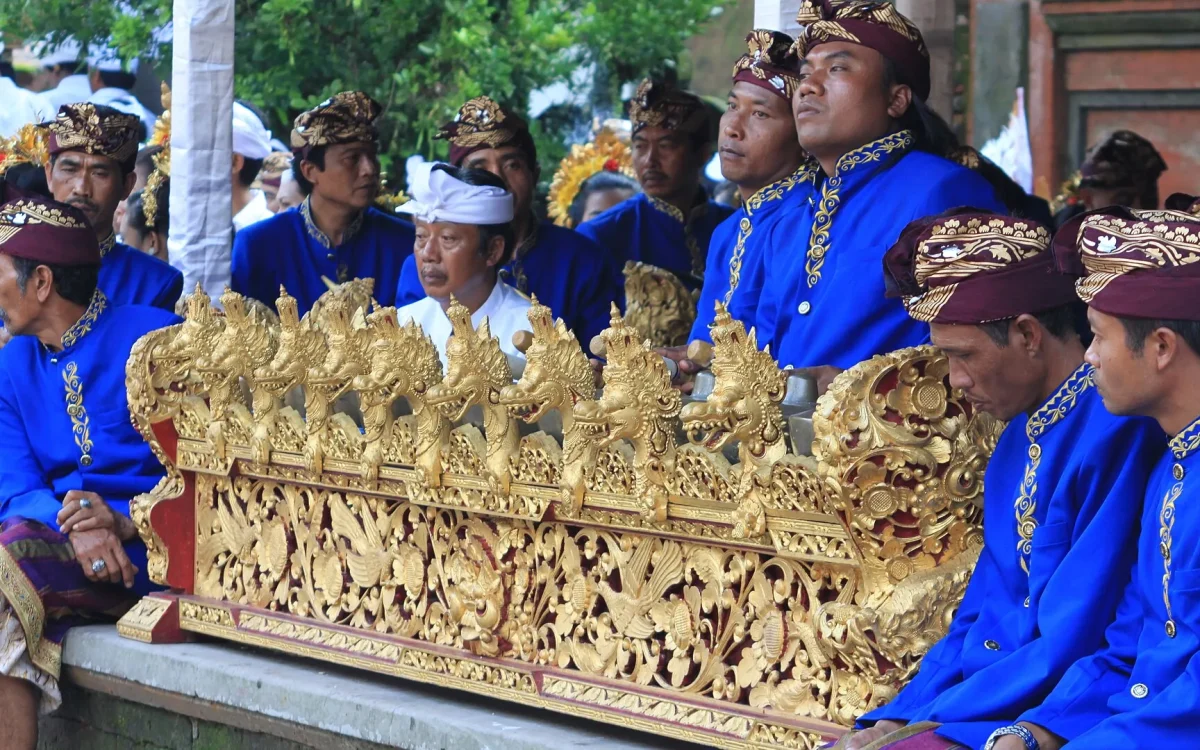
A complete gamelan may include dozens of instruments and require twenty or more players. The instruments are often beautifully carved and painted, and a gamelan set may be given a name and treated with respect.
Two tuning systems
Gamelan uses two main tuning systems. Slendro is a five-note system with intervals that are roughly equal, giving a floating, open sound. Pelog is a seven-note system with unequal intervals, from which musicians usually use five notes in a piece. Neither system matches Western tuning, and each gamelan set is tuned slightly differently from every other, so instruments from different sets cannot be mixed. Many gamelan include two sets of instruments, one in each tuning. Explore pentatonic scales with our World Scales Explorer.
The gong cycle
Gamelan music is organised in repeating cycles, and the gongs mark the structure, a system known as colotomic structure. The great gong ageng sounds at the end of each cycle, called a gongan, and smaller gongs divide it into equal parts. This creates a sense of time moving in circles rather than in a straight line. The stroke of the large gong is the most important moment in the cycle, where all the parts come together.
The core melody
At the heart of a gamelan piece is a core melody, called balungan (“skeleton”) in Java, played by the saron and other metallophones. Other instruments elaborate on this melody at different speeds: some play it more slowly, others decorate it with faster patterns. The result is a layered texture in which the same melody is heard simultaneously at different levels of density, a principle sometimes called heterophony or stratification.
Javanese gamelan
In Central Java, gamelan developed in the royal courts of Yogyakarta and Surakarta (Solo), where it became refined, slow and meditative. Javanese gamelan often features soft-playing instruments such as the gender, rebab, suling and voice, with a gentle, flowing sound. Performances accompany court dances, ceremonies and wayang kulit, the shadow puppet theatre in which a puppeteer, called the dalang, directs both the story and the music through the night.
Balinese gamelan
Balinese gamelan is often faster, louder and more dynamic. The style called gong kebyar, which emerged in the early twentieth century in north Bali, is famous for sudden explosive bursts, rapid tempo changes and brilliant virtuosity. Balinese musicians play interlocking patterns called kotekan, in which two players each play part of a fast melody, combining into a single rapid line. Balinese instruments are also tuned in pairs, slightly apart, so that they create a shimmering beating effect called ombak (“wave”).
Gamelan in community life
In Bali, many villages have their own gamelan groups, and music is part of temple ceremonies, processions and festivals. Playing in a gamelan is a communal activity: no single musician stands out, and everyone contributes to the whole. In Java, gamelan is taught in schools and conservatories, and gamelan groups exist in many universities around the world.
Gamelan and the world
Gamelan has fascinated musicians from abroad for more than a century. The French composer Claude Debussy heard a Javanese gamelan at the Paris Exposition of 1889 and was deeply influenced by its sound. Many twentieth-century composers drew on gamelan techniques, and minimalist composers were attracted by its cyclical structures. Today, gamelan ensembles exist in many countries.
Etiquette
Gamelan instruments are treated with respect. Players remove their shoes and sit on the floor, and it is considered disrespectful to step over the instruments. Offerings may be made to the gamelan before performances. If you visit a gamelan class or performance, follow the example of the musicians.
A closer look: hearing the layers
When you listen to a gamelan recording, try to find the core melody first, played at a steady pace by the metallophones. Then listen for the faster decorations above it and the slow gong strokes marking the cycle. In Balinese music, listen for the kotekan, which sounds like one impossibly fast player but is really two playing together. See also interlocking parts in African music.
Putting it into practice
Listen to a Javanese court gamelan piece and a Balinese gong kebyar performance, and notice the contrast in mood and tempo. If you visit Indonesia, look for performances in Yogyakarta or Ubud. The Music Culture Storyteller AI can explain wayang stories, and the Instrument Origins Guide AI can describe how gamelan instruments are made.
Frequently asked questions
What is a gamelan?
An Indonesian ensemble of bronze gongs, metallophones, drums and other instruments, built and tuned as one set.
What are slendro and pelog?
The two gamelan tuning systems: slendro has five roughly equal notes, pelog seven unequal notes.
What is the difference between Javanese and Balinese gamelan?
Javanese gamelan is often slow and meditative; Balinese gamelan is often fast, bright and dramatic.

Questions and notes