Taiko: The Power of Japanese Drumming
Taiko combines thunderous drums, athletic movement and shouted calls into one of the world's most exciting performance styles. Its roots in shrines, temples and festivals, the birth of ensemble taiko in the 1950s and Kodo's world tours.
In this guide
A taiko performance hits you in the chest. Huge drums boom, smaller drums crackle, players move in powerful, choreographed stances and shout encouraging calls as the rhythms build. Taiko, meaning “drum” in Japanese, has ancient roots in Japanese religion, festivals and theatre, but the ensemble taiko performances now seen worldwide developed only in the second half of the twentieth century. Today taiko groups exist across Japan and in many other countries. This guide explains the history, the drums and what makes taiko so powerful.
Ancient roots
Drums have been used in Japan for well over a thousand years. Taiko were played at Shinto shrines and Buddhist temples to mark rituals, call worshippers and drive away evil spirits. In battle, drums were used to signal commands and inspire troops. In villages, drums accompanied festivals, prayers for good harvests and dances. Taiko also became part of the music of theatre, including noh and kabuki, and of the imperial court music, gagaku. See Japanese traditional music.
The drums
| Drum | Description |
|---|---|
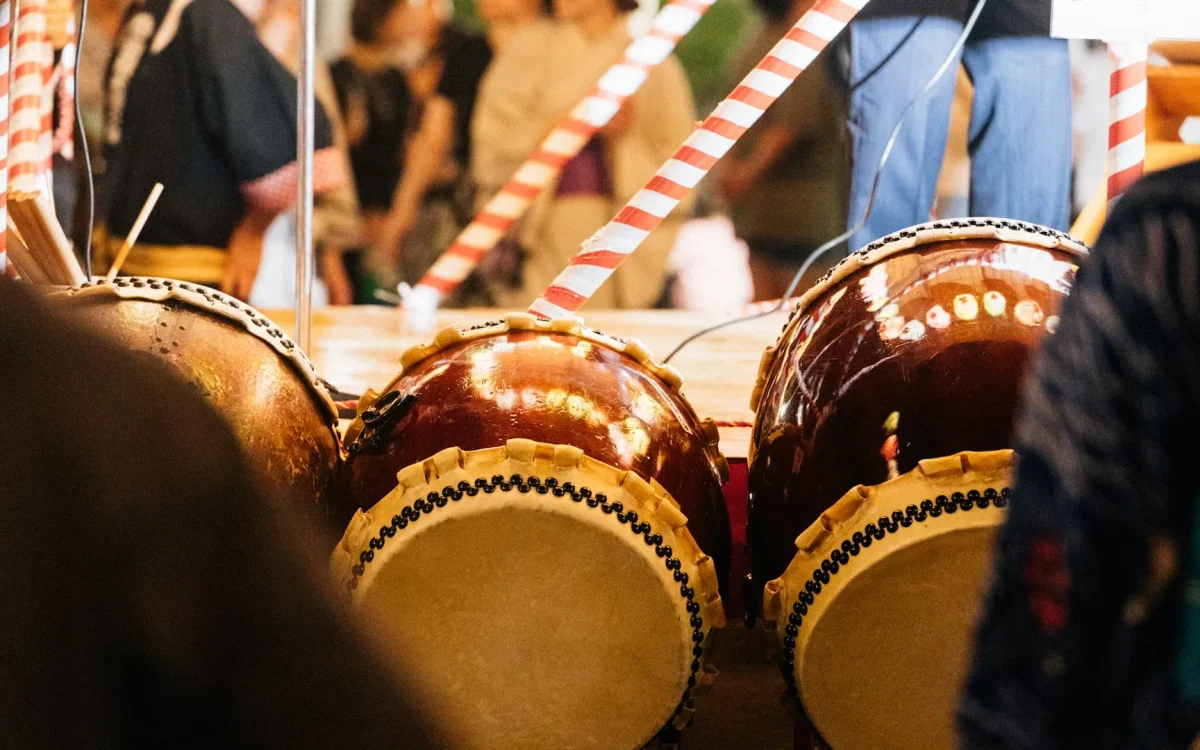
| Nagado-daiko | Barrel-shaped drum carved from a single tree trunk, with nailed cowhide heads; the classic taiko sound |
| Shime-daiko | Small drum with heads tightened by ropes or bolts, high and crisp |
| Odaiko | Very large drum, sometimes more than a metre in diameter, with a deep, thunderous sound |
| Okedo-daiko | Lighter drum made from staves, often carried and played while moving |
| Atarigane | Small hand gong that keeps time |
Traditional nagado-daiko are made by specialised craftsmen who carve the body from a single log, dry it for years and stretch the cowhide heads. Large drums can be extremely valuable.
Festival drumming
Before modern ensemble taiko, drumming was an essential part of matsuri, Japanese festivals. Drums are often carried on floats or played in processions, and each region has its own rhythms and styles. At summer Bon festivals, drums accompany circle dances honouring ancestors. Many of these local traditions continue, and some have inspired modern taiko compositions.
The birth of ensemble taiko
In 1951, Daihachi Oguchi, a jazz drummer in Nagano Prefecture, was asked to interpret an old piece of shrine drum music. Inspired by the drum kit, he arranged it for several drums of different sizes played by a group, each drum taking a role like the parts of a drum set. His group, Osuwa Daiko, is credited with creating kumi-daiko, or ensemble taiko, which became the model for countless groups. Oguchi helped spread taiko across Japan and abroad.
Ondekoza and Kodo
In 1969, Den Tagayasu founded Ondekoza on Sado Island, a group that combined drumming with intense physical training, including long-distance running. In 1975, members ran the Boston Marathon and then performed on stage. In 1981, members of Ondekoza formed Kodo, which became the most famous taiko group in the world, touring internationally and living communally on Sado Island. Kodo hosts the Earth Celebration festival on Sado each summer, attracting visitors from around the world.
Technique and movement
Taiko players strike the drums with wooden sticks called bachi. Taiko is not only about rhythm but also about movement and posture: players adopt low, strong stances, and their arm movements are part of the performance. The concept of kata, form or stance, is important in many groups. Players often move between drums and perform choreographed sequences, making taiko a visual as well as musical art.
Kakegoe: the shouts
During performances, taiko players shout calls called kakegoe, such as “sore”, “ha” or “iya”. These calls encourage other players, mark sections of the music and express energy. They also help keep the group together and create a sense of unity. Audiences unfamiliar with taiko are often surprised by the shouts, but they are an essential part of the art.
Taiko in North America
Taiko spread to North America in the late 1960s. Seiichi Tanaka founded San Francisco Taiko Dojo in 1968, and other groups soon followed, especially in Japanese American communities in California, Hawaii and elsewhere. For many Japanese Americans, taiko became a way to connect with their heritage and express identity. Today there are hundreds of taiko groups in North America, Europe and beyond.
Taiko and the body
Taiko requires strength, stamina and coordination. Many groups include physical conditioning in their training, and long performances can be exhausting. At the same time, taiko is accessible: many community groups welcome beginners of all ages, and the experience of drumming together is both energising and joyful.
A closer look: feeling the layers
When you listen to a taiko ensemble, notice how different drums play different roles. The shime-daiko often plays a steady, high rhythm that holds the group together. The nagado-daiko play the main patterns, and the odaiko adds deep, dramatic strokes. Listen also for the atarigane gong keeping time. These layers create a complex, powerful texture. You can practise steady rhythms with our metronome.
Putting it into practice
Watch a Kodo performance video, then look for a taiko group near you that offers beginner classes. If you visit Japan, consider timing your trip with a summer festival or the Earth Celebration. The Music Festival Trip Planner AI can help, and the World Rhythm Coach AI can explain taiko rhythms.
Frequently asked questions
What does taiko mean?
“Drum” in Japanese; it also refers to the art of ensemble drumming.
Who created ensemble taiko?
Daihachi Oguchi, a jazz drummer, with his group Osuwa Daiko in 1951.
What is Kodo?
A world-famous taiko group based on Sado Island, formed in 1981.
Questions and notes