Balafon and Marimba: Wooden Keys from Africa to the Americas
Wooden xylophones with gourd resonators have been played in Africa for centuries, and their descendants ring out in Guatemala, Mexico and Colombia. The West African balafon, the timbila and amadinda, the Central American marimba and the concert marimba.
In this guide
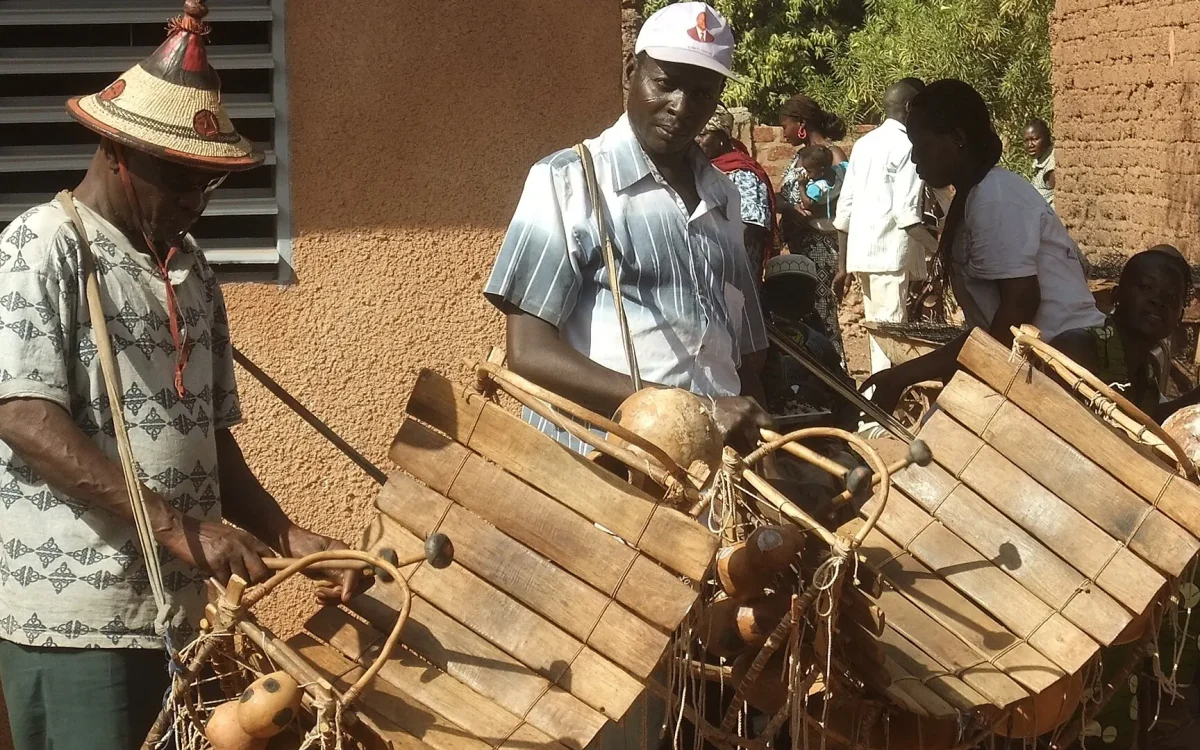
Strike a wooden key on a balafon and you hear a warm, woody note with a buzzing edge, amplified by a gourd hanging beneath. Across Africa, wooden xylophones have been played for centuries, accompanying griots, dances, ceremonies and royal courts. Carried across the Atlantic, the instrument evolved into the marimba of Central and South America, now the national instrument of Guatemala, and later into the concert marimba of orchestras and percussion ensembles. This guide explores this remarkable family of instruments.
How they work
A xylophone of this type has wooden keys of different lengths, each producing a different pitch, arranged on a frame. Beneath each key hangs a resonator, traditionally a gourd, sized to amplify that key’s note. In many African and Latin American instruments, each gourd has a small hole covered with a thin membrane, originally made from spider egg-sac silk or animal membrane and today often thin paper or plastic, which vibrates and adds a characteristic buzz. Players strike the keys with mallets, often with rubber or cloth heads.
The West African balafon
The balafon is the xylophone of the Mandé peoples of West Africa, in countries including Mali, Guinea, Senegal, The Gambia and Burkina Faso. It is traditionally played by griots, the hereditary musicians who also play the kora, and accompanies songs of history and praise. Balafons may be tuned to pentatonic or heptatonic scales, depending on the region. Skilled players produce fast, interlocking patterns, often playing with a second balafon. See the kora and the griot tradition.
The Sosso Bala
A balafon known as the Sosso Bala, kept in the village of Niagassola in Guinea, is linked by tradition to the epic of Sundiata and the founding of the Mali Empire in the thirteenth century. According to the epic, it belonged to the sorcerer-king Soumaoro Kanté. The instrument is guarded by a griot family, and UNESCO recognised the cultural space of the Sosso Bala as a Masterpiece of the Oral and Intangible Heritage of Humanity in 2001.
| Instrument | Region | Notable feature |
|---|---|---|
| Balafon | West Africa (Mandé) | Gourd resonators, played by griots |
| Gyil | Ghana, Burkina Faso | Played at funerals and celebrations |
| Amadinda | Uganda | Log xylophone with interlocking parts |
| Timbila | Mozambique (Chopi) | Large orchestras of xylophones |
| Marimba | Guatemala, Mexico | Large chromatic instrument played by several players |
| Marimba de chonta | Colombia, Ecuador | Afro-descendant Pacific coast tradition |
Other African xylophones
Among the Senufo peoples of Mali, Burkina Faso and Côte d’Ivoire, balafon music accompanies ceremonies and agricultural work, and is recognised by UNESCO. In northern Ghana and Burkina Faso, the gyil is played by the Dagara and Lobi peoples, especially at funerals, where it plays an important role. In Uganda, the amadinda and akadinda, large log xylophones played by several musicians at once, were part of the music of the Buganda royal court, with players interlocking their parts at great speed. See African polyrhythm.
Chopi timbila
The Chopi people of southern Mozambique play the timbila, xylophones with gourd resonators, in orchestras of a dozen or more instruments of different sizes, accompanied by dancers. Timbila compositions are long suites with dance movements, and composers are highly respected. The ethnomusicologist Hugh Tracey wrote about Chopi musicians in the 1940s, and UNESCO recognised the Chopi timbila in 2005.
The marimba in Central America
The marimba developed in Central America and southern Mexico, probably from African xylophones brought by enslaved Africans, combined with indigenous and European influences. Early marimbas had gourd resonators, later replaced by wooden boxes. The marimba became the national instrument of Guatemala and is central to the music of Chiapas in Mexico. Large chromatic marimbas, played by three or four musicians at once, accompany dances and celebrations. The membrane buzz, called charleo, is still prized in traditional instruments.
The Afro-Colombian marimba
On the Pacific coast of Colombia and Ecuador, Afro-descendant communities play the marimba de chonta, made from the wood of the chonta palm with bamboo resonators. It accompanies currulao music and dance, together with drums, shakers and singing. UNESCO recognised marimba music and traditional chants of the South Pacific region of Colombia and Ecuador as Intangible Cultural Heritage.
The concert marimba
In the early twentieth century, instrument makers in the United States developed the concert marimba, with rosewood keys and metal tube resonators, for orchestras and percussion ensembles. Composers wrote solo and concerto works for the instrument, and players developed four-mallet techniques that allow chords and complex textures. In Zimbabwe, marimba bands, developed from the 1960s, became popular in schools and spread to communities abroad.
A closer look: listening for the buzz
Compare a recording of a West African balafon with a concert marimba. On the balafon, listen for the buzzing edge on each note, produced by the membranes on the gourds. On the concert marimba, notice the smoother, rounder tone. The buzz is a deliberate aesthetic choice in many African and Latin American traditions, adding richness and power to the sound.
Putting it into practice
Listen to a Mandé balafon recording, a Chopi timbila orchestra, a Guatemalan marimba and a concert marimba solo. The Instrument Origins Guide AI can tell you more about how each instrument is made, and the Global Playlist Curator AI can suggest recordings.
Frequently asked questions
What is a balafon?
A West African wooden xylophone with gourd resonators, traditionally played by griots.
Is the marimba African?
It developed in Central America, largely from African xylophones brought by enslaved Africans.
Why do balafons buzz?
Thin membranes over holes in the gourds vibrate, adding a buzzing edge to each note.

Questions and notes